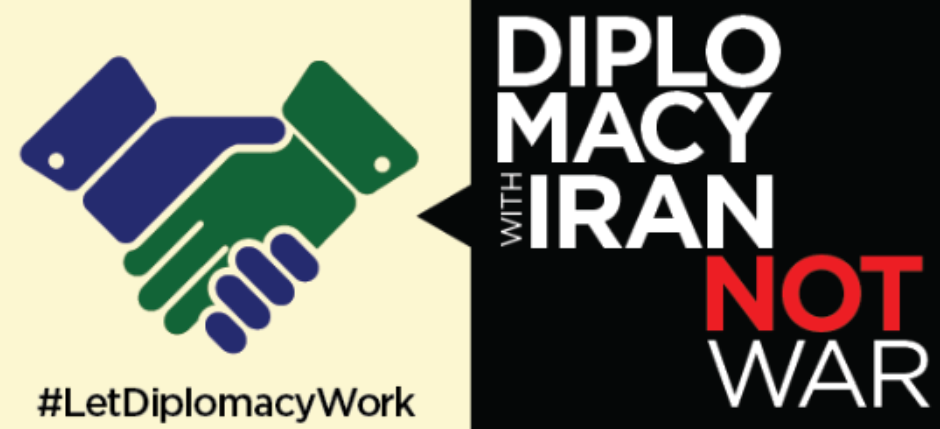
As a Quaker, a pacifist, and a human being, I am profoundly saddened by the Israeli attacks on Iran. This moment is deeply personal to me. In 2015, I worked closely with the American Friends Service Committee (AFSC), the Friends Committee on National Legislation (FCNL), my Quaker monthly and yearly meeting, and others to advocate for the successful approval of the Iran Nuclear Deal—officially known as the Joint Comprehensive Plan of Action (JCPOA).
I believe it is important to tell this story now, as a cautionary tale for future peace and justice work. To try to learn from history’s mistakes, such as leaving the Iran nuclear deal. To consider this lesson in the future and deepen our commitment to work for peace.
The Iran Nuclear Deal was a major diplomatic achievement of the Obama administration. It established a framework that allowed for rigorous international inspections of Iran’s nuclear enrichment program, ensuring its peaceful use. The plan worked.
I knew it was a profound mistake when President Trump withdrew from the deal in May, 2018. Why would we give up the ability to inspect Iran’s nuclear program?
Is was that inability to inspect Iran’s nuclear program that Israel used to justify its attacks on Iran today. Because of its concerns about Iran’s development of enough material to produce nuclear weapons.
Passing the Iran Nuclear Deal 2015
The ratification of the agreement of the Iran Nuclear Deal in 2015 by the U.S. Senate was in doubt. I was living in Indianapolis at the time, and our Democratic Senator, Joe Donnelly, had not taken a position and was a key vote.
On the eve of the vote, the Quaker organization, the Friends Committee on National Legislation (FCNL) arranged for President Obama to speak to those working for the deal.
Last night President Obama spoke for half an hour by phone to activists who support him. He described how the Iran deal is a good deal for the United States and all the counties who joined in the negotiations in good faith that they would all agree to the deal. This is the agreement that the international community hammered out and supports. If Congress defeats this bill, that will likely end any influence the United States could have in the Middle East. Opponents of the bill only offer that we need a “better deal”, but have nothing to offer as to what that could possibly be. Those who say we should continue with sanctions don’t understand that is not possible now Sanctions only work when the international community supports and enforces them. That won’t happen if they see the U.S. cannot agree on a foreign policy, as would be evident if this bill is defeated. There is also the question of who the sanctions hurt, which is the people of Iran, not their leaders. This feeds the movement to join terrorist organizations. An improved standard of living for the Iranian people should help mitigate that. The President specifically asked us to speak out to support this deal. “In the absence of your voices, you are going to see the same array of voices that got us into the Iraq war, leading to a situation in which we forgo a historic opportunity and we are back on the path of potential military conflict,” he said.
President Obama’s Iran briefing to activists, Jeff Kisling, Quakers, Social Justice and Revolution, July 30, 2015
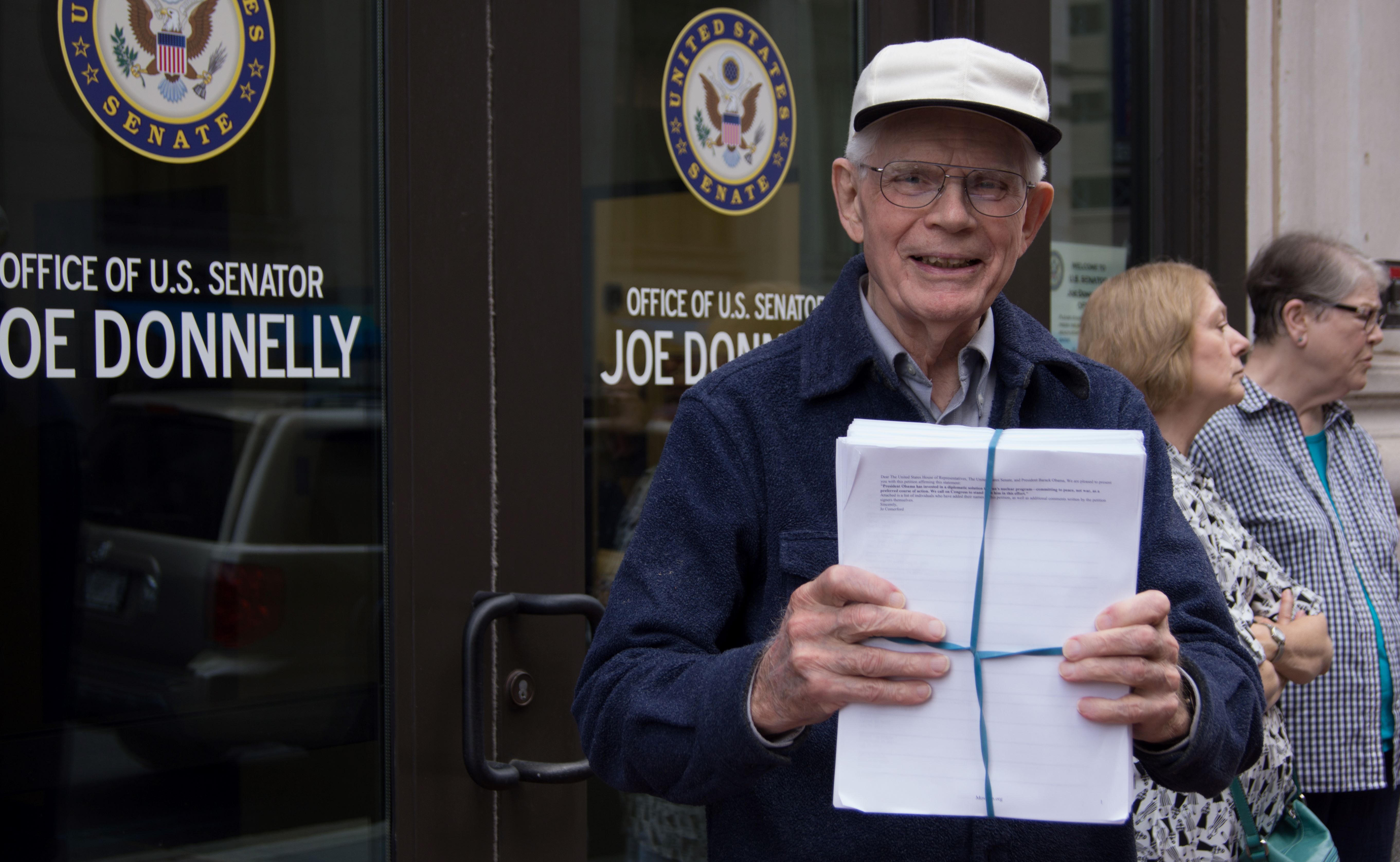
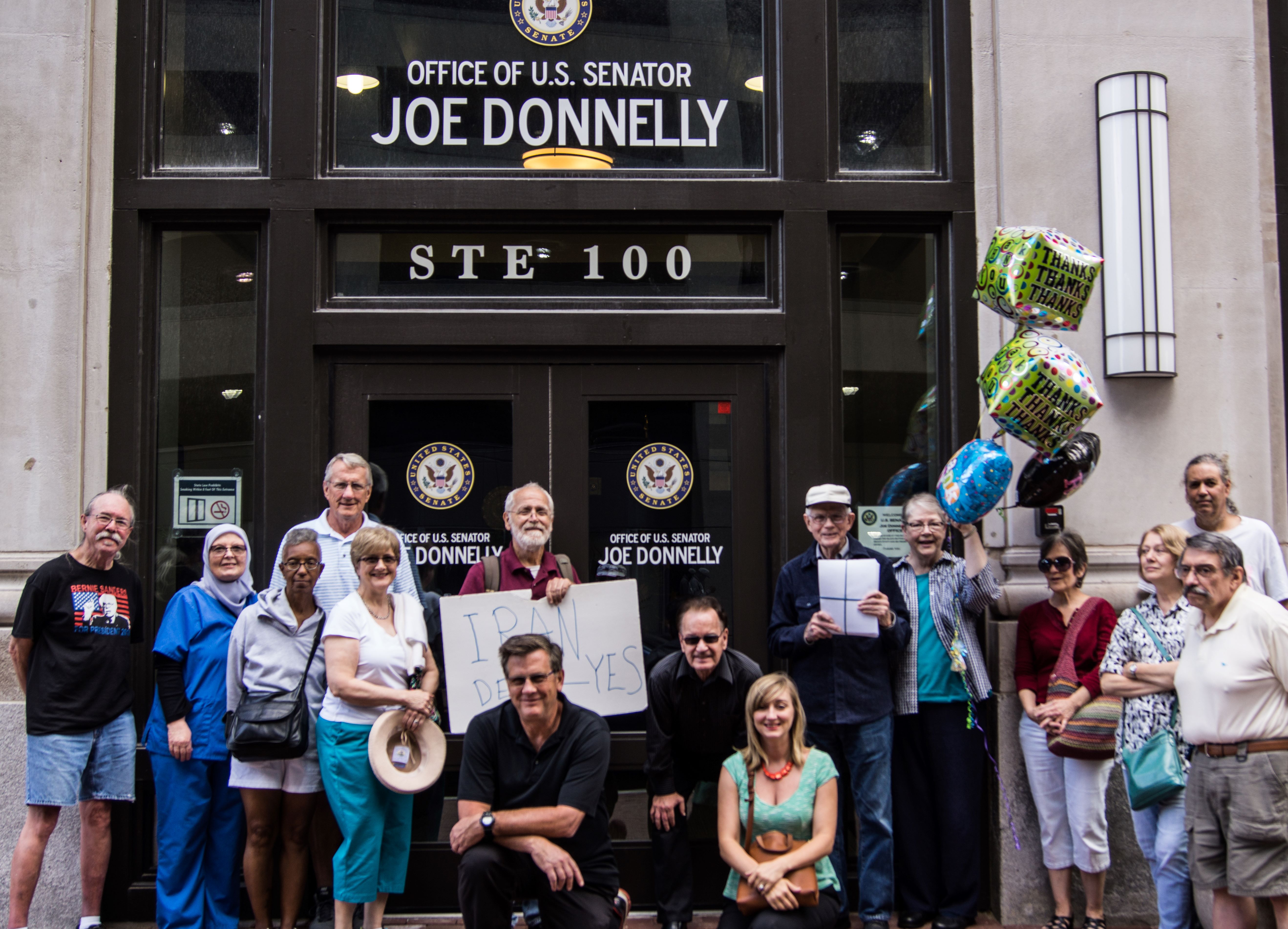
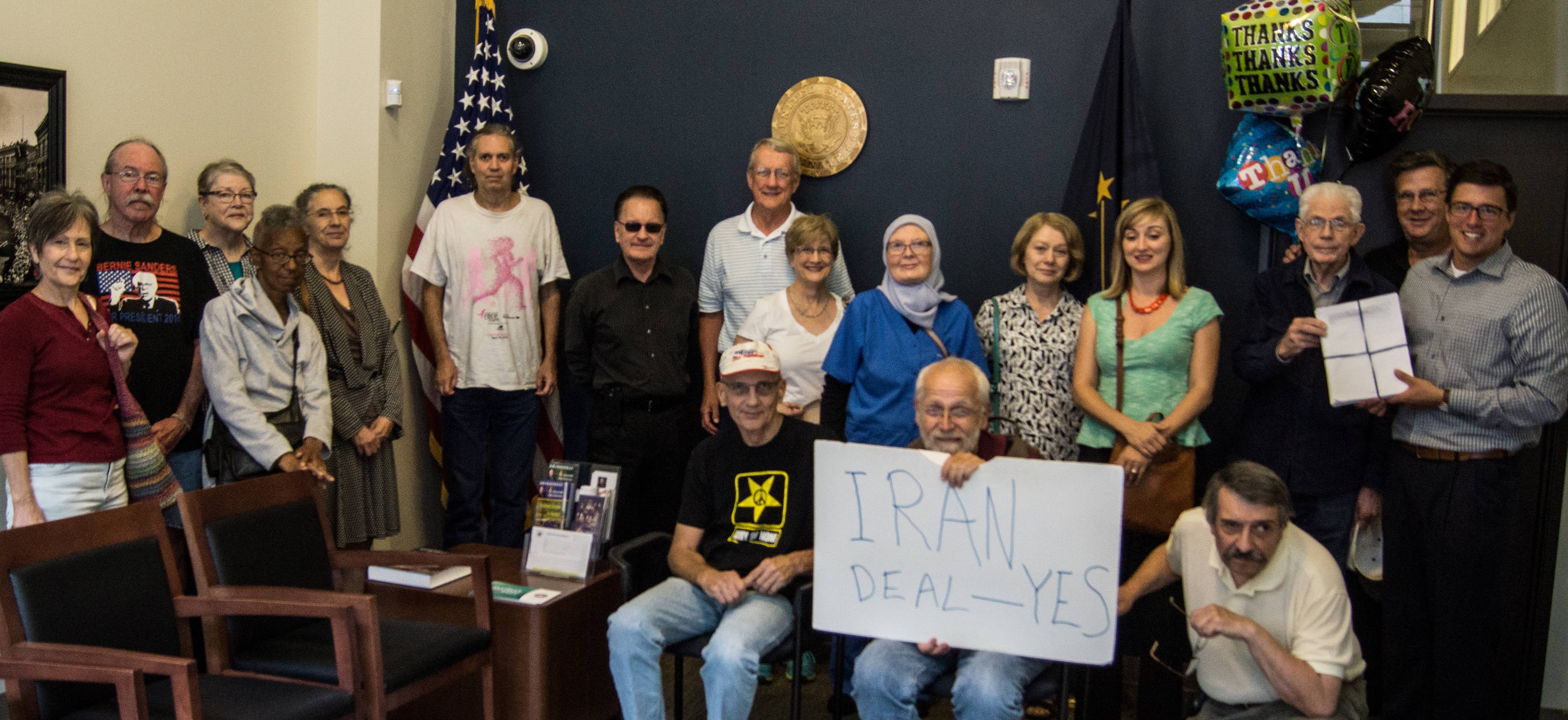
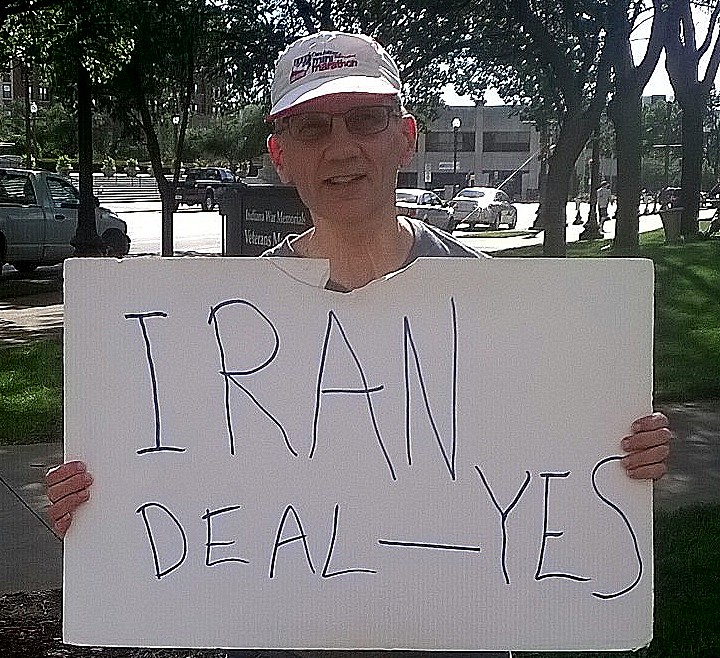
As a direct result of that call, with the help of MoveOn we organized the delivery of over 10,000 signatures of Hoosiers who support the Iran Nuclear Deal to Senator Joe Donnelly’s Indianapolis office. The Senator had just decided to support the deal, so our visit became a “thank you”.
The following Minute was approved by my Quaker Yearly Meeting, Iowa Yearly Meeting (Conservative) the summer of 2015. I was clerk of the Yearly Meeting’s Peace and Social Concerns Committee at that time.
Iowa Yearly Meeting (Conservative) supports the peaceable agreement among world powers, including the United States and Iran, to dramatically curb Iran’s nuclear program in exchange for easing international sanctions against Iran. We hope this will be the beginning of many more peaceful negotiations.
 unflinching