On World Hunger Day, May 28, people across the globe sought to highlight the devastating hunger, famine, and disease gripping Gaza and the West Bank resulting from Israel’s blockade of humanitarian aid to the region.
The act of fasting converts one’s own body into evidence of the suffering in Gaza and the complicity of institutions oand governments that sustain it.
My brother, a few Quaker friends, and I joined the #FastForGaza as an act of solidarity. Despite knowing that any expression of support for starving Palestinians often faces severe repression from the Israeli and U.S. governments—through arrests, disappearances, deportations, and the stripping of civil liberties. Still, awareness is growing, and media that had been complicit in this genocide is beginning to report the truth.
Reflections
Given the forces of apathy and suppression, one might ask: Why fast? Does this act have an impact beyond a small personal sacrifice? Could it shift perspectives? Influence policymakers? At the very least, it might offer some small reassurance to Palestinians that they are not forgotten.
One of the deepest wounds inflicted on Palestinians is the near-total lack of concern from Israel and the U.S., compounded by the deliberate narrative that paints them as “other.” For decades, systemic racism and colonialism have fueled their oppression, bringing us to the present humanitarian crisis.
A matter of the Spirit
I try to bring a spiritual approach to my life. But too often fail to seek guidance, or am unable to discern it. Leadings of the spirit come in their own time, place and manner. And I might feel unsure about following what that discernment would entail. There is usually an element of risk, sometimes significant risk.
I moved to Madison just prior to the attack on the Israelis on October 7, 2023. I began to look for justice organizations to work with in this new location. I was very disappointed that I didn’t find a group similar to the Des Moines Mutual Aid community I had been so involved in and learned so much from in Iowa.
In the face of the terrible history of the Middle East that I’ve been learning about these past several years, and about the complicity of this country, I feel morally devastated. Leading me to seek spiritual discernment about what to do.
I was being led to learn about what was happening in Gaza. I lived near the University of Wisconsin in Madison, where I was able to attend meetings about Palestine, including hearing Palestinian poets speak. I had been fairly uninformed about what was happening there. The more I learned, the more devastated I felt. Our government was deeply complicit in the atrocities against the Palestinian people. Which made me feel I shared in this complicity. Unfortunately, the vast majority of people in this country are either ignorant of the genocide, or feel it is not their responsibility to address.
It takes some time to find organizations that align with your values. I eventually joined the Wisconsin Coalition for Justice in Palestine (WCJP) and the Madison FCNL Advocacy Team, whose focus at this time is on Gaza. Spiritual discernment led me to these.
Encampments
Through these connections I learned about the U of Wisconsin student pro-Palestinian solidarity encampment. I might not have heard about the encampments otherwise, since there were few news reports about them. A trusted network is required to help you be aware of what the government doesn’t want you to know.
I went to the encampment several times to learn what was going on and to take photos. I have learned to avoid identifiable faces because of law enforcement monitoring where photos like these are likely to be posted. I shared them with the WCJP and have used them extensively in blog posts written since then. I also helped create business cards with “know your rights” and a local lawyer’s phone number on it for WCJP.
All these things are important to becoming connected to these struggles and the people and organizations involved. I believe we must develop these connections if we hope to effectively engage. People need time and experiences with us to get to know us. We need time to learn from them. Solidarity involves the heart, not the head.
Hunger is employed as a form of non-violent protest and resistance
Hunger
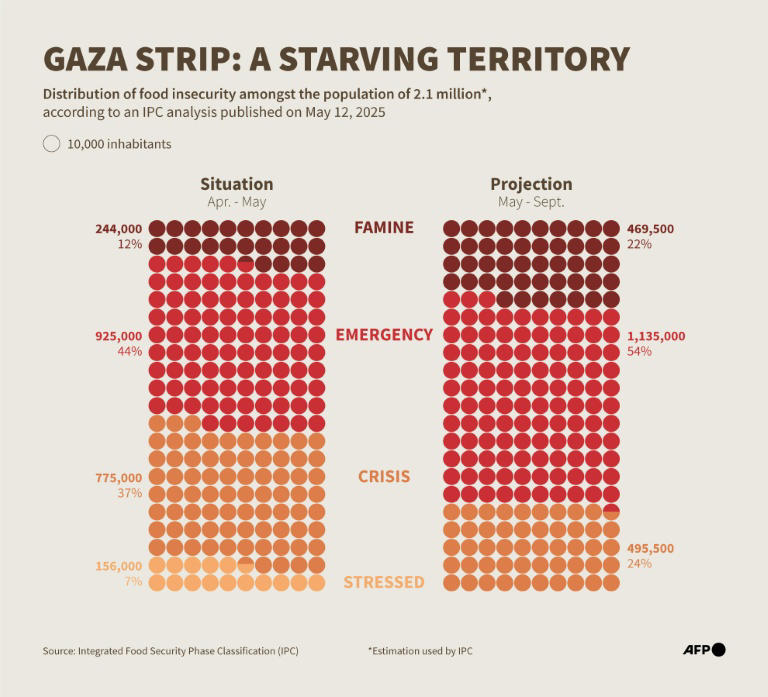
Hunger and malnutrition existed long before this present acute crisis because of the years of the Israeli blockade of aid.
But now Israel has blocked ALL humanitarian aid from entering Gaze for three months. Children are dying by intentionally starving them to death.
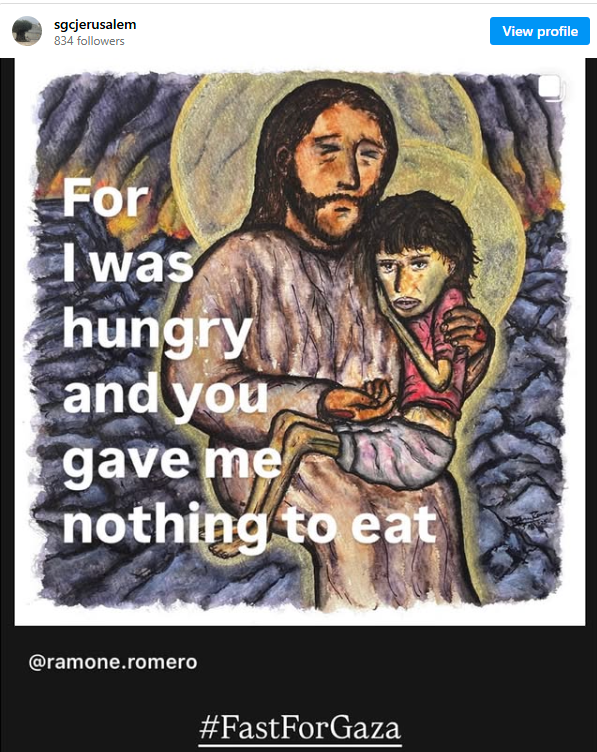
#FastForGaza
#FastForGaza is about how we can use fasting ourselves to express solidarity with the Palestinian people’s situation. World Hunger Day brought this into focus globally.
Spirit
The decision to follow the leading to fast for Gaza came easily. I remembered how cleansing fasting can be. And I imagined the fasting would help me maintain a spiritual focus, which it did. Perhaps most importantly, I would be doing something, no matter how small. Engagement is dynamic, and comes from the spirit and the heart. Committee meetings, reports and social media posts are about the head and tend to not result in change.
The evening before the fast I began to move into a deepening spiritual awareness. I became more attuned to feelings related to what was happening in Gaza and in this country. That awareness continued to deepen as I entered the day of fasting.
During the day I began to feel the hunger, which really helped me focus on what it must be like for the children in Gaza. But being aware that I knew I could eat anytime I wanted. Knowing there was an endpoint for me, but none such for the children there.
Hunger is our weapon against injustice
The phrase “Hunger is our weapon against injustice” is a motto associated with the #FastForGaza movement and related hunger strikes. This phrase encapsulates the core strategic and symbolic purpose behind participants abstaining from food. Rather than a weapon of physical aggression, hunger is employed as a form of non-violent protest and resistance.
By choosing to fast, we physically engage in an act that ties us directly to the reality of starvation experienced by Palestinians in Gaza. This physical endurance of discomfort is intended to amplify the silent suffering of those starving in Gaza. The act converts one’s own body into evidence of the suffering in Gaza and the complicity of institutions and governments that sustain it. Starvation, unlike deaths from bombing, is described as making no noise and being less visible, making the symbolic act of fasting important for raising awareness.
Quaker tent solidarity
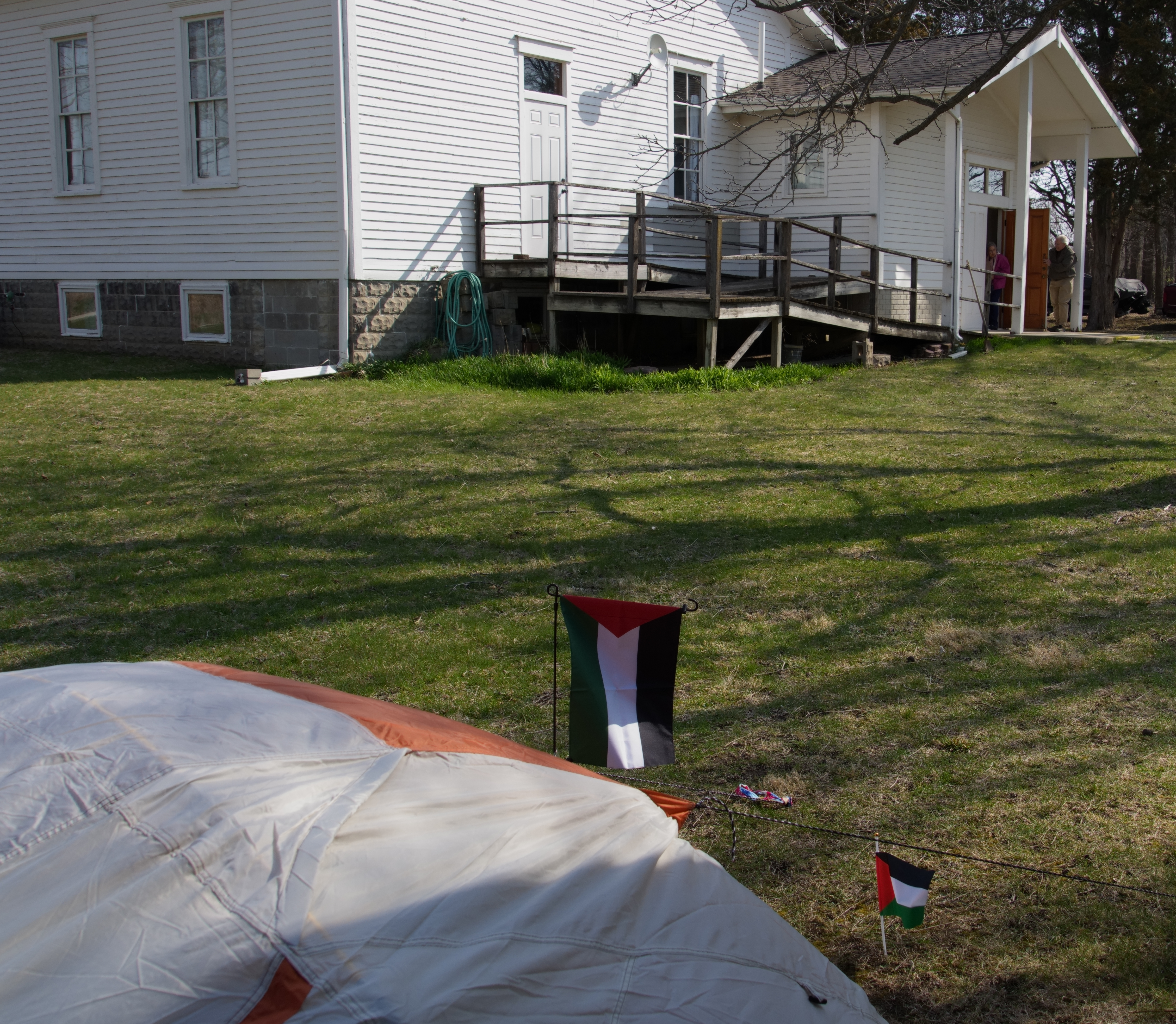
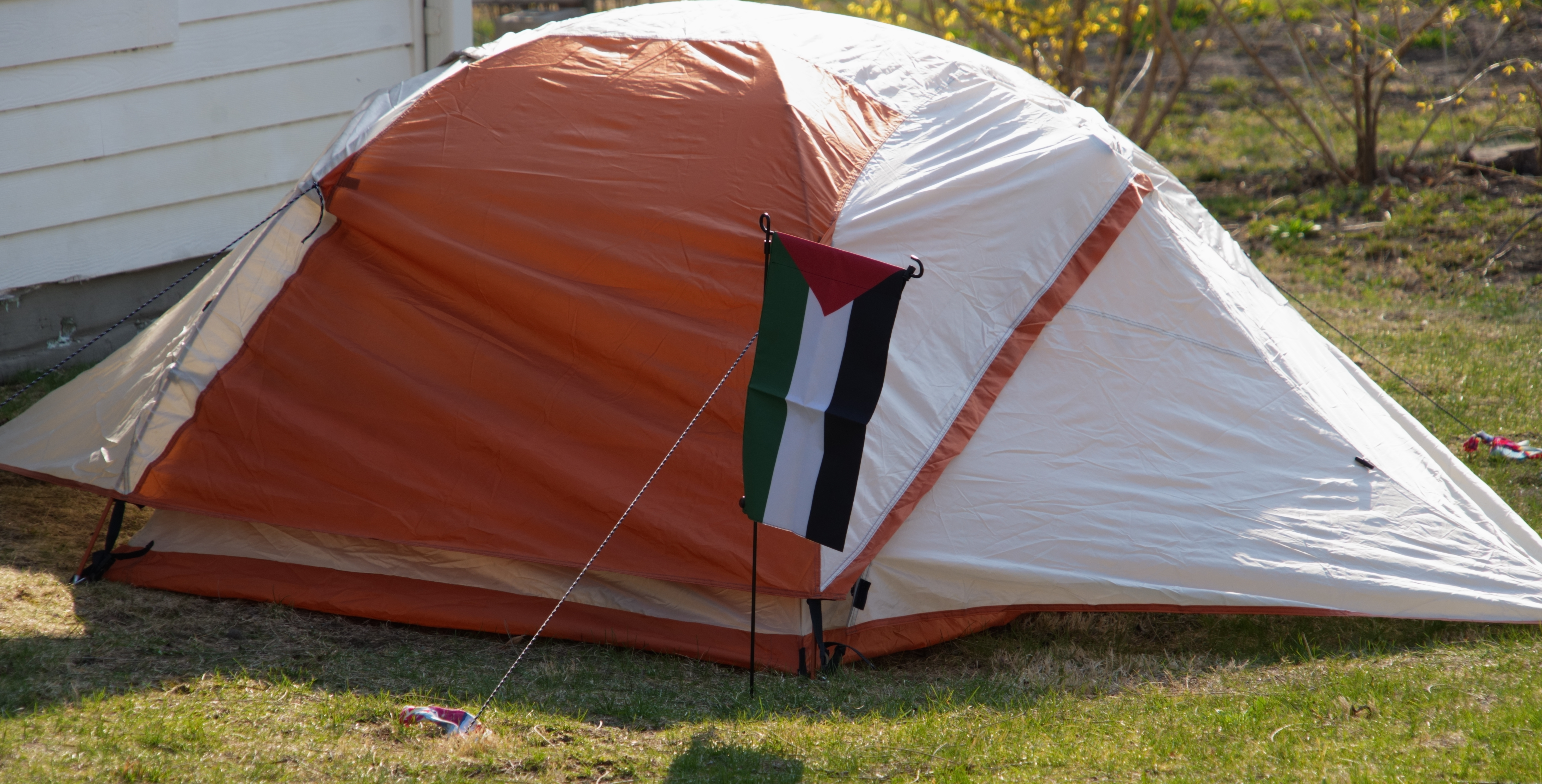
Another way I’ve been led to raise awareness of the genocide in Gaza is my vision of Quaker tent solidarity. These photos were taken at a recent meeting of Quakers at my home meeting, Bear Creek, last month.




Riyad Mansour, the Palestinian ambassador to the United Nations, delivered an emotional address to the UN Security Council breaking down in tears as he described the “unbearable” suffering of Palestinian children amid the ongoing war in Gaza.
 unflinching