As I was walking to the University of Wisconsin campus yesterday to attend the graduation of my good friend Reza Mohammadi, I saw these graffiti images at the front of the stadium where the main graduation ceremonies would be held. Reza’s Masters degree graduation was held separately, earlier.
Even if you don’t read the rest of this post, I wanted to say all of this was erased by the time I walked back past here just two hours later. How symbolic is that?
Seeing this graffiti, I thought, wow, I’m so glad someone did this. I’ve been devasted by all that I’ve been learning about the genocide and war crimes being committed in Gaza and the West Bank by Israel and the United States.
And at the same time I was aware of my engrained response against vandalism. And asked myself whether the message is more important than the physical cost. How do you compare the deaths of over 50,000 children, women and men in Gaza and the West Bank to some minor property damage?

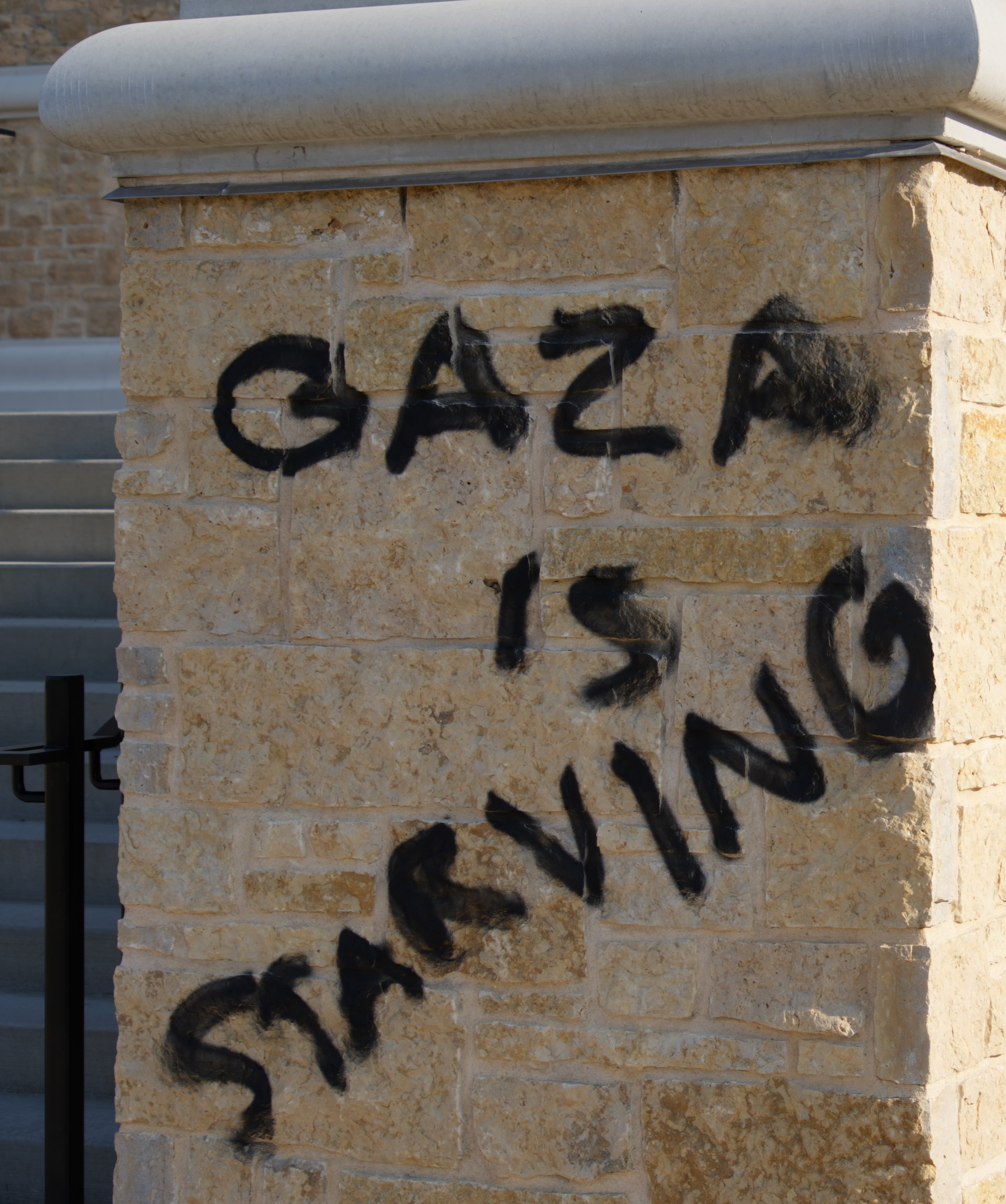


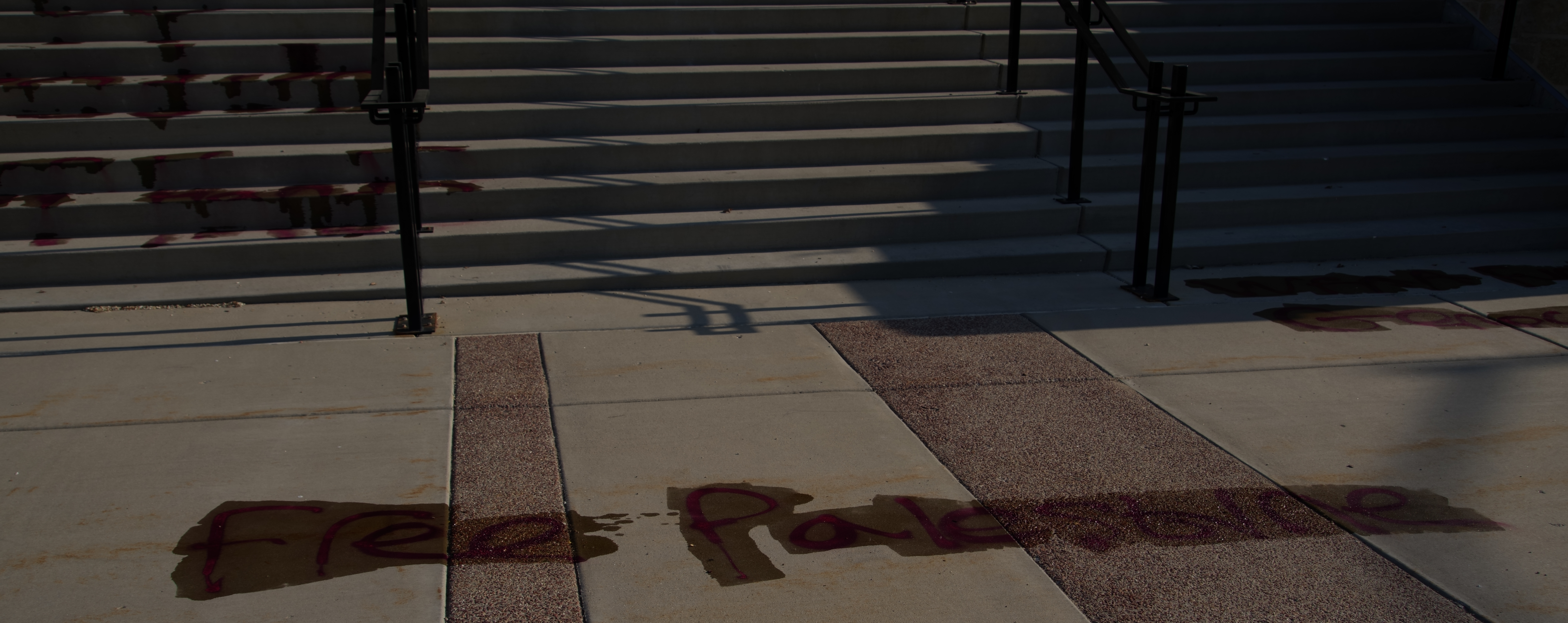
Graffiti at the University of Wisconsin on graduation day 5/10/2025. Photo credit: Jeff Kisling
So, I’ve been gathering sources, which collectively explore the significance of street art, particularly graffiti and murals, as a form of resistance and communication on the Israeli West Bank Wall. They highlight how what was once dismissed as vandalism has evolved into a powerful tool for expressing Palestinian identity, challenging occupation, and fostering international solidarity. The texts examine the historical roots of Palestinian street art, its transformation in response to the construction of the wall, the various styles and techniques used, and the ongoing debates surrounding its normalization or “beautification.” The sources also discuss the impact of international artists and “struggle tourism” on the visual landscape of the wall and the messages conveyed, while emphasizing the core themes of freedom, justice, love, and the enduring commitment to resistance reflected in the artwork.
The problem with writing about Gaza is that words can’t explain what’s happening in Gaza. Neither can images, even the most gut-wrenching and heartbreaking. Because what needs to be explained is the inexplicable. What needs to be explicated is the silence in the face of horror.
Israel has been brazenly upfront about its plans to subdue Gaza, depopulate it of Palestinians, and seize the Strip for itself. Israel will not change. It hasn’t deviated from this genocidal course since October 8, 2023. For 19 months, every Palestinian has been a target because Israel wants Gaza cleansed of Palestinians. Therefore, everyone can be bombed. Everyone can be starved. Everyone can be denied medical care and the mere essentials of life.
A Silence That Kills. The Scourging of Gaza: Diary of Genocidal War by Jeffrey St. Clair, CounterPunch, May 10, 2025
Podcast
Palestinian Graffiti: Tagging Resistance and Communication
The Art of Resistance
This is the briefing document compiled from the sources listed at the end of this article.
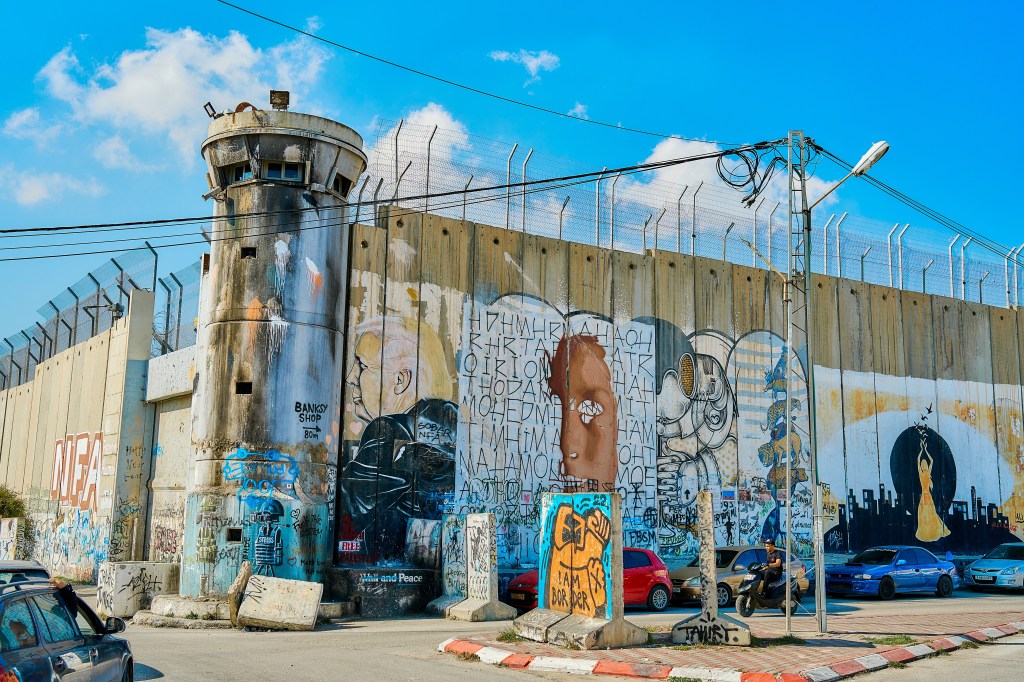
The Apartheid Wall, also known as the Israeli West Bank Wall, extends roughly 708 km, or 440 miles, with 85% of the wall extending well beyond the Green Line—the pre-1967 armistice line demarcating Israel and Palestine. The Wall effectively destroys geographical and spatial continuity between Palestinian towns, turning what remains of Palestinian territories into Bantustans.
When the banalities of every-day life are invaded by an oppressive regime, local forms of resistance form to combat existing power dynamics. Given the domination Palestinian’s face vis-à-vis Israeli apartheid, sumud, or ‘stead-fastness,’ has emerged as a cultural expression of this resistance, often capturing the very same mundanities of day-to-day life, and breathing new, antagonistic life into them. In general terms, sumud embodies the spirit of opposition, maintaining that something as ‘simple’ as refusing to leave the land of Palestine behind is galvanized with unique socio-political force. While these acts can take on many different forms, street art—including graffiti—plays an overlooked role in challenging the apartheid conditions within the West Bank of Palestine, and is often recognized by local Palestinians and the diaspora of this art as sumud.
September 8, 2023: “The Art of Resistance: “Sumud,” Graffiti, and the Palestinian. Contestation of the Apartheid Wall in the West Bank” by Christopher Oshinski, Garnet, September 22, 2023
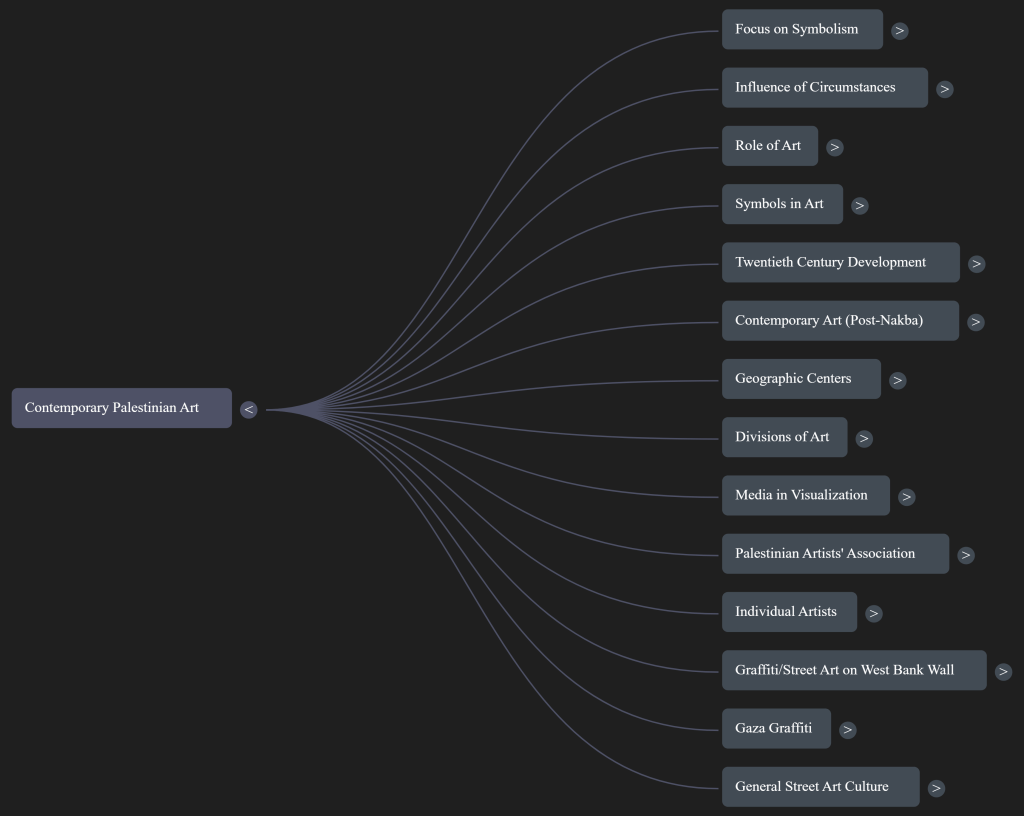
Sources
 unflinching