While the world looks on in horror, Israel continues it’s two month long blockade of any humanitarian aid, preventing hundreds of aid trucks from entering Gaza. And now the Israeli government has the audacity to propose that they should be in charge of the distribution of humanitarian aid in Gaza.
That’s a terrible juxtaposition.
Israel’s plan to occupy Gaza is intertwined with its proposed system for aid distribution
Israel’s plan to occupy Gaza is intertwined with its proposed system for aid distribution, which would place control in Israeli hands, severely limit supplies, confine distribution to specific vetted areas, and rely on private security. This approach is widely rejected by humanitarian actors as a violation of principles, impractical, and potentially harmful, occurring within a context of extreme need and lawlessness.
Gaza Occupation and Aid Distribution Plan
Based on the provided sources, Israel’s plan to occupy parts of Gaza has significant impacts on humanitarian aid distribution efforts. The plan, recently approved by Israel’s Security Cabinet, involves expanding military operations, seizing and holding territory, flattening buildings, and displacing the population to designated “humanitarian areas” in the south. This occupation plan is linked to a separate, but related, plan for Israel to take over and manage humanitarian aid distribution in Gaza.
Here’s how Israel’s plan impacts aid distribution:
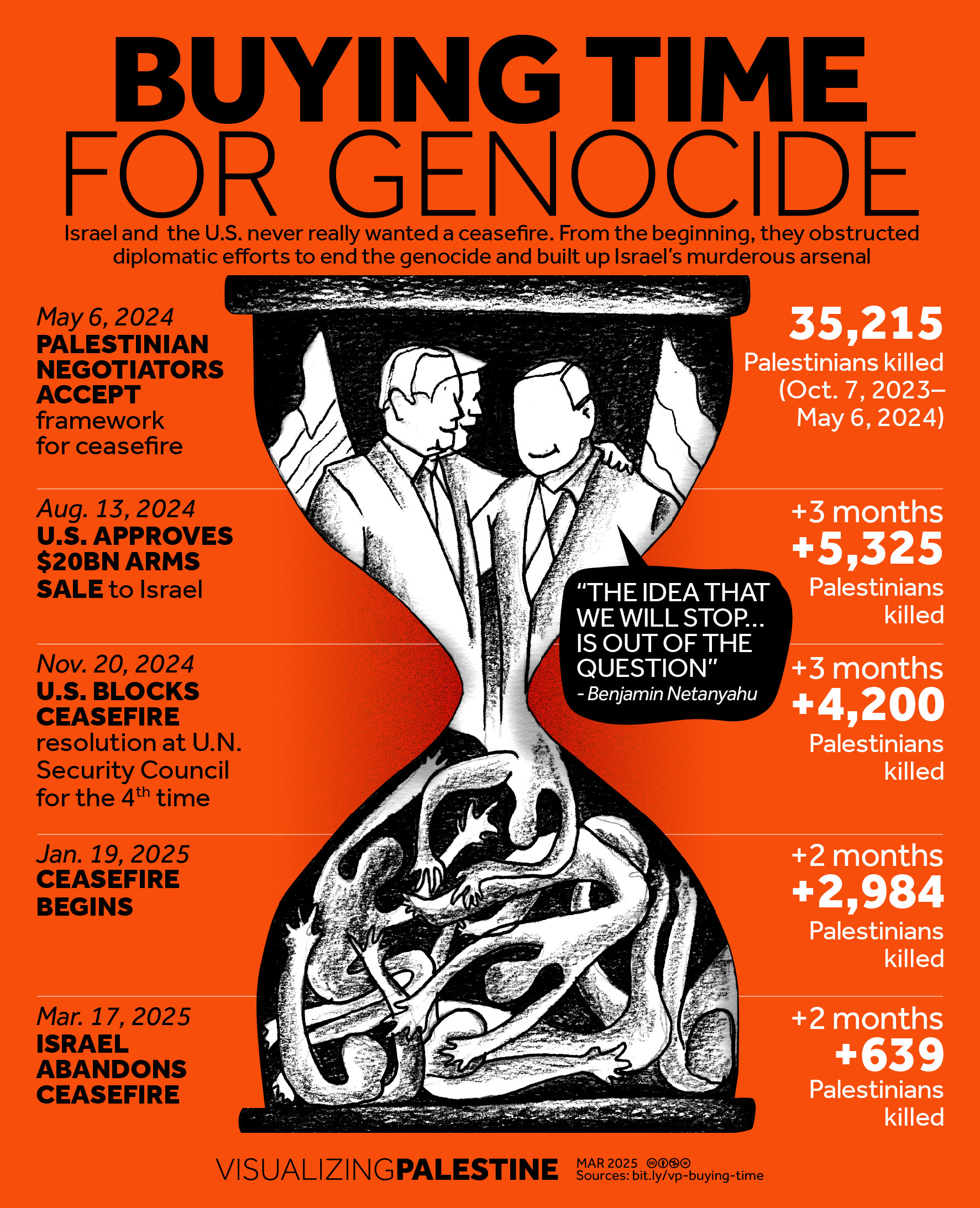
- Shift in Control and Restricted Flow: Israel plans to take control of the distribution of humanitarian aid within Gaza, a role typically managed by international aid agencies. This plan involves severely restricting the amount of aid entering Gaza. Under this proposed system, Israel would permit only about 60 trucks carrying basic items per day, which is just one-tenth of the volume allowed during the previous ceasefire period. Aid agencies state this amount is far less than what is needed for the roughly 2 million Palestinians in Gaza.
- Designated “Humanitarian Areas” and Distribution Hubs: The occupation plan includes displacing the population, potentially nearly all 2 million residents, to specific “humanitarian areas” or zones in the south, near Rafah. The new aid plan proposes distributing aid through designated “hubs” located in these areas. Aid distribution would initially be restricted to these few sites in the south.
- Vetting and Security Measures: Israel intends to vet those entering the humanitarian zones and receiving aid to prevent supplies from reaching Hamas. The proposed plan involves using private U.S. security contractors to provide security in and around these distribution hubs, while the IDF provides security in the broader area. Facial recognition technology may be used to identify visitors to the hubs. Israel claims these measures are necessary because Hamas has allegedly diverted and profited from aid, an allegation Hamas denies.
- Strong Opposition from Aid Agencies and International Bodies: Humanitarian organizations, including the UN humanitarian agency OCHA, have slammed and rejected Israel’s plan. They state it violates fundamental humanitarian principles such as impartiality, independence, and neutrality, especially as Israel is a party to the conflict. Aid agencies also argue the plan is logistically unworkable, insufficient to meet the scale of needs, and could put Palestinian civilians and aid workers at risk. Restricting aid distribution to specific southern sites is seen as discriminatory and potentially forcing further displacement. International law experts suggest the plan likely would not comply with international law obligations for an occupying power to ensure the basic needs of the civilian population are met.
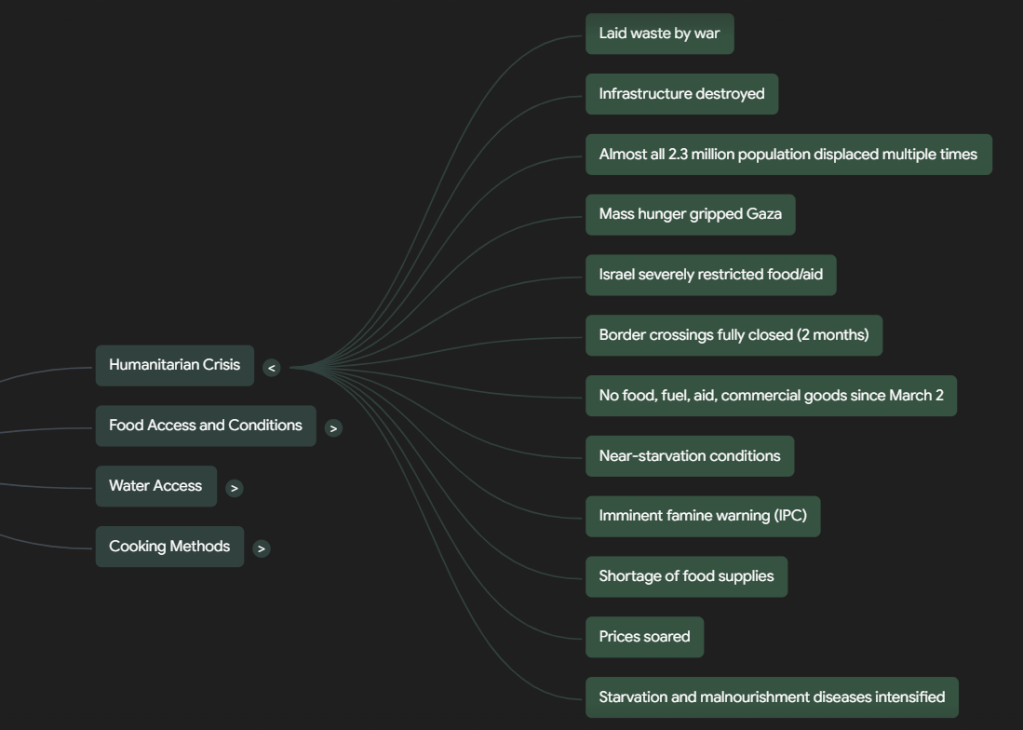
- Context of Severe Humanitarian Crisis: The plan is being considered amid an existing severe hunger crisis in Gaza, exacerbated by Israel’s blockade which has prevented food, fuel, aid, and commercial goods from entering the enclave since early March 2025. This blockade followed the collapse of a ceasefire two months prior. Residents report surviving on one meal a day or less, communal kitchens have shut down, and malnutrition cases are rising.
- Security Vacuum and Lawlessness: Separately, sources report that Israel’s actions, including targeting the Hamas-run civilian police force responsible for protecting aid convoys and allegedly supporting or turning a blind eye to armed looters, have created a significant security vacuum and exacerbated lawlessness in Gaza. This chaos and rampant looting have made safe aid delivery extremely difficult and dangerous for humanitarian organizations.
- Perceived Strategic Objectives: Aid agencies and critics suggest the aid plan, combined with displacement, appears designed to use control over life-sustaining items as a pressure tactic as part of a military strategy. Some Israeli hardliners have openly called for starving the population or see managing aid distribution as a first step towards permanent occupation and control. Critics link the occupation and aid plans to goals of ethnic cleansing and making Gaza unlivable for Palestinians.
Recent timeline
- May 5, 2025: Israel’s security cabinet approves a plan to expand military operations in Gaza, including the occupation of territory, in a meeting held Sunday night. David Mencer, a spokesman for Prime Minister Netanyahu, confirms the unanimous approval. IDF Chief of Staff Eyal Zamir speaks about mobilizing tens of thousands of reservists and expanding operations. The security cabinet also ratifies a plan to overhaul aid distribution in Gaza. Far-right National Security Minister Itamar Ben Gvir is the sole dissenter against the aid distribution plan. Axios reports that Israel’s Security Cabinet approved a plan last night to reoccupy and flatten all of Gaza if a new hostage-and-ceasefire deal isn’t reached soon. UN Secretary General António Guterres calls for humanitarian aid to flow back into Gaza immediately.
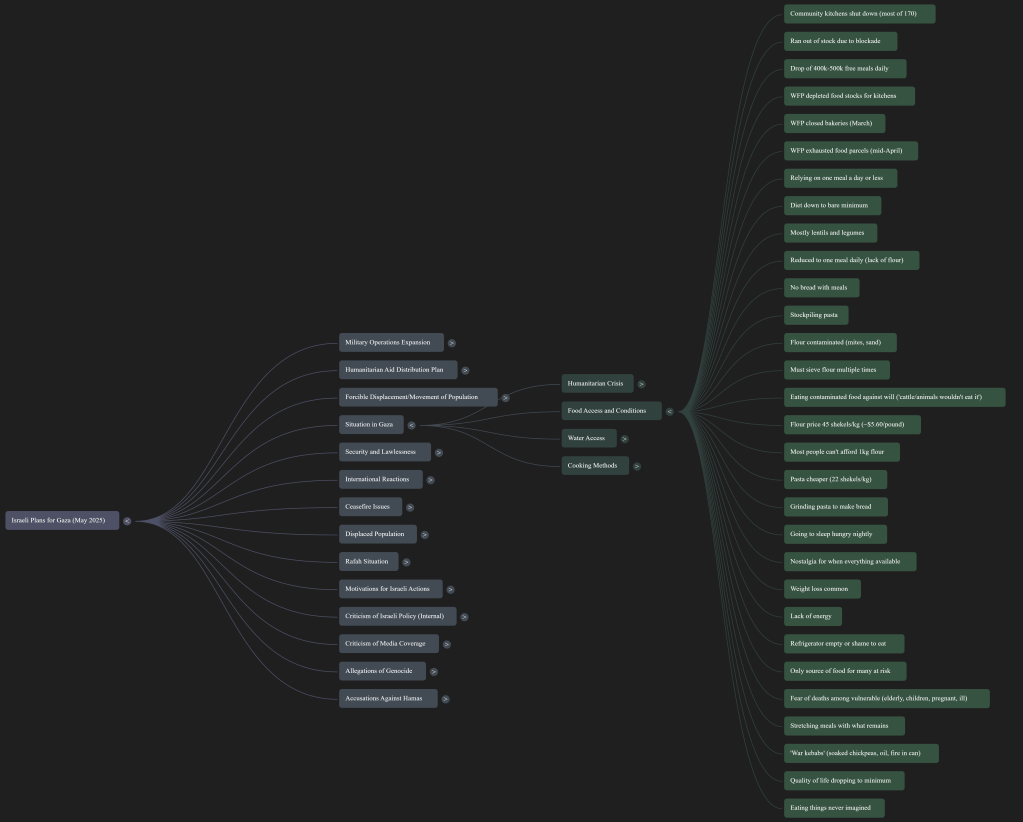
- May 6, 2025: Reports confirm Israel’s plan to reoccupy Gaza indefinitely. The Israeli government plans to manage aid distribution, which the UN calls a contravention of humanitarian principles and a pressure tactic. Dozens of Gaza communal kitchens shut down after running out of stock due to Israel’s blockade. Amjad al-Shawa, director of PNGO in Gaza, states that most of the enclave’s 170 community kitchens have shut down.
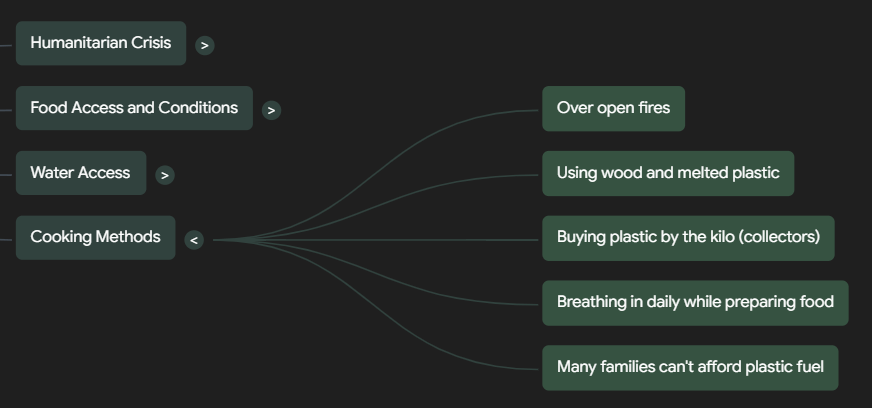
- May 7, 2025: Aid agencies criticize Israeli plans to take over aid distribution, citing concerns about complexity, lack of details, and potential harm to civilians. Amjad al-Shawa warns of a significant drop in free meals and a potential hunger catastrophe. A displaced father from northern Gaza, Mohammad Abu Ayesh, complains about contaminated flour. Ahmed (an alias), a Gaza resident, describes severe food shortages, reliance on one meal a day without bread, expensive vegetables, and the use of wood and melted plastic for cooking fuel.
- Currently (as of Early May 2025): Mass hunger grips Gaza due to Israel’s severe restrictions on aid. The IPC is conducting another evaluation of food insecurity and acute malnutrition. Israel is creating a power vacuum in Gaza by targeting its civil government and allegedly backing armed looters. Israel has dramatically altered the map of Gaza, declaring about 70% a military “red zone” or under evacuation orders. Israel has also enlarged its “security zone” along Gaza’s borders. Israel plans to displace close to 2 million Palestinians to the Rafah area, where humanitarian aid compounds are being built. All Palestinians entering these areas will be screened. Rafah City is surrounded by corridors constructed by the Israeli army. Calls are growing among families in Gaza for clans to form a new “united leadership” to confront lawlessness.
Humanitarian Crisis
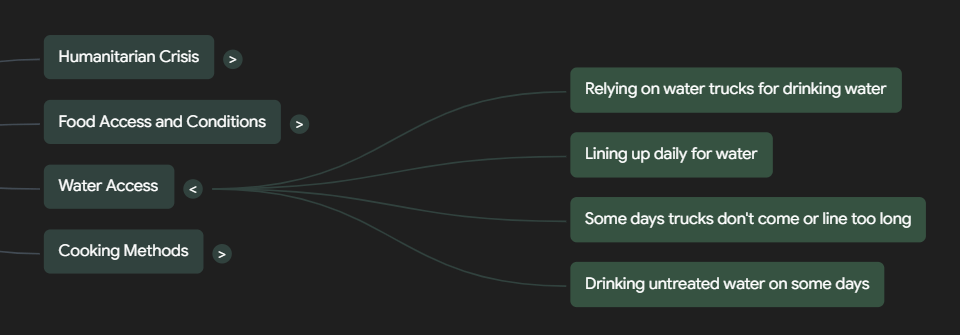
Water Access
Cooking Methods
Food Access and Conditions
Study Guide










 unflinching