Yesterday I wrote about the Center for Jewish Nonviolence (CJNV) and their support for Masafer Yatta.
As I’ve learned more about Masafer Yatta, I discovered that the CJNV was formed in response to the Israeli army uprooting hundreds of fruit trees and grapevines from Daoud Nassar’s family farm in 2014. Daoud is the founder of the Tent of Nations (TON).
Center for Jewish Nonviolence (CJNV)
On May 19, 2014, the Israeli army uprooted over a thousand fruit trees on Daoud Nassar’s family farm, the Tent of Nations, located just south of Bethlehem in the West Bank. The Tent of Nations is an internationally known educational and environmental meeting center where people from around the world come together. The Nassar family has lived on this land for the last century, despite efforts by the Israeli government to displace them. During this time they have welcomed thousands of visitors from around the world, including hundreds of Jewish visitors from Encounter and other programs over the course of the last decade. When the tree uprooting happened, Ilana Sumka, the previous Jerusalem director of Encounter and the founder of CJNV, was asked to facilitate an international phone call with Daoud Nassar and Encounter alumni. When Ilana asked Daoud how Jews around the world could support him, Daoud replied: “You could come replant the trees with us in a show of solidarity, to demonstrate that the Israeli Army’s bulldozers don’t represent your Jewish values.” Nine months later, in February 2015, twenty-five Jews from the US, Canada, and Europe spent a week replanting trees on the farm, giving birth to the Center for Jewish Nonviolence.
The destruction of over a thousand fruit trees—olive, almond, and others—was carried out by the Israeli military, citing that the trees were planted without proper permits.
CJNV’s mission
CJNV’s mission is to strengthen and uplift a robust and connected movement of Palestinians, Israelis and Jews from around the world committed to co-resistance and solidarity against Israeli occupation and apartheid. CJNV works towards its mission by taking part in on-the-ground and international campaigns that bring these communities together in nonviolent action.
Our activities aim to leverage Jewish privilege to support Palestinian efforts to stay on their land and maintain their way of life, as well as model and amplify the viability and impact of shared resistance.
We choose nonviolent action because we believe it is an important, effective and strategic way for us to leverage our particular position and privilege in this struggle. This includes the use of proactive or disruptive nonviolence and non-cooperation, existence is resistance efforts, and critical education.
Our main activities include:
Delegations of large groups of activists who come for 9-10 days and join in nonviolent action, critical learning, and projects that support sumud/steadfastness.
Hineinu, where activists stay in Palestinian communities in the West Bank and engage in daily embodied solidarity for three months, primarily through accompaniment and human rights documentation work.
The Olive Harvest, where volunteers join farmers and families, during this economically and culturally vital time of year in Palestinian society, to provide support for the harvest and protective presence against settler-state violence.
Activating, training and developing Jewish activists from around the world who are grounded in the realities of life under apartheid and the communities who struggle against the systems of injustice in Israel/Palestine.
What Are Some Of The Values They (CJNV) Reflect?
- CJNV strives for a future that honors the full equality and shared humanity of both Palestinians and Israelis. In the pursuit of such, CJNV’s work embraces specific guiding principles including:
- Invitation from Palestinians: On May 19, 2014, the Israeli army uprooted 1,500 trees at the Nassar family farm, Tent of Nations, near Bethlehem. On a call with Ilana Sumka, CJNV’s founder, Daoud Nassar asked for Jews to come help replant the trees. CJNV’s impulse to be in close relationship with their partners, grounded in solidarity, and to follow invitation from members of the local community helps shape their co-vision of shared resistance, which guides their work.
- Developing Resistive Relationships: CJNV believes that relationships rooted in deep solidarity and co-resistance between Palestinians, Israelis, and Jews from around the world can, and will, disrupt and destabilize the material and ideological systems that uphold Occupation and oppress communities on both sides of the Green Line. They have seen these resistive relationships transform what is possible in our actions and in everyone involved, shifting movement landscapes and upending injustice. They also acknowledge that communities of solidarity foster resiliency and audacity.
- Maintaining a Growth Mindset: CJNV knows that their work requires flexibility and being adaptable, to learn from and be responsive to changing circumstances and possibilities. They believe that imaginative experimentation allows them to visualize and actualize new realities so they can push themselves and their supporters to the edges of what seems possible: strategically, politically, personally, and spiritually.
- Embracing a Plurality of Perspectives: CJNV welcomes multiple perspectives, approaches, beliefs, and political ideologies, seeking to cultivate dialogue and negotiation about these differences. They believe that in coming together across these differences, we can all gain greater collective power and challenge each other to become fuller and more developed justice-seekers. They acknowledge this is not always easy, such solidarity requires people to be in deep, vulnerable relationships with each other.
- Consciousness of Privilege: As diaspora Jews, CJNV recognizes their unique privilege and ability to navigate across the intensified divisions created and sustained by the Occupation. They use this power to play a connecting role for Jewish, Palestinian, and Israeli groups and individuals who stand firmly against the occupation, particularly in terms of fostering and strengthening international on-the-ground connections and leveraging international support. They also support and amplify the efforts of those marginalized while working to dismantle and disrupt the systems that benefit some of us at the expense of others.
- Embracing Diversity of Strategies: Seeing the successes and efforts of our partners as a part of their work, CJNV believes that vibrancy and diversity of strategies and entry-points are needed to bring about a just and equitable end to the Occupation.
- https://www.nonviolenceinternational.net/cjnv_partner
Tent of Nations
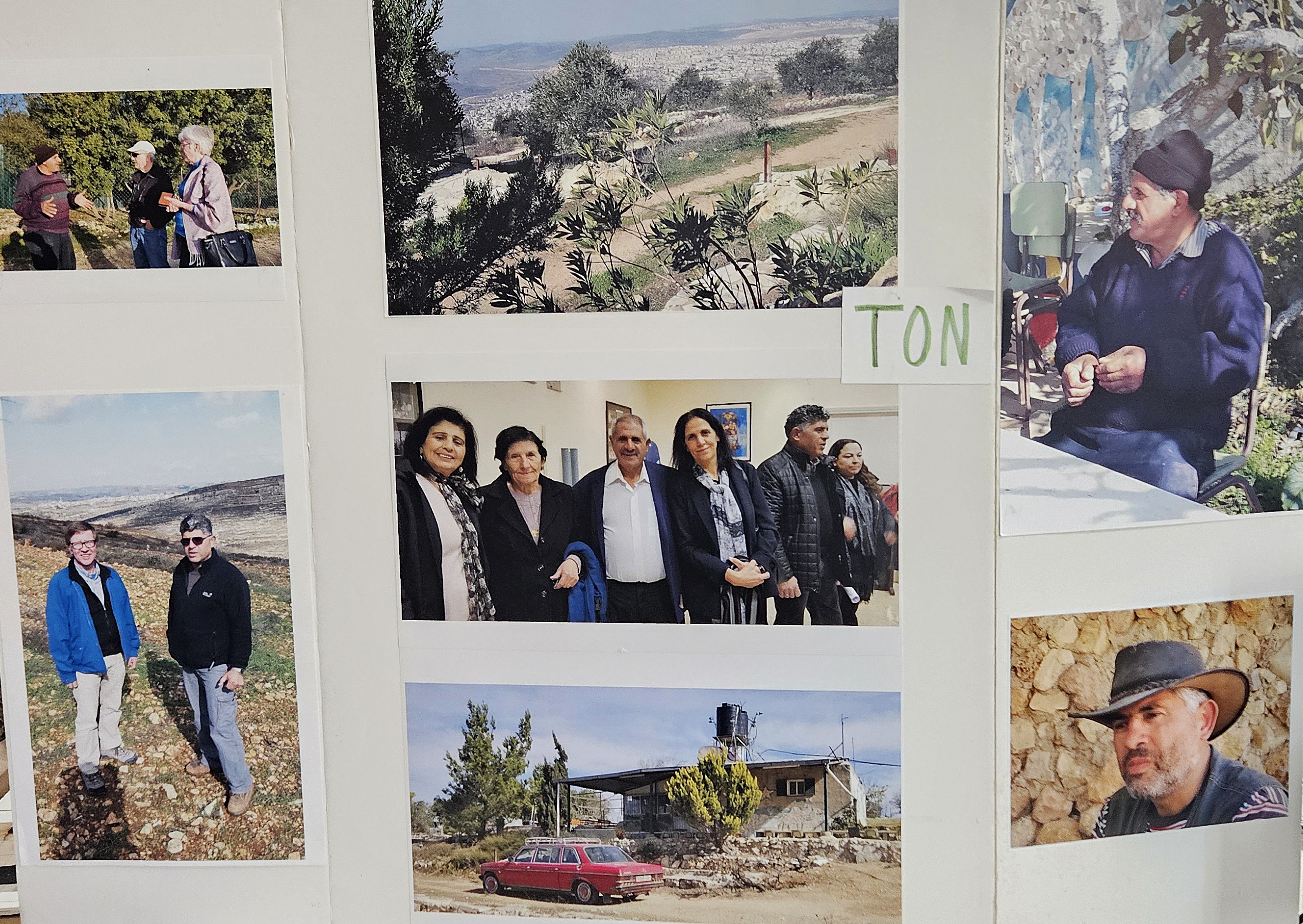
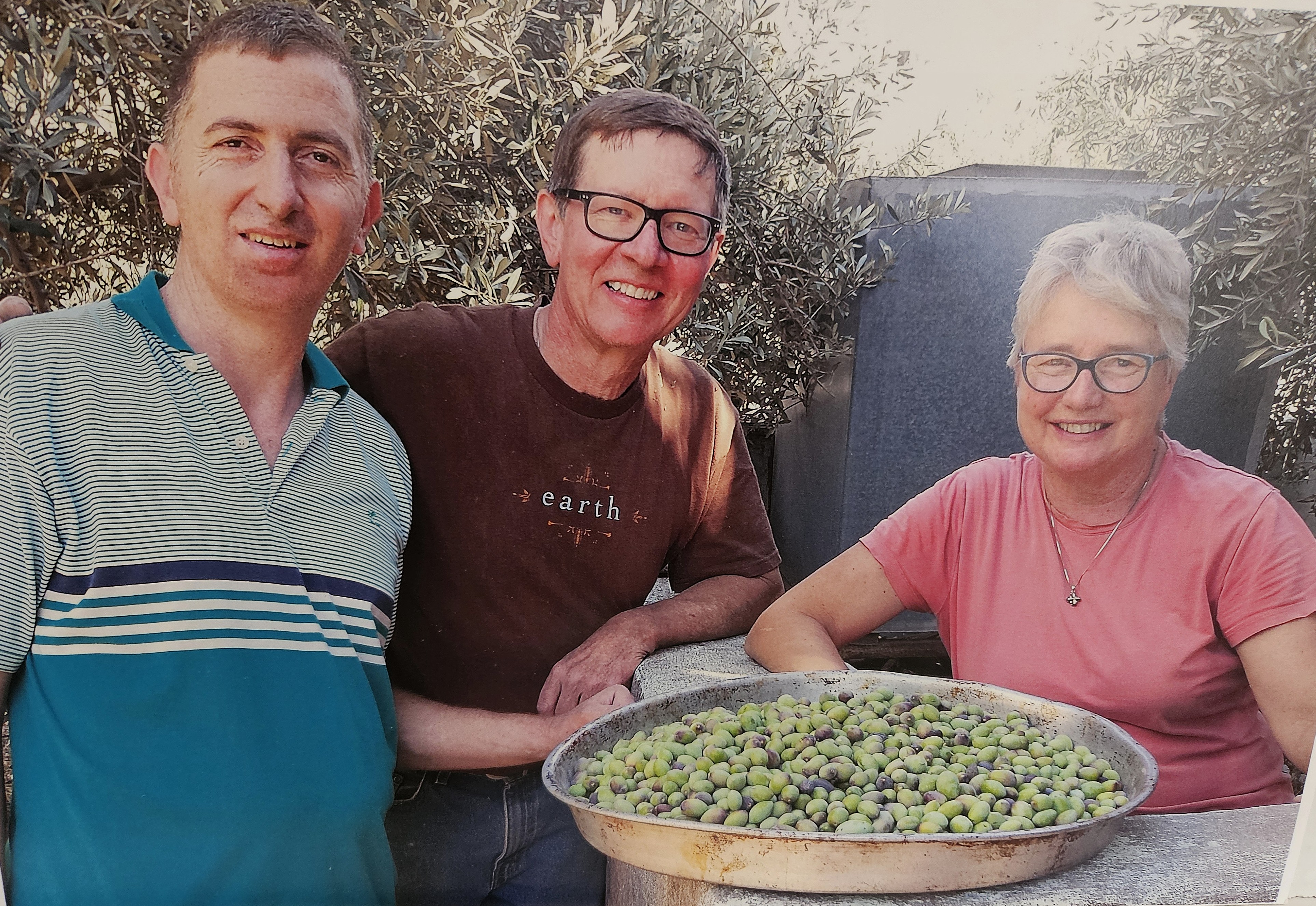
These are some of the photos illustrating the work of the Tent of Nations, including olives that were on display during Iowa Yearly Meeting (Conservative)’s Midyear Meeting recently.



 unflinching