I felt uncomfortable when I attended the Hands Off! vigil at the Wisconsin State Capitol yesterday and was having trouble figuring out why. I’m beginning to understand some of the reasons.
While it is always heartening to see people demonstrate, the gathering yesterday didn’t seem to have a focus beyond trying to stop the exploding authoritarianism of the Trump administration. I was reminded of the Occupy movement, which didn’t lead to any change I’m aware of. And didn’t last very long.
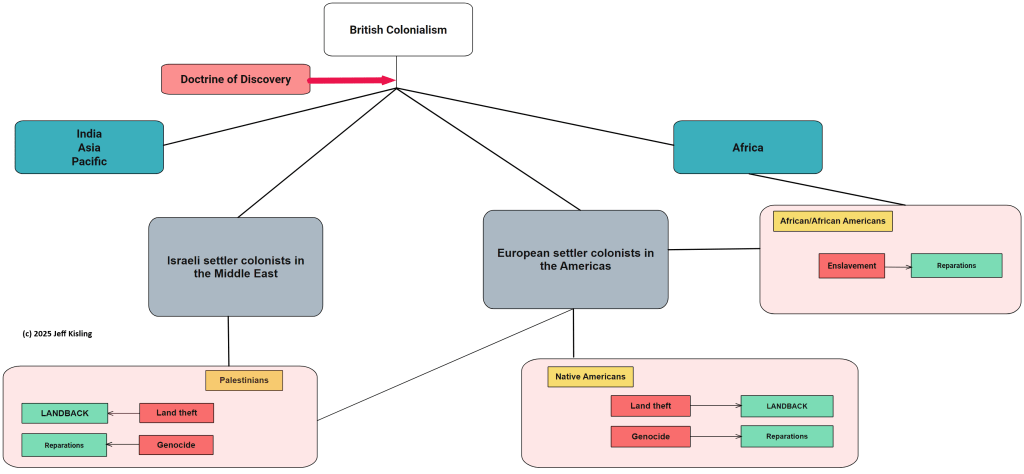
Or, perhaps it was the general emphasis on returning the political system that was in place prior to the new administration. A system that was based upon the enslavement of Black people and the genocide of Native Americans.
And I think it is crucial to understand this is a system that made the genocide of the Palestinian people possible. And that genocide continues and expands as Israeli forces are illegally increasing their encroachment into Gaza.
Following are two things that have just been written about where we are now. Kenn Orphan wrote Stay Woke on his substack site. And Charles Eisenstein wrote When Politics Becomes War.
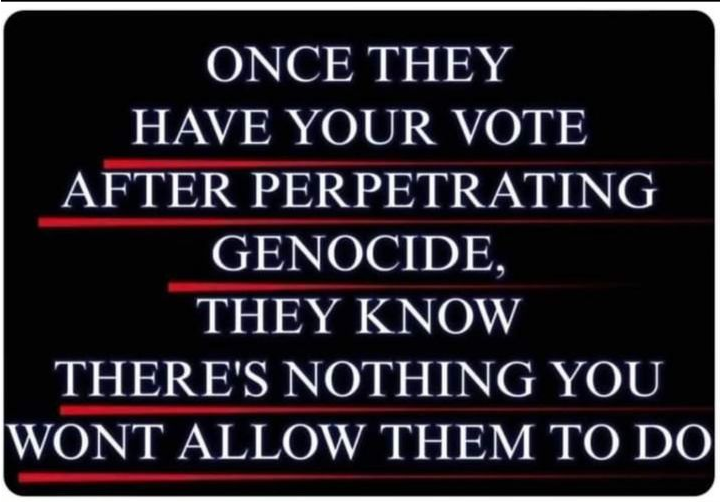
They both write about the collapse of our democracy. As Kenn Orphan writes, “You cannot save a democracy that no longer exists.” He says the American Empire is dying. “As the late Howard Zinn once said, “there is no flag big enough to cover the crime of killing innocent people.” After more than a year and a half of supporting, funding and arming a genocide, the worst crime of this century, the US has demolished its reputation forever.”
Article published today: Israel controls 50% of Gaza after razing land to expand its buffer zone by SAM MEDNICK, The Associated Press, April 7, 2025.
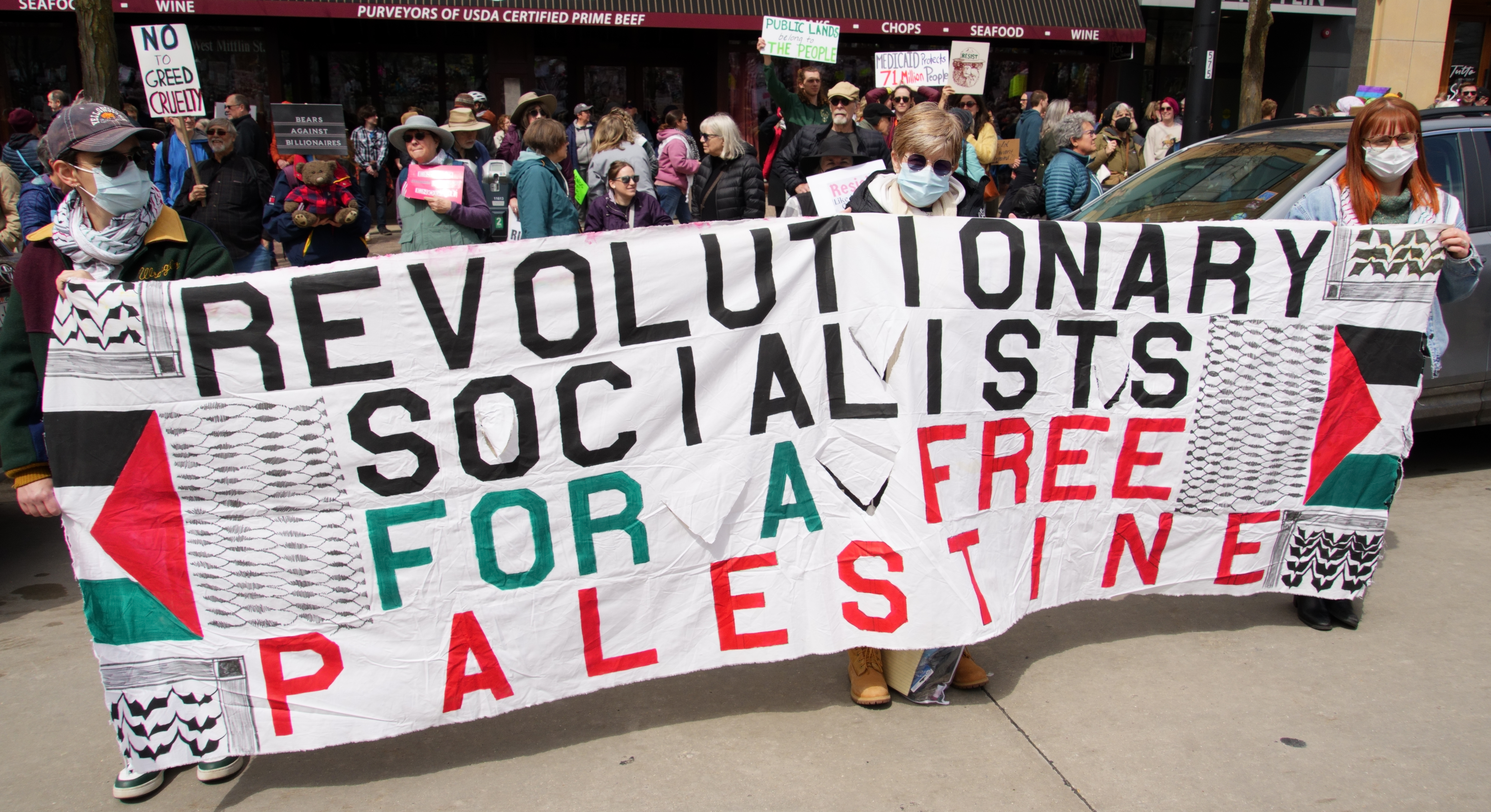
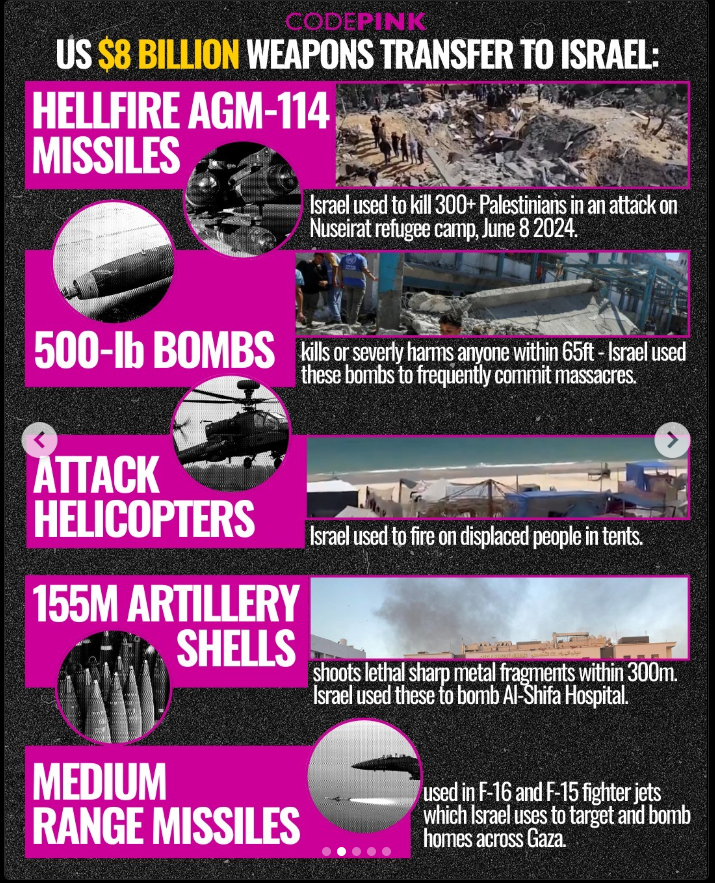
These are reasons I was led to work to try support the Palestinian people. The slaughter in Gaza is not only continuing, but Israeli forces are claiming even more land and demolishing more homes there, right now. And the US government is deeply complicit. These are some reasons behind my Quaker tent solidarity project. (see below)
War mentality isn’t a thirst for violence nor a lust for fighting. War mentality is a pattern of thinking and a habit of seeing. It organizes the world into us and them, friend and foe, hero and villain. It poses solutions in terms of victory and success in terms of winning
Chales Eisenstein
Many Americans are planning to go to protests tomorrow. And I applaud their desire to do something, anything, in a time of growing barbarism. But I would also caution those who think they are “saving democracy” by attending these events.
The American Empire is dying. Like all empires, its descent is not linear. It is erratic and may take a few decades for its final dissolution. But its prognosis is terminal. And the Trump regime is speeding this process up with idiotic tariffs and blind imperialistic fever dreams. It may be difficult, if not impossible, for many Americans to realize this. After all, the US has one of the most propagandized populations on the planet. But the signs are glaring.
For years, most white Americans have been drunk on a false shibboleth of supremacy. Believing that they live in the “greatest nation on earth” despite not having healthcare or basic labour protections. Most who espouse this notion haven’t traveled beyond the borders of their state, let alone country. Few possess a passport. But this delusion has permeated every cell, every fibre of the culture. Facts to the contrary (and there is a mountain of them) be damned.
…
As the late Howard Zinn once said, “there is no flag big enough to cover the crime of killing innocent people.” After more than a year and a half of supporting, funding and arming a genocide, the worst crime of this century, the US has demolished its reputation forever. The world understands this, even if most Americans do not. This one thing stands firmly in the way of any meaningful change. Unless it is reckoned with, platitudes and promises will continue to ring hollow.
You cannot save a democracy that no longer exists.
If you go to the protests, consider these things. And instead of believing that Democratic politicians will save the republic, connect with real people. Build relationships that foster mutual aid and protection at the local level and outside of the institutions that are under attack. Above all, be careful. This regime has demonstrated it has no intention of listening to or working with anyone not in its cult of death. Knowing this might just save your life or the life of someone in a community that is now being ruthlessly targeted.
Ken Orphan, Stay Woke
Charles Eisenstein recently published an essay titled When Politics Becomes War.
A dear friend reached out to me today, an esteemed elder in the Way of Council, to ask how I was doing. I told her I have the sensation of watching a slow-motion car crash, yet feeling an odd sense of serenity as the catastrophe unfolds. Because, the time of pleading with the drivers to turn the wheel and hit the brakes is over. We did that for a long time, but they accelerated instead, and now the long-foreseen collision is inevitable. In fact it is already happening.
Someday everyone, drivers and passengers and onlookers, will step out from the wreckage and dust, sober, eyes blinking, to tend the injured and grieve the dead and ask what they shall create together in their new-found freedom.
Who knows when that day will come. In one timeline, it is about three years. That timeline depends on our collective willingness to accept and integrate information that profoundly violates the old consensus reality. This information will feed a new human drama, if we so choose.
When Politics Becomes War by Charles Eisenstein, Charles Eisenstein substack, April 6, 2025
I used to believe that collapse would save us; that we would stop destroying nature, each other, and our own bodies because we would have to stop. I no longer believe that, any more than hitting bottom can rescue an addict. “Bottom” is the moment when the addict makes a different choice. The collapse of first one, then another, then another dimension of his life—his work, his marriage, his family, his health, his freedom—offers him a series of invitations. These are moments when a choice is available, when the momentum pauses and he is asked whether he is ready to take a different path. What is bottom for one addict is, for another, just a way-station on the road to hell.
Our society is approaching just such a moment, just such a choice point.
Of our many collective and individual addictions, the one I will speak of now is the addiction to the habits of war.
War mentality isn’t a thirst for violence nor a lust for fighting. War mentality is a pattern of thinking and a habit of seeing. It organizes the world into us and them, friend and foe, hero and villain. It poses solutions in terms of victory and success in terms of winning. It traffics in punishment and blame, deterrence and justification, right and wrong. It is addictive, because when it fails to solve a problem, the solution is to up the dose. It escalates to new enemies and new battles. If there is no obvious foe to blame for the worsening situation, it looks harder to find one, or creates one instead.
The solution that war mentality offers for every problem is to find the bad thing and eradicate it. That solution applies to diverse areas of human activity: agriculture (kill the pests); medicine (find a pathogen); speech (censor bad ideas); political conflict (kill the terrorists); public safety (lock up the criminals). Complex problems, such as mass fentanyl addiction in America or industrial decline, collapse into simple but futile solutions as soon as someone can be found on which to pin the blame. The Chinese! The Mexican cartels! There is a kind of relief in this formula, even though it rarely succeeds.
When Politics Becomes War by Charles Eisenstein, Charles Eisenstein substack, April 6, 2025
Both Eisenstein and Orphan paint a grim picture of the current sociopolitical landscape in the United States. Eisenstein focuses on the self-destructive nature of a pervasive “war mentality” that is tearing society apart, while Orphan diagnoses the terminal decline of the American Empire. Both authors express a lack of faith in traditional political solutions and emphasize the need for a fundamental shift in understanding, connection, and action at a more local and personal level. Their analyses, while coming from slightly different perspectives, converge on a sense of impending crisis and the need for profound societal transformation beyond the current paradigm of conflict and division.









 unflinching