Unsurprisingly, there have been other efforts to use tents to symbolize displacement and all that goes along with that. A search for information about tents as an expression of Palestinian solidarity returned:
- The “Tent Campaign” for Solidarity with Gaza and Truth-sharing
- “If Americans Knew” Tent Cards
- Quaker Tent Solidarity with Palestine
Since I began publishing stories about tents, Quaker Tent Solidarity is now being returned by web searches.
Even as I write this, Israeli Defense Forces are expanding military operations in Gaza.
The tent of return
This proposal suggests to set up a tent in one of the public squares in your city in solidarity with the Great Return March in Gaza. And in addition to what the tent means of the symbol of the displacement and right to return, the square in which the tent is to be set up, has to be one of the symbolic places in your capital or city, and we suggest it lasts for a few days so that it helps spread more awareness and attracts more solidarity. There will also be a live broadcast of the activities from Gaza in the tents around the world and the reflection of the tents activities among each other and to Gaza.
The tent’s activities:
- Setting up various exhibitions about: the right of return, the ongoing Great March of Return along with pictures about the daily clashes, exhibition about Al-Quds and the effects of the bargain of the century (the campaign will prepare the exhibitions) as well as cultural and media activities in order to promote this movements.
- Organizing intellectual seminars to highlight the right of return cause after 70 years of the Nakba and displacement, and the bargain of the century and its strategic danger on the cause.
- Hosting symbolic political, academic and sports figures and recording interviews with them.
- Communicating with the legal and health institutions in your country and around the world, and providing them with the details of the activities of the Great Return March and the weekly updates of the activities as well as the numbers of martyrs and wounded (the campaign will provide you with these statistics periodically)
The details of the tent:
We suggest that:
- The tent fits for a hundred participants or more (if it is possible)
- The tent be equipped with display screen(s)
- The tent be equipped with a camera and an internet modem in order to broadcast the activities live (through advanced machinery set up by the campaign to promote the activities)
- There should be one or two reporters present in the tent in order to carry out interviews with the guests and to share them with the members of the campaign around the world.
Objectives of the tent:
- Expressing solidarity with the steadfast Palestinians at the border in Gaza in the tents of the Great march of Return, and to express our support for them in the face of Israeli snipers
- Hosting people who support the Palestinian cause to give them a place where they can express their solidarity
- Hosting reporters and journalists for media coverage
- Hosting politicians and political figures, interviewing them, organizing seminars with them, and conveying their views to the media
- Enhancing the attendance of activists from the Great March of Return through live broadcast via face-book and internet around the world
Join the “Tent Campaign” for Solidarity with Gaza and Truth-sharing by Kathryn Shihada, If Americans Knew Blog, Apr 28, 2018
There are several Gaza solidarity campaigns and initiatives that utilize the symbolism of tents to raise awareness and express support for Palestinians:
- The “Tent Campaign” for Solidarity with Gaza and Truth-sharing: Proposed in 2018 by the Global Campaign to Return to Palestine (GCRP), this campaign encourages Palestine advocates to erect tents in conspicuous public places to share information with passers-by. These tents serve as a conversation starter, symbolizing the plight of refugees and those whose homes have been demolished by Israel. The campaign aimed to educate Americans about the Great March of Return and the broader Palestinian situation. Activities within these tents could include exhibitions about the right of return and the situation in Gaza, intellectual seminars, hosting figures for interviews, and communicating with legal and health institutions. The objectives included expressing solidarity with Palestinians in Gaza, providing a space for supporters, hosting media, and enhancing the visibility of the Palestinian cause.
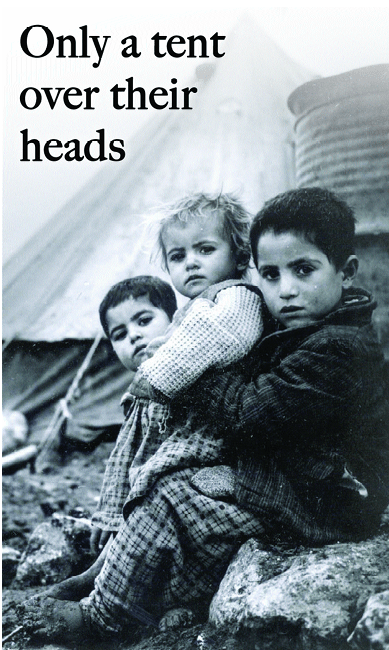
- “If Americans Knew” Tent Cards: In response to pro-Israel groups setting up tents, “If Americans Knew” created “tent cards” and other materials to provide facts and context about the Palestinian situation. These materials highlight the history of Palestinian displacement since 1948, the ongoing impact of Israeli military actions in Gaza (such as the 2008-09 and 2014 attacks which left many homeless), and the demolition of Palestinian homes. The tent is presented as a recurring symbol of Palestinian displacement. These materials are designed to be used even where pro-Israel “tent events” are not taking place to educate a wider audience.
- Quaker Tent Solidarity with Palestine: This initiative involves setting up a tent at a Quaker meetinghouse as a visible and symbolic act of support for the Palestinian people, particularly those displaced and suffering. Rooted in Quaker values of peace, justice, and equality, the tent symbolizes solidarity, nonviolent resistance, and the advocacy for human rights and justice for Palestinians. The tent aims to raise awareness within the local community, spark conversations, and become a focal point for distributing information and hosting educational events. Key messages include solidarity, nonviolent resistance, the importance of human rights, raising awareness, community collaboration, hope, interfaith solidarity, highlighting specific issues like displacement, and advocating for policy change. A vision of a tent was seen as directly related to Palestinian children and families forced to live in tents due to the destruction of their homes by Israeli bombardment and bulldozers, with the US complicity due to military aid.
Tents have become a significant symbol for Palestinians, representing displacement, loss, and the longing to return to their ancestral homes. The use of tents in solidarity campaigns draws upon this powerful symbolism to connect with the public and highlight the ongoing suffering and resilience of the Palestinian people. These campaigns aim to counter what they perceive as global inaction and a lack of accountability for the suffering of Palestinians.
“If Americans Knew” Tent Cards

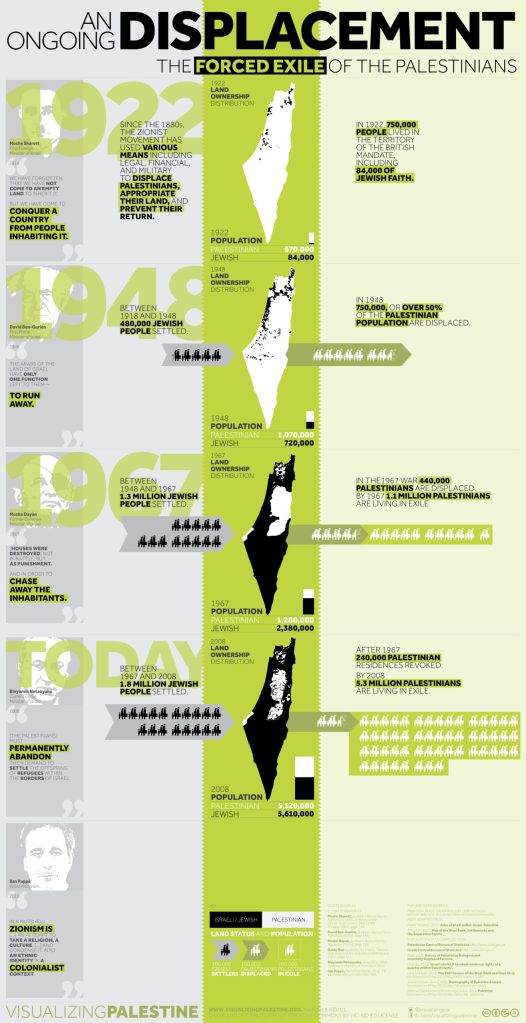
An Ongoing Displacement – The Forced Exile of the Palestinians
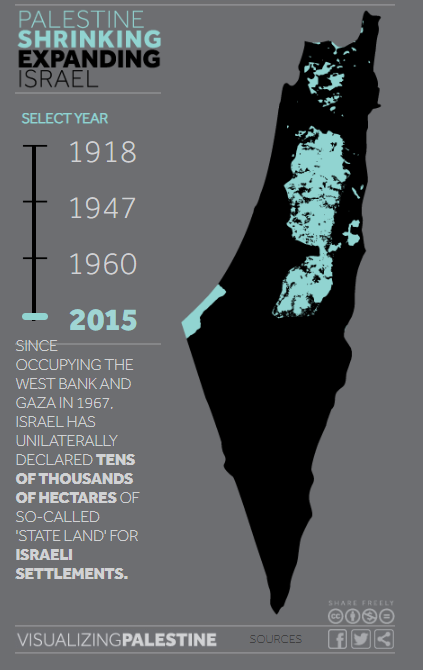
[May 2013] 15 May, 2013, marked the 65th anniversary of the Nakba – when 750,000 Palestinians were displaced from the territory that became Israel. In 1948, more than 50% of the entire Palestinian population was ethnically cleansed. In commemoration of the Nakba, and the displacement that continues today, VP released ‘An Ongoing Displacement’. The graphic references the iconic ‘Disappearing Palestine’ image, adding a layer of detail that quantitatively catalogues the multiple dimensions of Palestinian displacement and loss of land.









 unflinching