
As soon as the first phase of the Israel-Hamas ceasefire officially ended, Israel moved to block all aid into Gaza as a strategy to pressure Hamas into agreeing to extend the ceasefire’s first phase. Despite this action, which could be considered a war crime, humanitarian organizations on the ground, such as United Nations Relief and Works Agency for Palestine Refugees in the Near East (UNRWA), continue their critical work as best as they can under impossible conditions.
On March 6, Senator Peter Welch (VT) announced the reintroduction of the UNRWA Funding Emergency Restoration Act of 2025 (S. 898). This bill was first introduced in September 2024. It highlights the urgent need for U.S. funding to support UNRWA’s aid in Gaza and surrounding regions, signaling a shift towards providing aid, not arms, to the region.
In a letter sent by UNRWA USA with over 120 organizations to members of Congress in support of this legislation, organizations pointed out that “UNRWA’s staff, facilities, and infrastructure remain the backbone of the humanitarian response in the devastated Gaza Strip and serve as a significant stabilizing presence in the occupied West Bank, including East Jerusalem.”
Humanitarian Aid Shouldn’t Be Politicized – Congress Can Show Its Support by Backing UNRWA By Odeliya Matter, Friends Committee on National Legislation (FCNL), March 5, 2025
March 3, 2025
Dear Members of Congress:
We, the undersigned 124 civil society organizations, write to respectfully request your support for the restoration of United States funding to the United Nations Relief and Works Agency for Palestine Refugees in the Near East (UNRWA) through cosponsorship of the forthcoming “UNRWA Funding Emergency Restoration Act of 2025.”
UNRWA’s staff, facilities, and infrastructure remain the backbone of the humanitarian response in the devastated Gaza Strip and serve as a significant stabilizing presence in the occupied West Bank, including East Jerusalem. Since October 2023, UNRWA has delivered two-thirds of all food assistance to Gaza, provided shelter to over a million displaced persons, and vaccinated a quarter of a million children against polio. UNRWA continues this wide-scale life-saving assistance, despite the implementation of Knesset restrictions in January on UNRWA’s operations in the occupied Palestinian territory.
In the first phase of the ceasefire alone, UNRWA brought in 60% of the food entering Gaza, reaching more than 2 million people, or over 90% of the population. In addition, the Agency opened 37 new shelters to support people returning to the north, providing tents, blankets, plastic sheeting, and warm clothes to survive the winter months. UNRWA is providing 17,000 medical consultations a day, repairing water wells, and providing waste disposal services for nearly half a million people in and around UNRWA shelters. Over 260,000 children, who were out of school for a year and a half due to constant bombardment, are now enrolled in UNRWA’s online learning platform.
In the West Bank and East Jerusalem, UNRWA offers stability by providing education to over 49,000 refugee children and youth who attend UNRWA schools and vocational training centers.
It also provides primary healthcare services to nearly half a million Palestine refugees at more than 40 UNRWA healthcare centers. In the last 12 months alone, UNRWA supported over 10,000 refugee families with cash assistance in response to house demolitions and damage, and settler violence. These UNRWA services are especially critical given the prolonged security situation in the northern part of the West Bank, which has already displaced 40,000 Palestine refugees from their homes.
Importantly, UNRWA and the broader UN acted swiftly and decisively to address any allegations concerning employee neutrality, as evidenced by the resumption of support by other UN member states – leaving the United States one of the only holdouts. We believe it is now time for Congress to actively reengage with the Administration with the goal of resuming US funding to UNRWA, ensuring the Agency can continue its mandate.
We are all grateful for the implementation of phase one of the ceasefire agreement, particularly the release of hostages and the increased flow of humanitarian aid to Gaza. However, the current truce is fragile and the transition from a ceasefire to the “day after” will be long and arduous. UNRWA’s continued presence is essential to this process.
UNRWA was never intended to be a permanent entity. However, 76 years later, the Agency is still in place—not by choice, but rather as the result of a collective failure by UN Member States to resolve the underlying political issues. The alternative to imploding UNRWA is to support the UN Agency to progressively conclude its mandate within the framework of a political process.
We appreciate your consideration of this request and hope you will use your voice and vote to support the humanitarian needs and rights of Palestine refugees.
Respectfully,
UNRWA USA National Committee
US & International Organizations
Friends Committee on National Legislation (FCNL)
99 Coalition
Action Corps
Alliance of Baptists
American Baptist Churches USA
American Friends Service Committee (AFSC)
…
and 118 other civil society organizations
Contact your members of Congress
You can use the following tool to send a message about the need for humanitarian relief in Gaza, and supporting the work of the UN Relief and Works Agency (UNRWA) to you Congressional representatives.
https://fcnl.quorum.us/campaign/106197/

Reliable Sources of Information
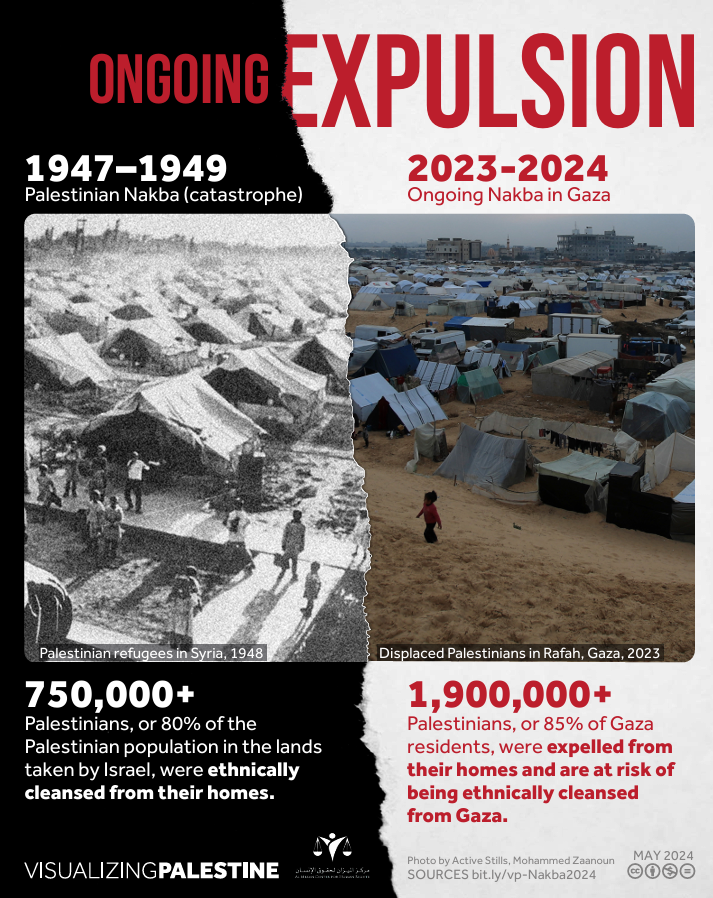
Especially in these days of deliberate misinformation, where can you find reliable sources of information about these issues? VisualizingPalestine is one source I trust and use.
VisualizingPalestine primarily creates InfoGraphics, graphics that visually display data, which are usually more effective ways to communicate than tables of numbers. There is a link to the data each InfoGraphic is based upon, so you can see the yourself. Also, VisualizingPalestine has used Creative Commons licensing, which means you have permission to share the graphics.
Visualizing Palestine
We use data and research to visually communicate Palestinian experiences to provoke narrative change. We envision a liberated future for Palestinians in a world free from oppression.
Why Narrative Change?
Palestine is the subject of more than a century of colonial narratives upheld by imperial empires, which sustain the brutal system of Israeli settler colonialism and apartheid we see today. Although the basic facts and root causes of the Palestinian struggle are well-documented, they are frequently denied or obscured by those shielding Israel from accountability. Narrative work is about building spaces to uplift aspirations for liberation, and reach people who want to deepen their understanding and action in partnership with the Palestinian people.
Visualizing Palestine creates narrative interventions that convey the urgent and the actionable. We strive to capture not just stories of struggle, but of solidarity, sumud (steadfastness), and inspiration. Our visual tools ensure that factual, liberatory narratives about Palestine are visible, accessible, and interconnected with those of other movements working for collective liberation.
UN Workers
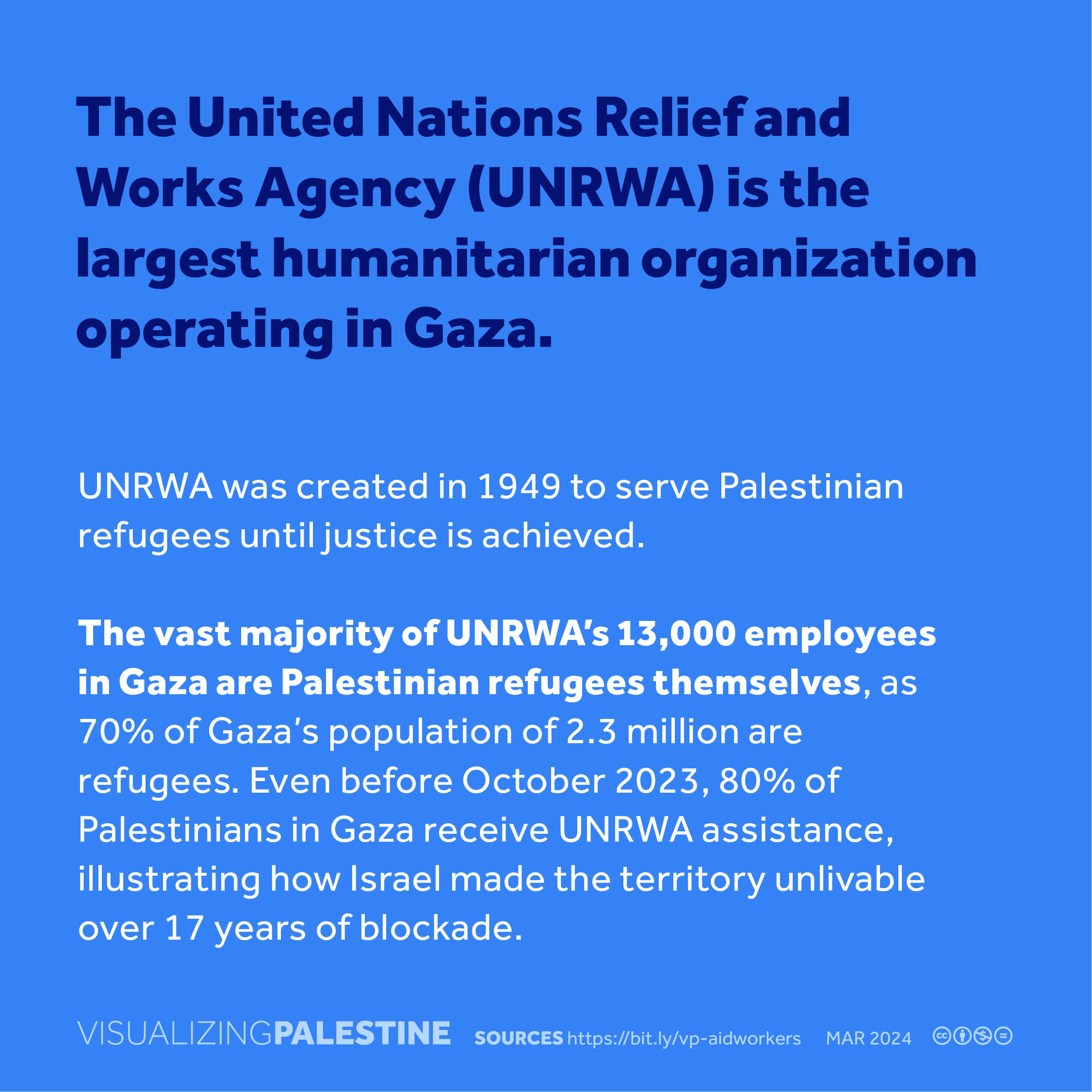
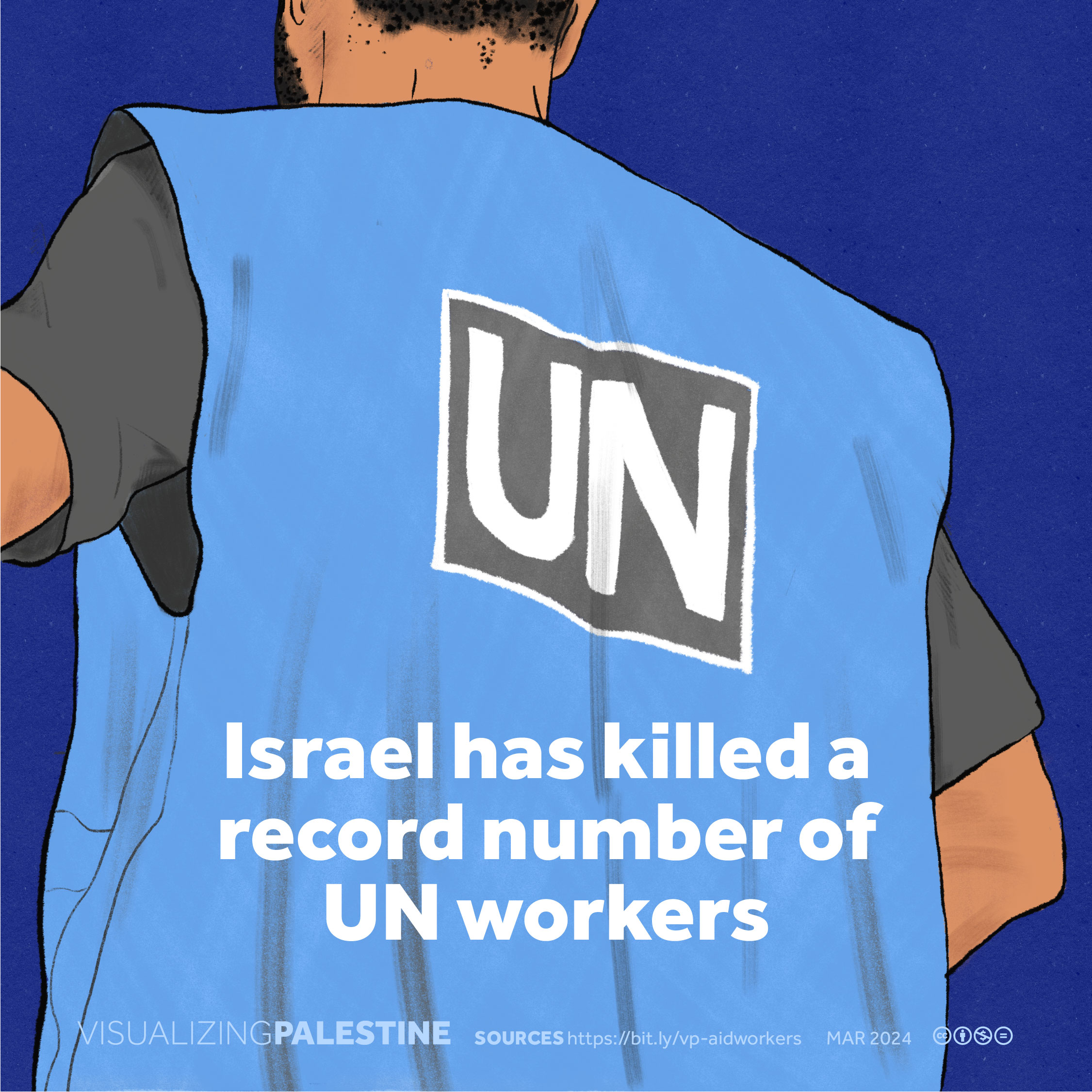
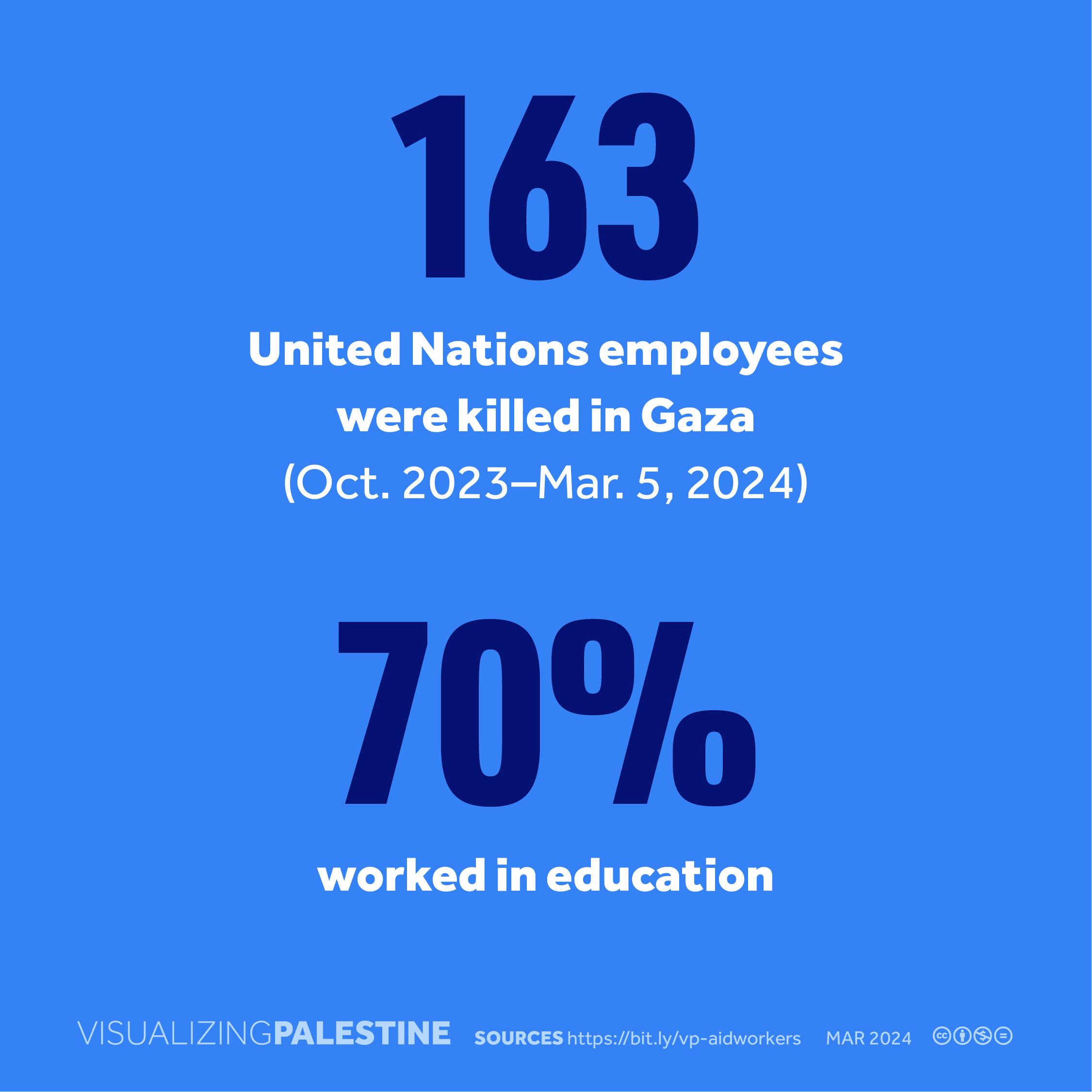
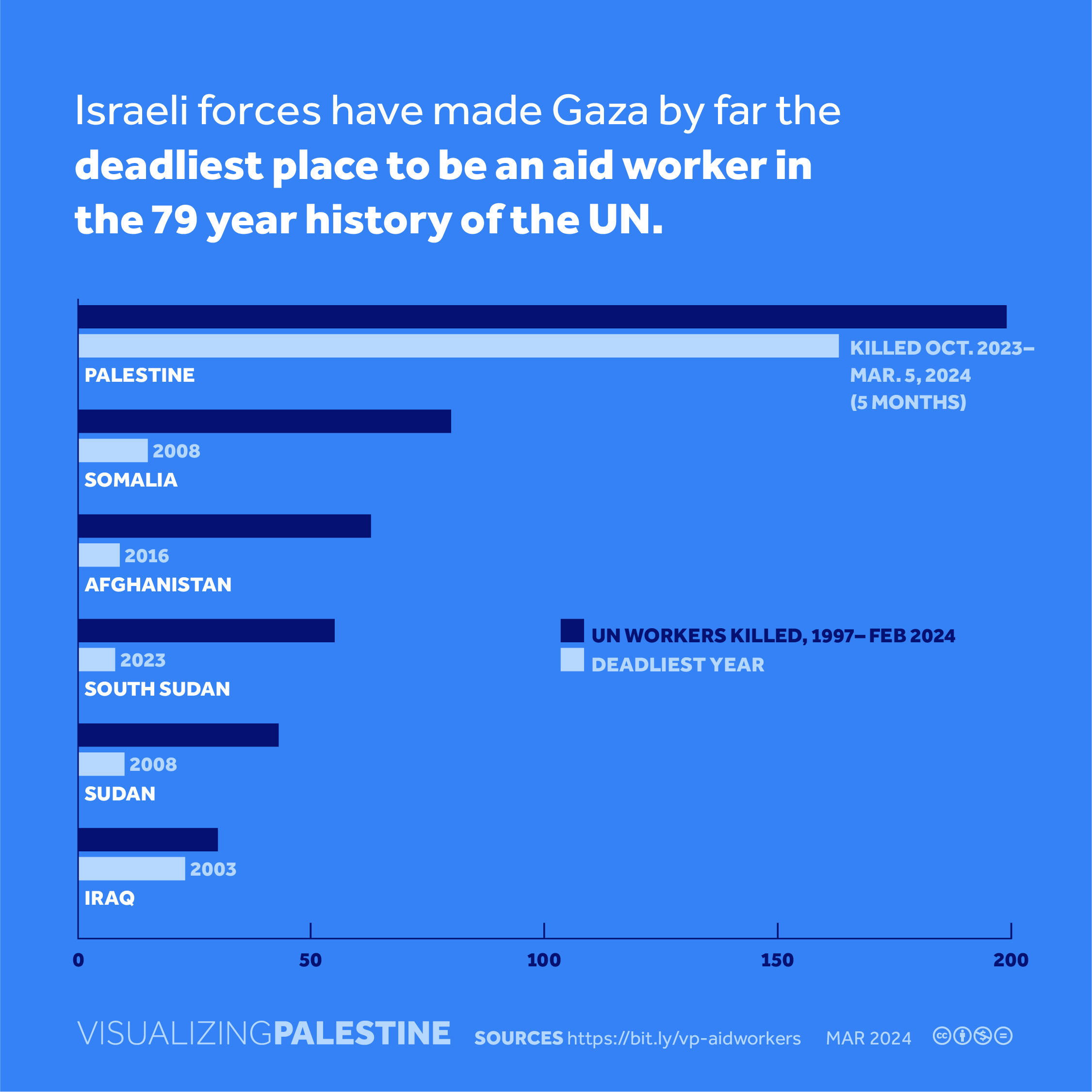
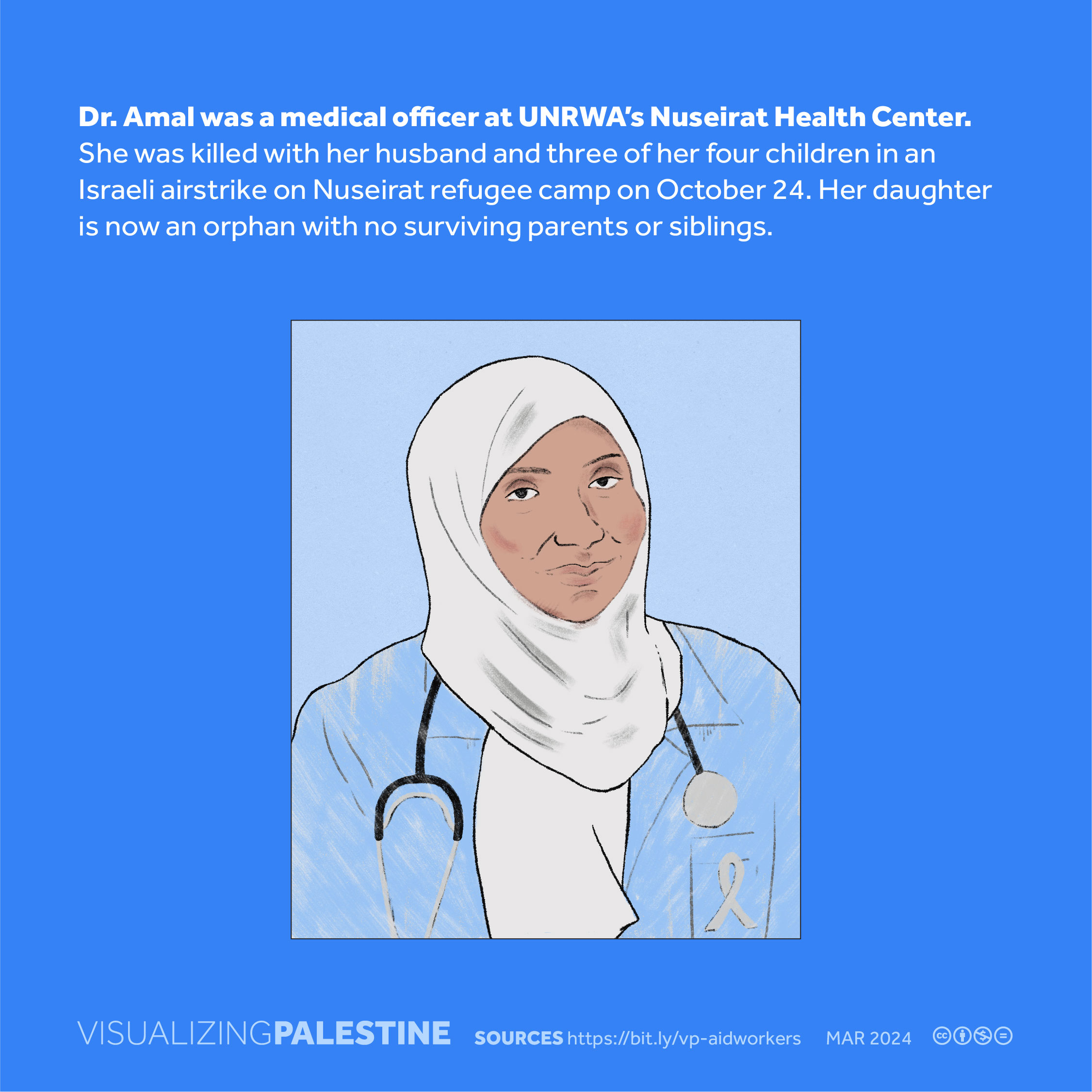
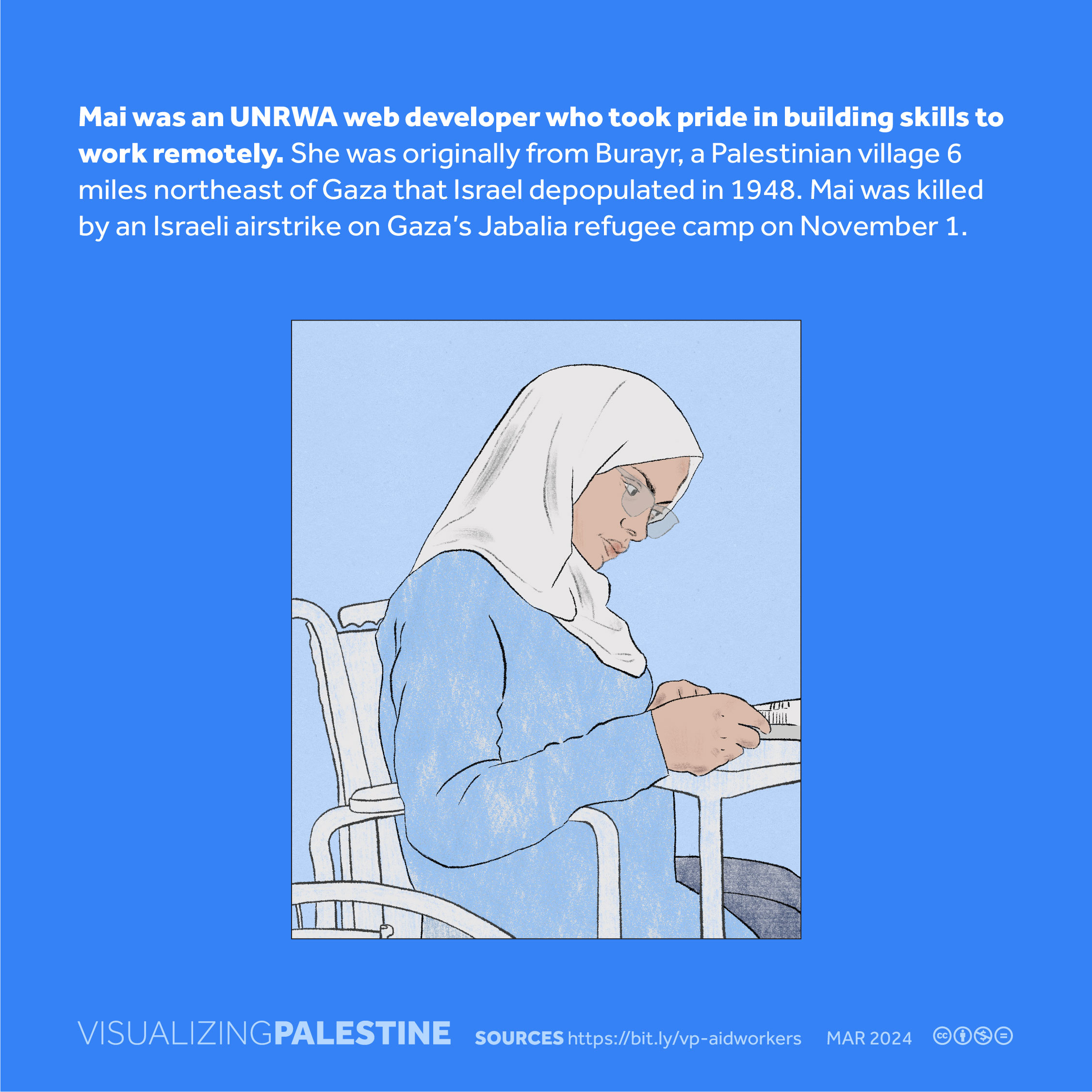
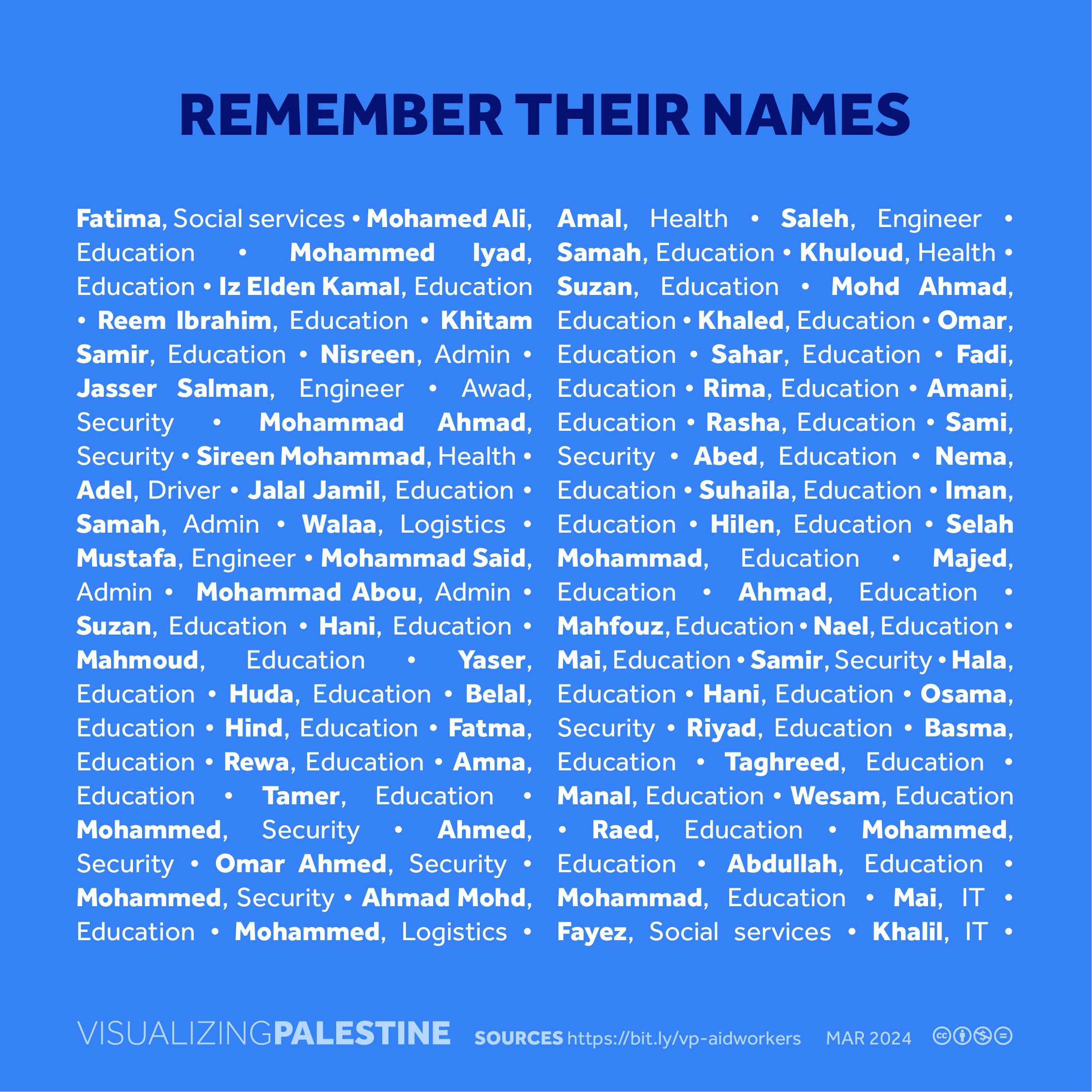
Israeli forces have killed a record number of United Nations (UN) employees in the ongoing genocide of Palestinians in Gaza which started in October 2023, making Gaza the deadliest place to be a UN worker in the 79-year history of the UN. Most of these workers were employees of The United Nations Relief and Works Agency for Palestine Refugees (UNRWA), the largest humanitarian organization in Gaza.
Source of data: https://bit.ly/vp-aidworkers
https://visualizingpalestine.org/visual/un-workers/



130 Days of Bombing on Gaza

On day 130 of Israel’s genocide (since October 2023):
- Over 1.4 million displaced Palestinians in Rafah faced massacres and bombardment
- Israeli snipers were firing on Nasser Hospital in Khan Younis, the largest hospital in south Gaza
- A group of Israelis blocked trucks of food to Gaza as millions were starving
- 15 governments willfully accelerated the genocide by suspending funding to UNRWA
https://visualizingpalestine.org/visual/130-days-0-accountability/
177 School Buses
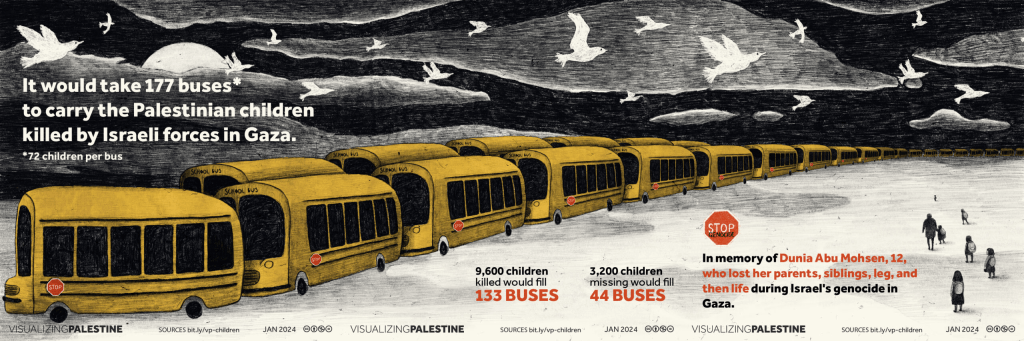
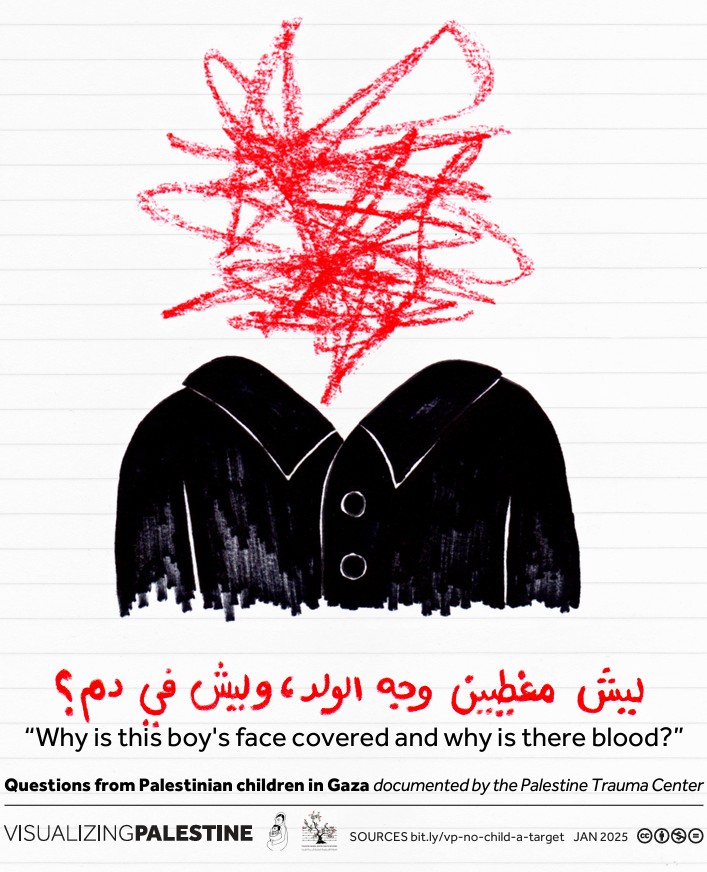
As of today [Jan 12, 2024], more than 9,600 Palestinian children in Gaza have been killed by the Israeli genocidal assault on the besieged population. Thousands more are missing and presumed dead. Gaza has been described as a “graveyard for children” by UN Secretary-General António Guterres.
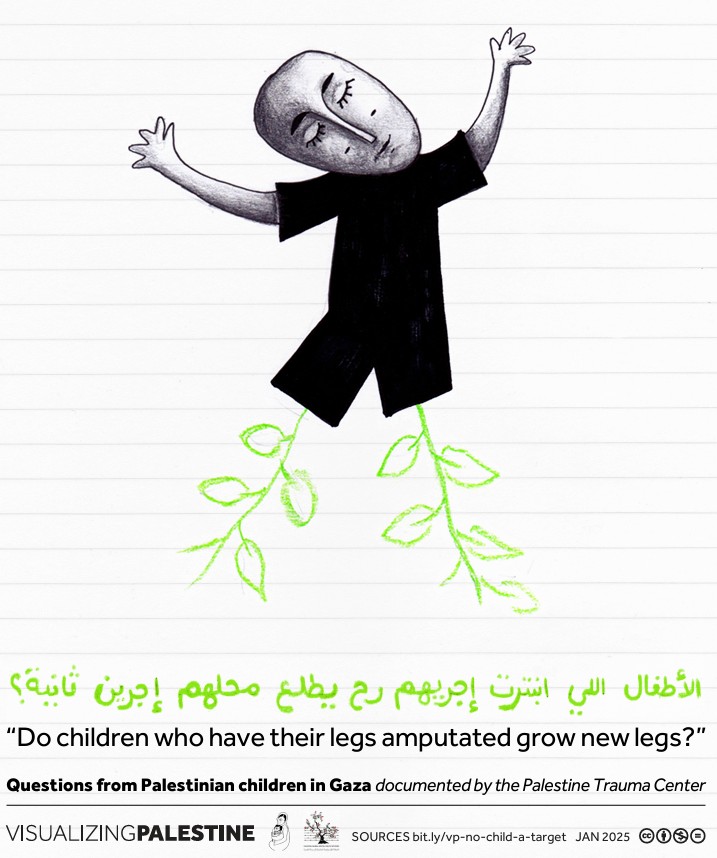
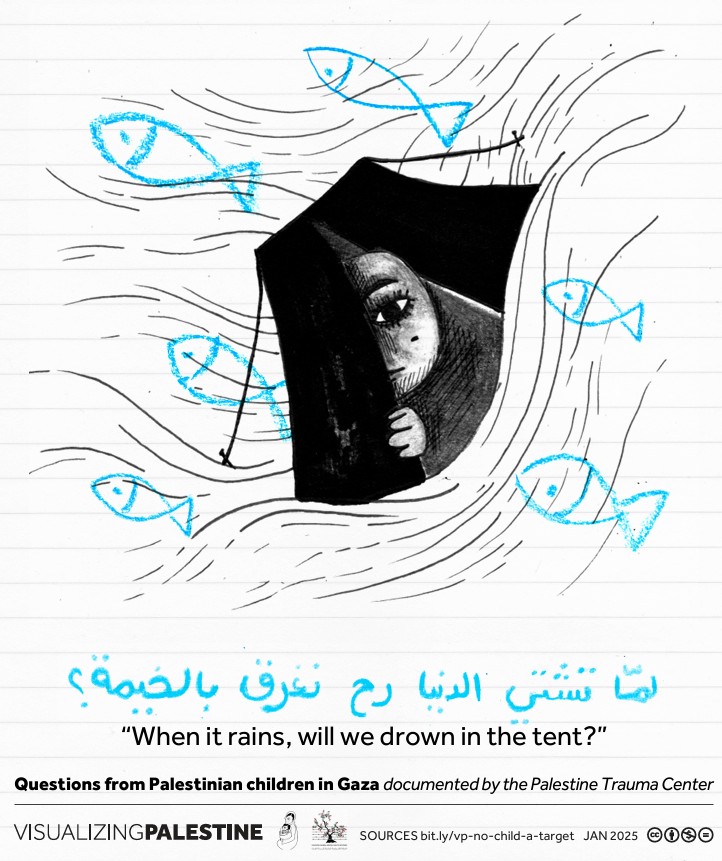
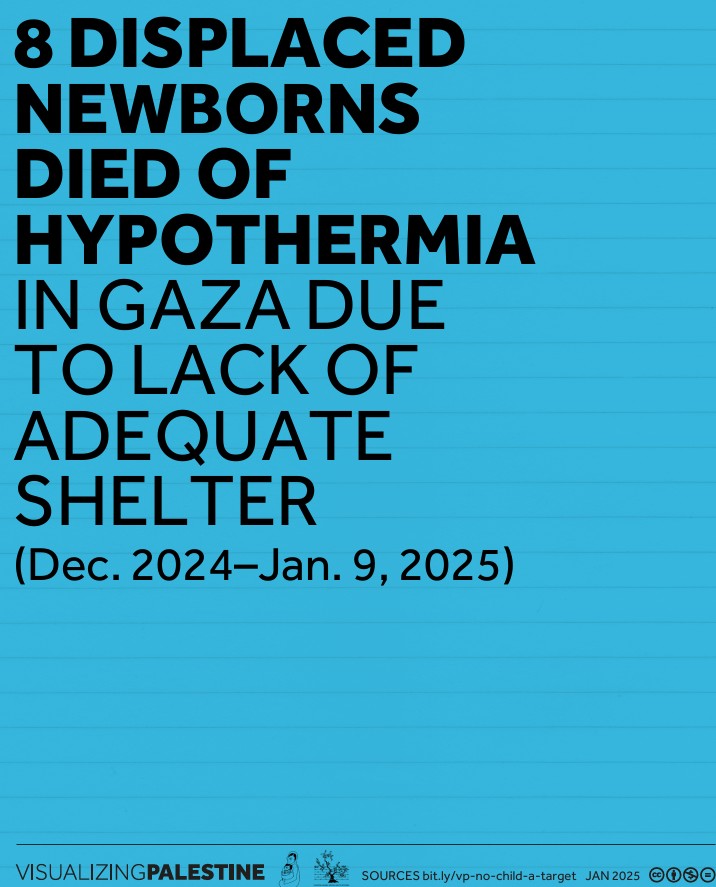
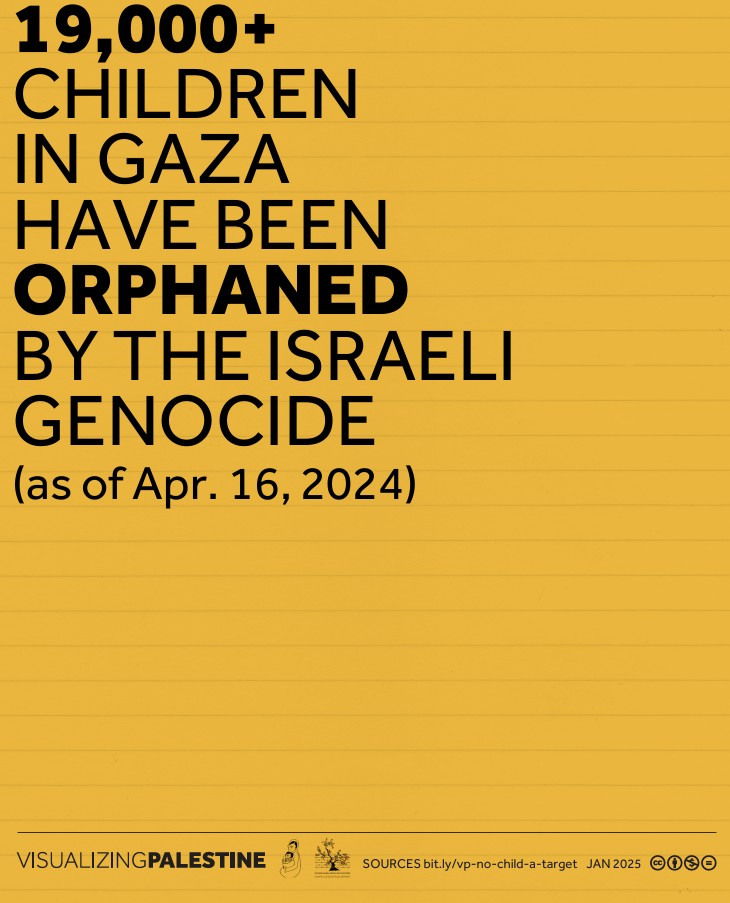
Mass killings are the tip of the iceberg of Israeli violations against Gaza’s children. The vast majority are currently displaced. Most face severe hunger, with malnutrition posing lifelong developmental risks for young children. There are 71,000 cases of diarrhea in children under 5 in Gaza, which can cause dehydration and death. UNICEF reported that around 1,000 children in Gaza have lost one or both legs. Thousands have lost one or both parents.
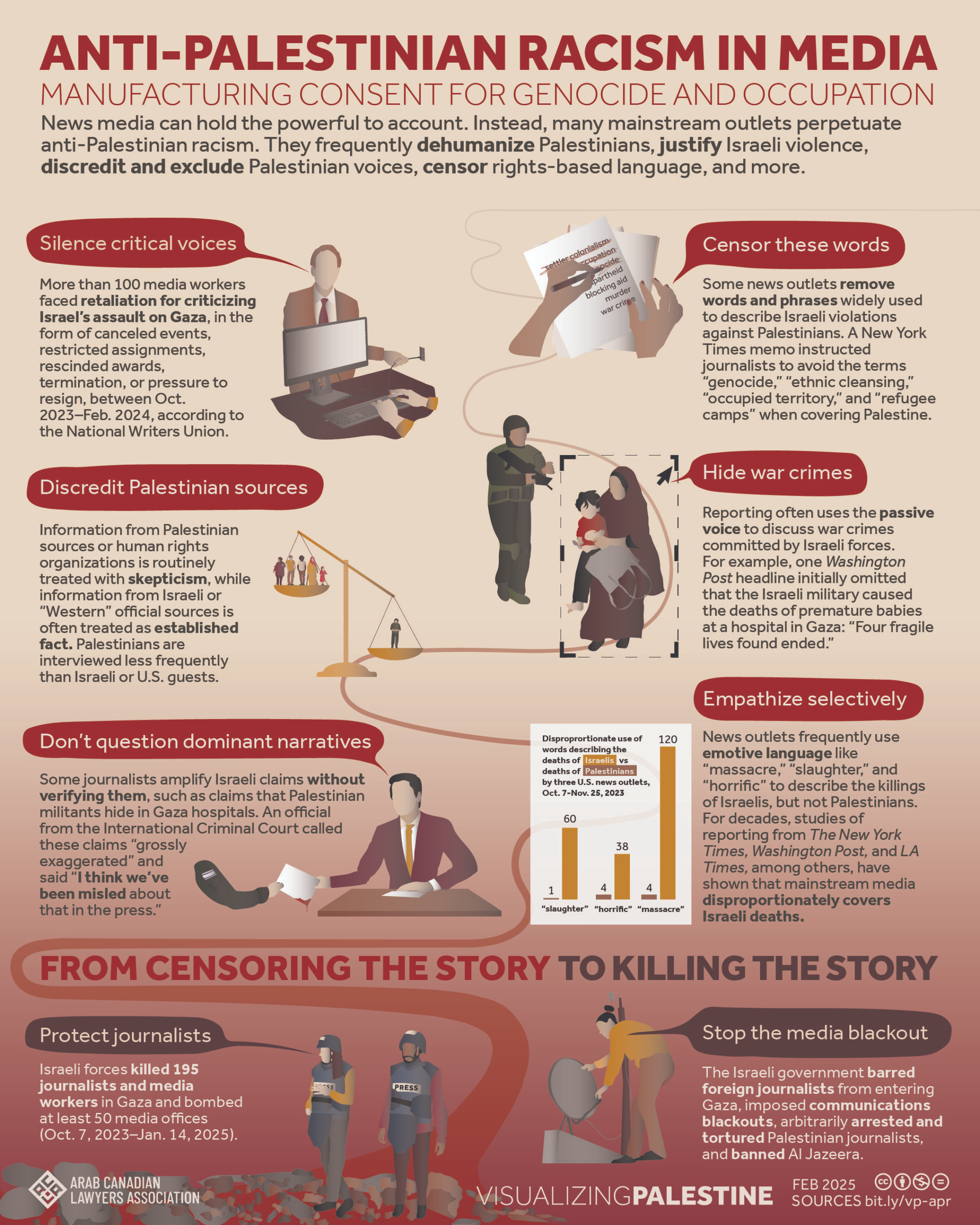
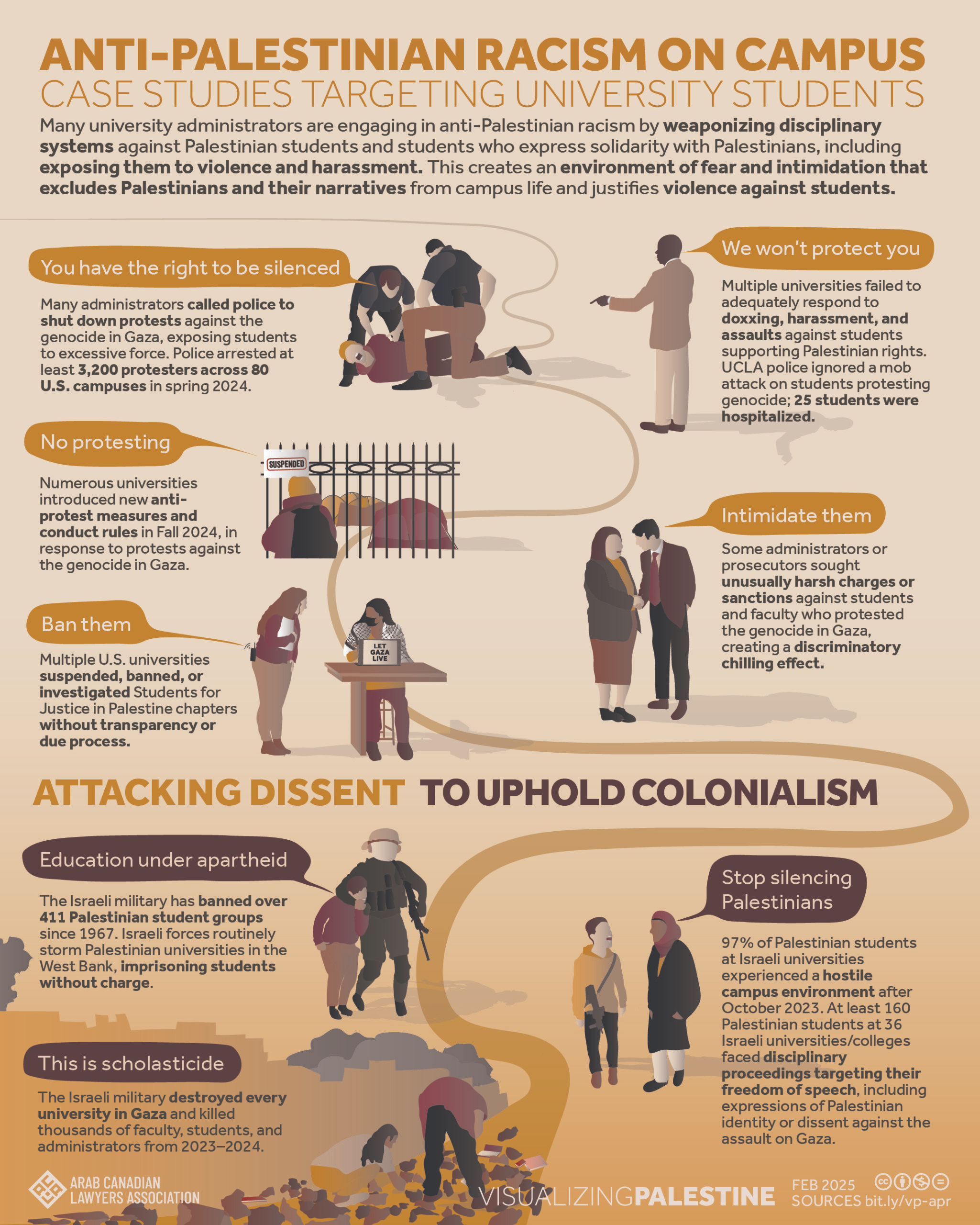
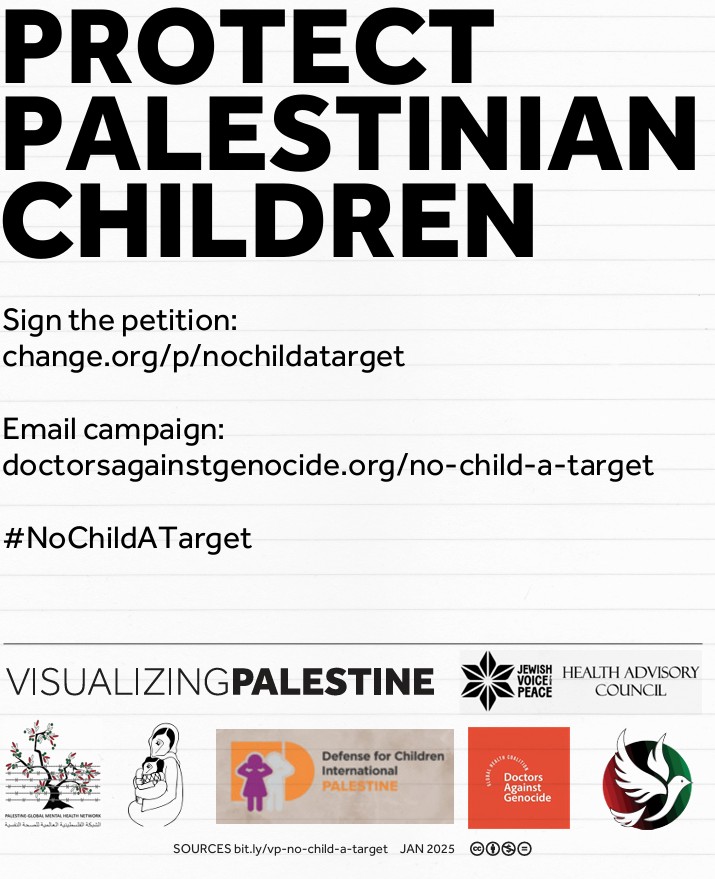
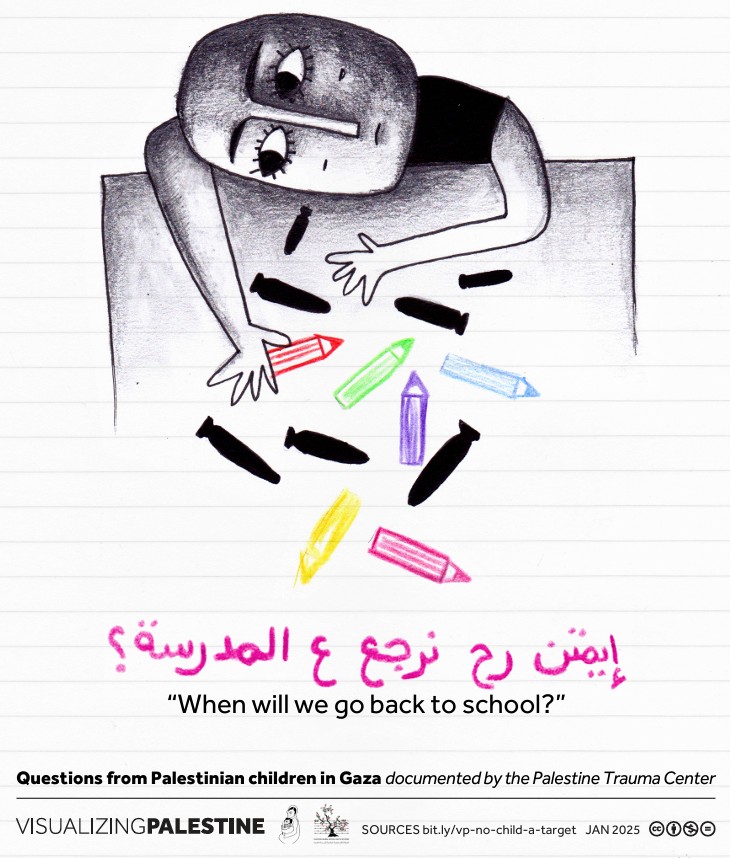
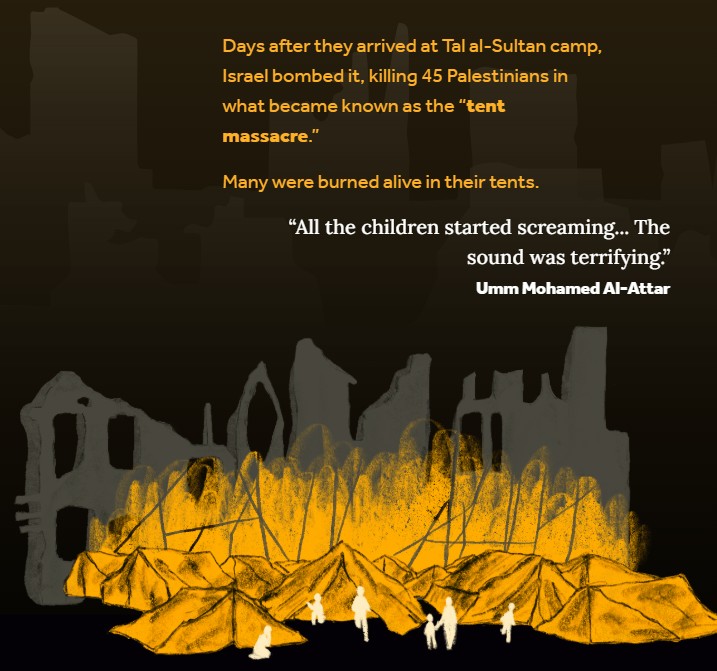
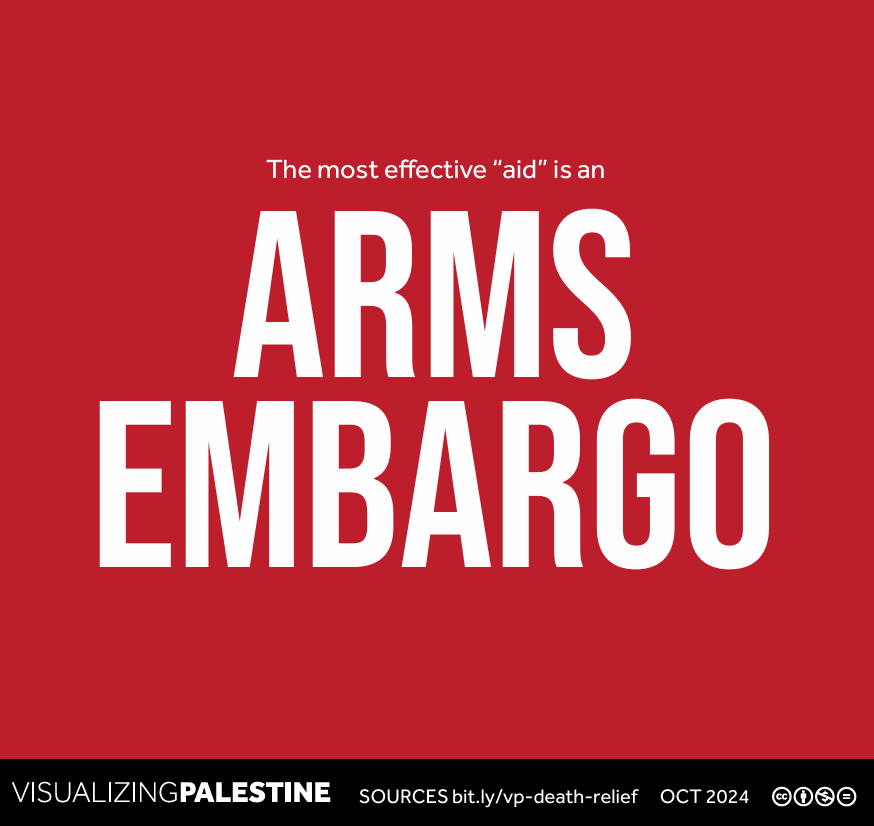
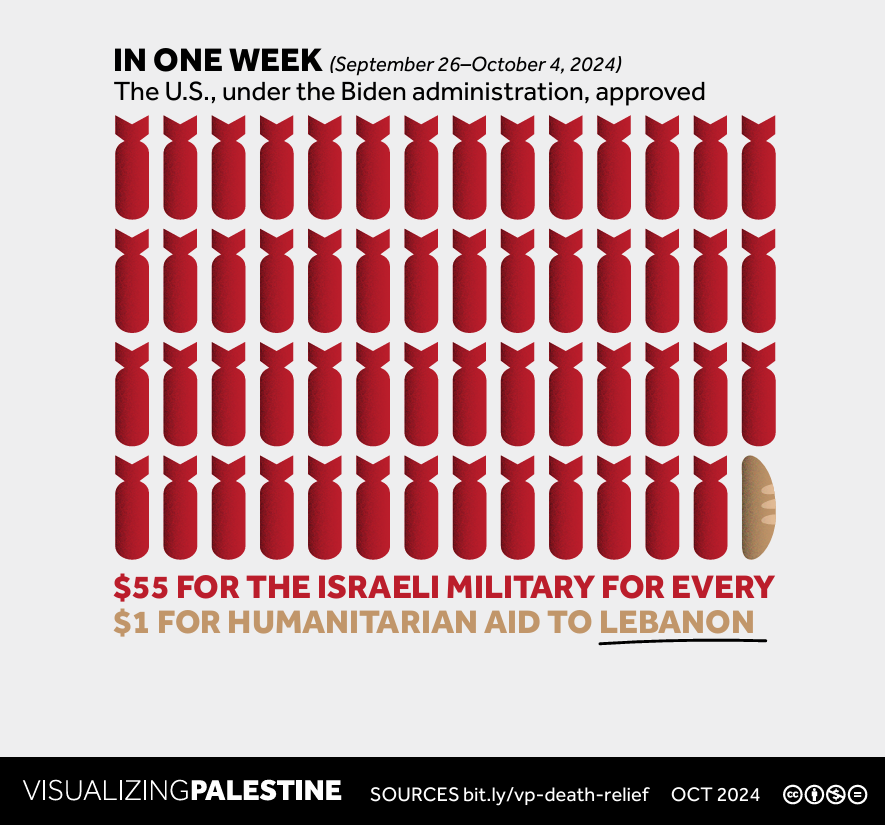
Some of the graphics from VisualizingPalestine
https://visualizingpalestine.org/














 unflinching