One of the consequences of the rapidly emerging authoritarianism in this country (and elsewhere) is the impact on those who advocate for justice and social change, as I wrote in yesterday’s post Persecution.
How do we continue advocating for justice, and caring for our neighbors and one another, when this work is criminalized? Often with extreme sentences if convicted. This creates great tension when we are led by the spirit to do this work under these circumstances. Work that once helped give us purpose, rarely with any legal consequences. Unless we chose to risk arrest for nonviolent actions.
“Acts of renegade carers are reclaiming their capacity to make worlds. That’s why they are criminalized: the common wealth that they produce nourishes and propagates other forms of struggle.” As diverse forms of pirate care “multiply, diversity and connect, their collective power grows to more than the sum of its parts. The acts complement one another to make each one stronger. They thus allow for a revolutionary reclamation of society and its institutions.”
Pirate Care as a Revolutionary Act by David Bollier
Pirate Care
I just recently discovered the concept of Pirate Care.
Providing care to people in need is usually seen as supremely humane and ethical. But look more closely and you’ll find that “care” is often a vehicle for self-serving social and political control. It’s often considered acceptable to withhold care from people who don’t have the “right” citizenship, skin color, cultural background, or gender identity, or who don’t have money to buy the care they need.
For an illuminating deep dive on the politics of care, check out a new book, Pirate Care: Acts Against the Criminalization of Solidarity (Pluto Press). I interviewed two of the co-authors — Italian activist Valeria Graziano, now living in London, and Croatian activist Tomislav Medak — in my latest Frontiers of Commoning podcast (Episode #58). The third co-author is Croatian activist Marcell Mars, now living in Coventry, England.
Pirate Care is an omnibus term coined by the authors to describe acts of care that defiantly challenge the “organized abandonment” of people in need. In the tradition of civil disobedience, pirate care activists intervene in situations to show organized compassion and social solidarity for ordinary people.
In the process, they also aim to show how the state, markets and patriarchal families are the ones decided who is deserving of care, and on what terms. Certain types of care are seen as unpatriotic, a threat to business revenues, or unacceptably kind to marginalized people.
Pirate Care as a Revolutionary Act by David Bollier, 10+ indigenous authors, originally published by David Bollier blog, resilience, Jan 9, 2025
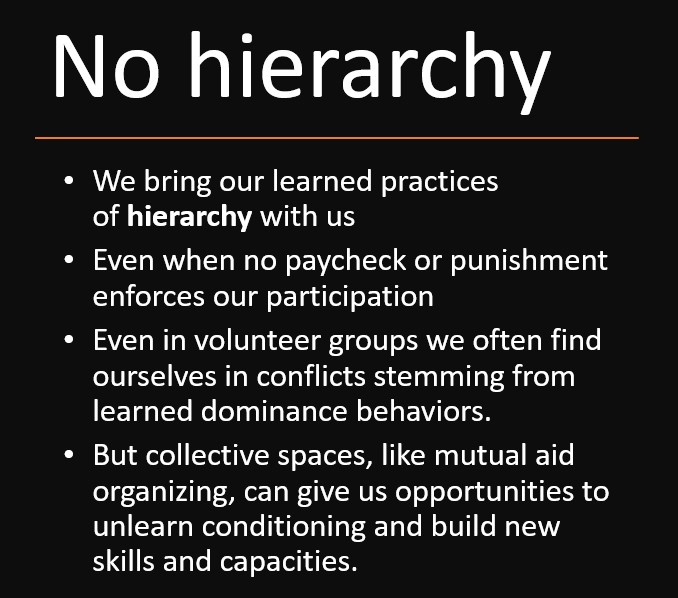
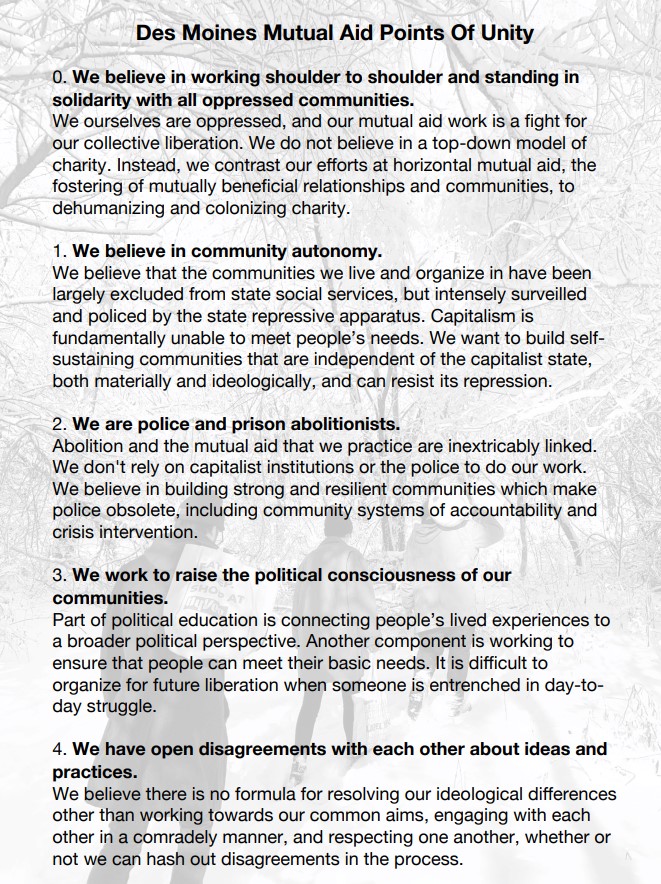
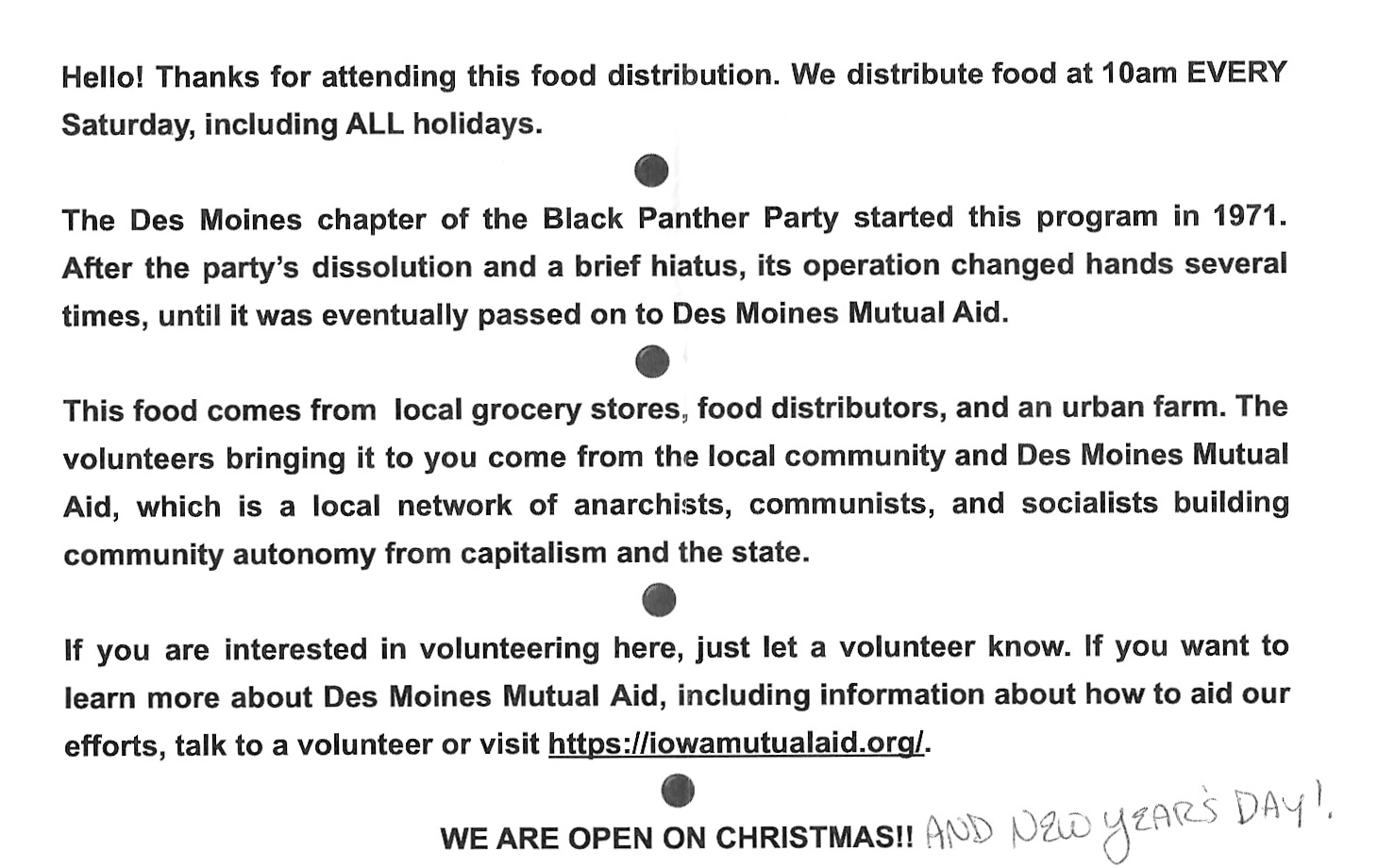
This aligns with the concept of Mutual Aid, that calls out hierarchy because that creates power relationships. Hierarchy is, of course, how our mainstream political and social systems today are structured. “Care” is often a vehicle for self-serving social and political control:
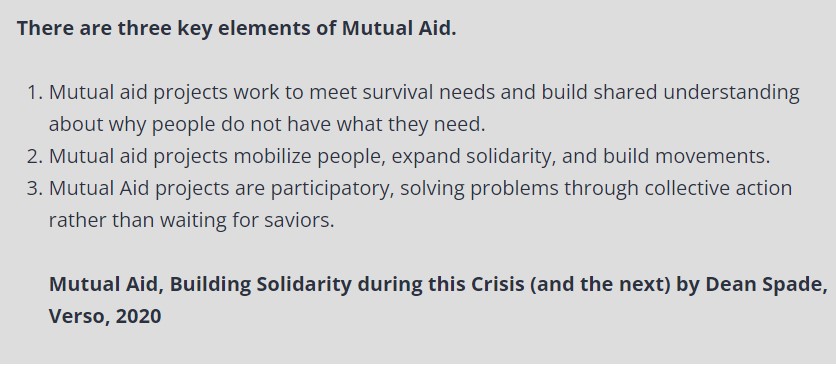
The contemporary political moment is defined by emergency. Acute crises, like the COVID-19 pandemic and climate change–induced fires, floods, and storms, as well as the ongoing crises of racist criminalization, brutal immigration enforcement, endemic gender violence, and severe wealth inequality, threaten the survival of people around the globe. Government policies actively produce and exacerbate the harm, inadequately respond to crises, and ensure that certain populations bear the brunt of pollution, poverty, disease, and violence. In the face of this, more and more ordinary people are feeling called to respond in their communities, creating bold and innovative ways to share resources and support vulnerable neighbors. This survival work, when done in conjunction with social movements demanding transformative change, is called mutual aid.
Mutual aid has been a part of all large, powerful social movements, and it has a particularly important role to play right now, as we face unprecedented dangers and opportunities for mobilization. Mutual aid gives people a way to plug into movements based on their immediate concerns, and it produces social spaces where people grow new solidarities. At its best, mutual aid actually produces new ways of living where people get to create systems of care and generosity that address harm and foster well-being.
Mutual Aid. Building Solidarity During This Crisis (and the Next) by Dean Spade
A Growing Tide of Pirate Care
I highly recommend the book Pirate Care: Acts Against the Criminalization of Solidarity cited in the following. The book begins with three examples of pirate care.
These are three tales of pirate care, three uncompromising acts of grassroots solidarity that defy unjust laws and norms. They use and hack the tools, knowledges, and resources available to sustain the life of those to whom care is denied under an uncaring Empire. This book is about such people whose practices defy resignation and cynicism, and about getting more pirates to join them. However, pirate care isn’t just about heroes with superpowers commanding boats, hacking systems, or transmuting revolution into poetry and back again. It is also about the everyday defiance of nurses, cooks, friends, programmers, amateurs, tinkerers, librarians, professionals, custodians, and kin who join together to practice care dangerously. The trajectory of these practices is revolutionary. In addition to providing care where it is most needed, and in addition to refusing artificial borders imposed by Empire, they show that the world does not need to be this way and they prefigure alternatives. Practices shared in these pages represent an emerging tendency of today’s radical struggles, hidden in plain sight: an archipelago of self-governing initiatives, collectives, and coalitions operating within, outside, and across Empire’s enclosures and institutions. This book aims to help pirate carers recognize themselves in their diversity and band together into a federation of mutually sustaining struggles that can turn the tide against an uncaring Empire.
Graziano, Valeria; Mars, Marcell; Medak, Tomislav. Pirate Care: Acts Against the Criminalization of Solidarity (Vagabonds Book 7) (p. 13). Pluto Press. Kindle Edition.
There is a lot to the concept of pirate care that I think I will be led to write more about. But this is enough of an introduction. To learn more, see the book quoted above, Pirate Care: Acts Against the Criminalization of Solidarity. And you can visit the pirate care website https://pirate.care/








 unflinching