I recently wrote “The Fires in Gaza are the Fires in LA”. It spoke about the US military as the largest source of greenhouse gas emissions in the world. Those emissions contribute to increasing ocean and air temperatures, and drought, which will increasingly result in more extreme wildfires and weather events.
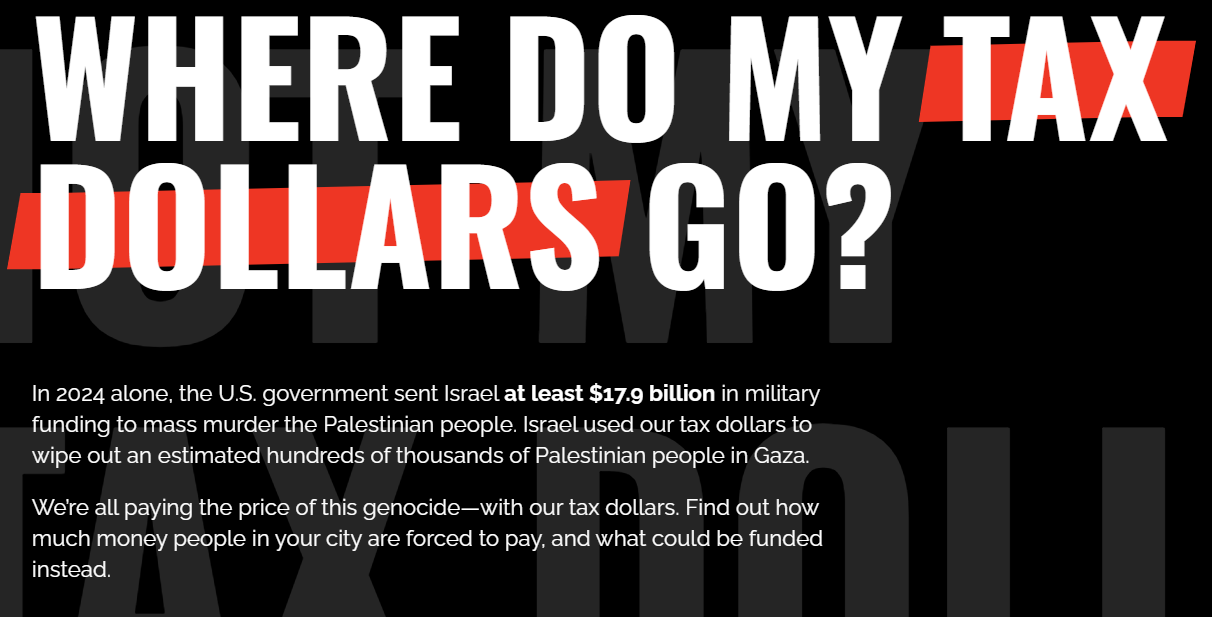
The other part of that story was the billions of dollars sent to Israel from the US, funds that were desperately needed to address pollution and invest in infrastructure, social programs, renewable energy, and disaster preparedness here. That diversion of funds contributed to the Los Angeles fires and their consequences.
Rubble
Another tragic parallel between the war in Gaza and the LA fires is the complete devastation of the land. In Gaza 2,000-pound bombs were dropped with the intention of flattening everything. “Scorched earth” describes the aftermath of the LA fires.
The rubble in Gaza is the rubble in LA.
It’s eerie to see these desolate landscapes. To no longer be able to see the marks of boundaries, such as fences and buildings.
There is a story that Merlin flew with King Arthur into the sky. He pointed out there were no visible boundaries on the land below.
There are no boundaries among the geese. How can you have boundaries if you fly? Those ants of yours — and the humans too — would have to stop fighting in the end, if they took to the air.
T.H. White, The Once and Future King
Colonialism and capitalism
My thoughts turn to the concepts of
- land ownership
- colonization, and
- Indigenization
Following is a diagram I’ve been working on for years. The diagram traces the interrelationships among the root causes of injustice, property, colonialism, and capitalism, and their consequences. Efforts toward decolonization include
- LANDBACK (Indigenous leadership)
- Black liberation
- Abolition of police and prisons
- Mutual Aid
- Conservation
- Mni Wiconi (water is life)
- spirituality

Indigenous peoples
Globally, Indigenous peoples have always worked and continue to work to protect and nourish Mother Earth. Their practices mean they live in harmony with nature.
Great Plains Action Society was born out of a need for Indigenous voices, values, and practices to be heard in the state of Iowa concerning the climate crisis, social injustice, natural resource extraction, and colonial farming practices–all results of colonial capitalism. Our focus for over two years (2016-2018) was on the fight against the Dakota Access Pipeline in Iowa and at the Standing Rock Reservation, which culminated in Little Creek Camp which is a resistance camp to the pipeline that ran in Williamsburg, Iowa from February to August 2017. However, before and after the NoDAPL movement, we have been steadfast in our work to stop the insidious damage of Big-Ag to our water, land, and air in Iowa (the most biologically colonized state in the country) and have continued to fight all forms of detrimental colonial-capitalist projects.
Frontline Land Defense, Great Plains Action Society
Worst thing LA could do
When you have 100 mph Santa Ana winds and you have this kind of dried-out vegetation and this kind of housing packed together in these inaccessible, difficult-to-reach hills, it’s just a recipe for this kind of terrible disaster. So, yes, if we would have thought differently about urban planning and restricted building in Pacific Palisades and 30 years ago required different building materials, and if the levels of CO2 in the atmosphere weren’t so high and the drought cycles and heat cycles weren’t so extreme, that could have been a different scenario.
There will be many lessons learned from this. But the biggest lesson that we need to learn is that we are just plain not prepared for the climate that we have created. Our world is not built for the climate that we live in, and the biggest change is going to require acknowledging that fact.
I’m scared that we’re going to rebuild LA more or less the same way, without using this as an opportunity to rethink how LA is built and reinvest in important public infrastructure like better water supply systems, as well as coming up with a strategy to force a retreat from building in the most risky areas.
This is an opportunity to reimagine the urban landscape and its relationship with nature in Southern California, and if history shows us anything, it’s not going to happen. We have to stop and think, “Okay, we have to do this differently now. We have to use this tragedy as an opportunity to really learn, really think this and rebuild in a way that acknowledges the dangers of the world that we live in right now.”
The worst thing LA could do as it recovers from fire disaster by Peter Bergen, CNN, Jan 18. 2024
Water quality
The infrastructure of crucial utilities like water could be impacted, the experts said.
When houses are burned down and plumbing fixtures are lost, there is effectively a loss in the pressure in water lines, Thomas Young, a civil and environmental engineering professor at the University of California, Davis, told ABC News.
Young, who has researched other large fires such as the Camp Fire in Paradise, California in 2018 and the Maui wildfires in 2023, said when an entire neighborhood is lost in a fire, the entire water system is likely compromised, he said.
“Any place in the water lines that might have a crack or gap before, which would have had water leaking out, now has the possibility of stuff from the outside getting in,” Young said. “The concern is the ash or other fire debris would be sucked into the lines.”
The difficulties of rebuilding in the same spot after the LA wildfires subside. Many are vowing to rebuild, but it may not possible to get back what once was. By Julia Jacobo and Megan Forrester, abc News, Jan 17, 2025




 unflinching