I cannot reconcile the image of a Nativity scene in contrast to the present-day obliteration of Gaza by Israel. Instead of a family in a manger, orphaned children sit on the rubble of what was once their home, without any family left alive to help them.
Occupied Jerusalem: The Bethlehem Municipal Council has announced to cancel the 2024 Christmas celebrations in solidarity with Palestinians for second year in row.
Bethlehem is the birthplace of Jesus or Prophet Isa (Peace be upon him). Therefore, Christmas celebrations here has always been a very special event, with thousands of visitors and tourists thronging the city to watch.
Bethlehem municipal body however said all celebrations marking Christmas will be cancelled and will be limited to prayers and religious rituals.
Bethlehem Governorate emphasized that canceling the celebrations rejects the injustices in Gaza and across Palestine.
“We chose to restrict Christmas celebrations to prayers as a stand against the oppression faced by Gaza and all of Palestine”, Mayor Anton Salman said in order to confirm the local civic body’s decision.
Salman strongly condemned the continued assault on Gaza. He criticized the international community’s silence in the face of Israeli massacres. He called for serious and immediate action to end Israeli violations.
For 2nd year in row, Bethlehem cancels Christmas celebrations. The Bethlehem Municipal Council has announced to cancel the 2024 Christmas celebrations in solidarity with Palestinians for second year in row. ummid.com News Network, Sunday December 22, 2024
Questions/queries
- What are the moral questions about celebrating Christmas in a region where violence and suffering are prevalent?
- In what ways can the international community reconcile the celebration of Christmas with the reality of the humanitarian crisis in Palestine?
- How can the themes of hope and redemption in the Christmas story inspire efforts towards peace and justice in the region?
- What can be done to ensure that the message of Christmas—peace, love, and compassion—extends to all people in the region, regardless of their background or circumstances?
Homeless/houseless
Another question:
How do the stories of displacement and refuge in the Christmas narrative resonate with the experiences of Palestinian refugees since the Nakba of 1948?
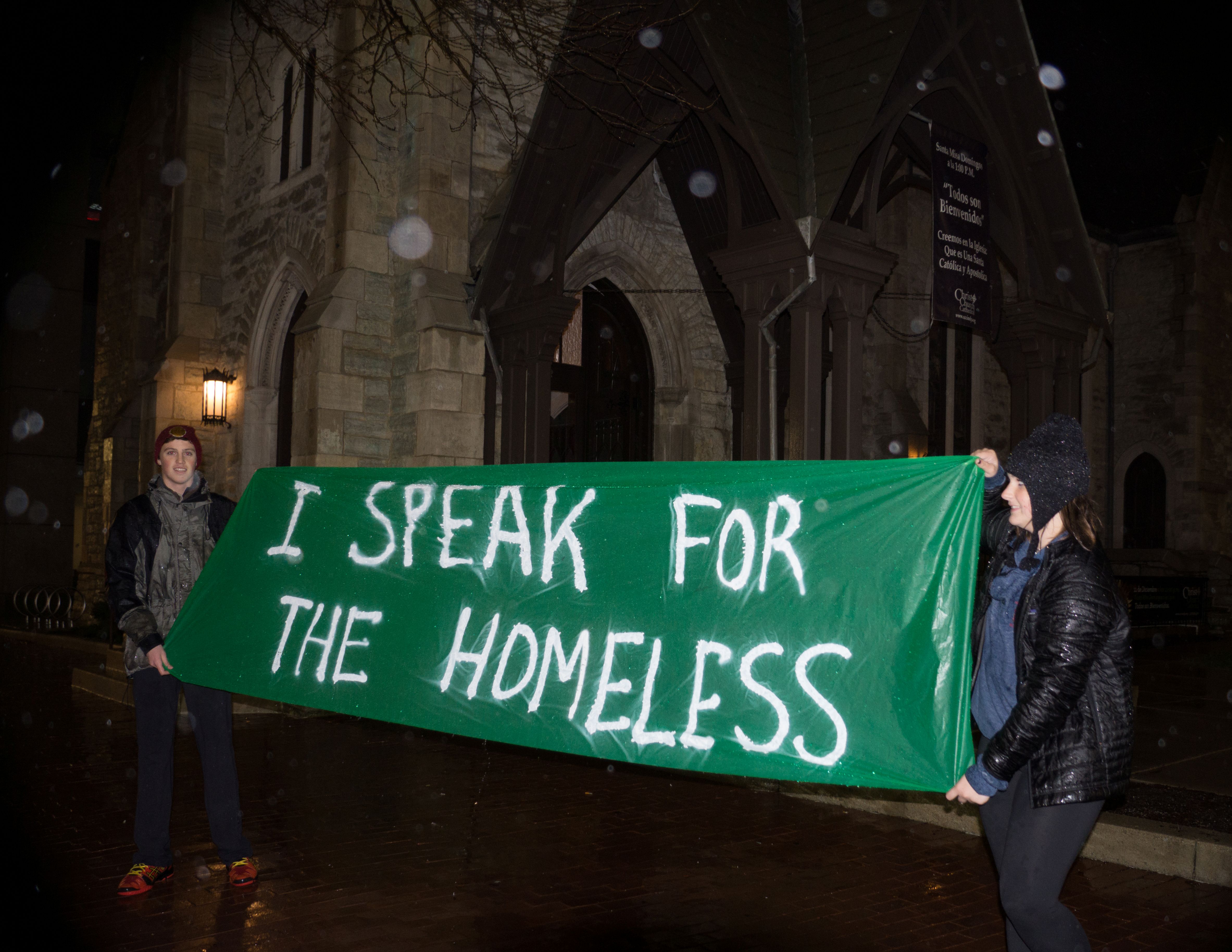
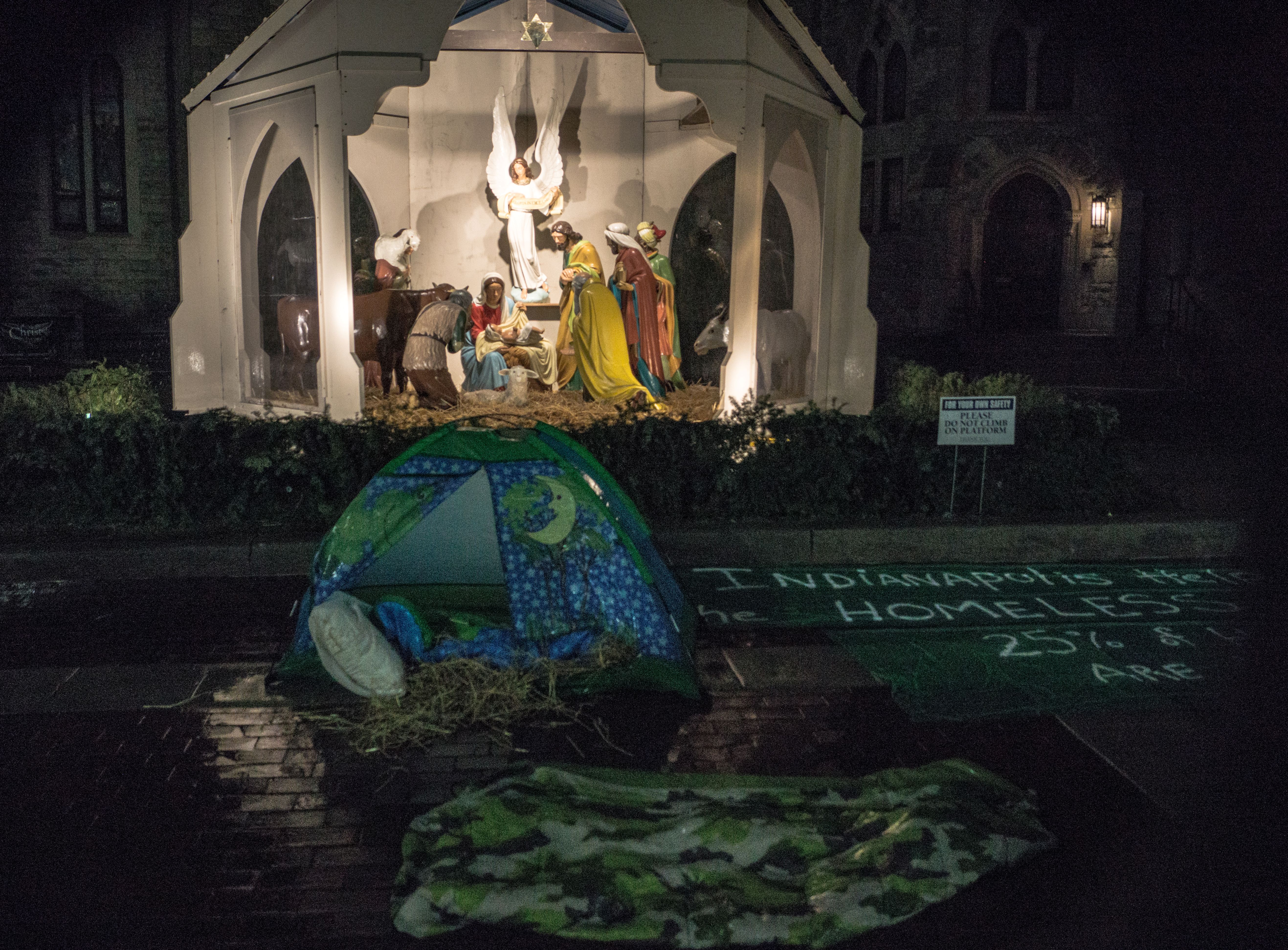
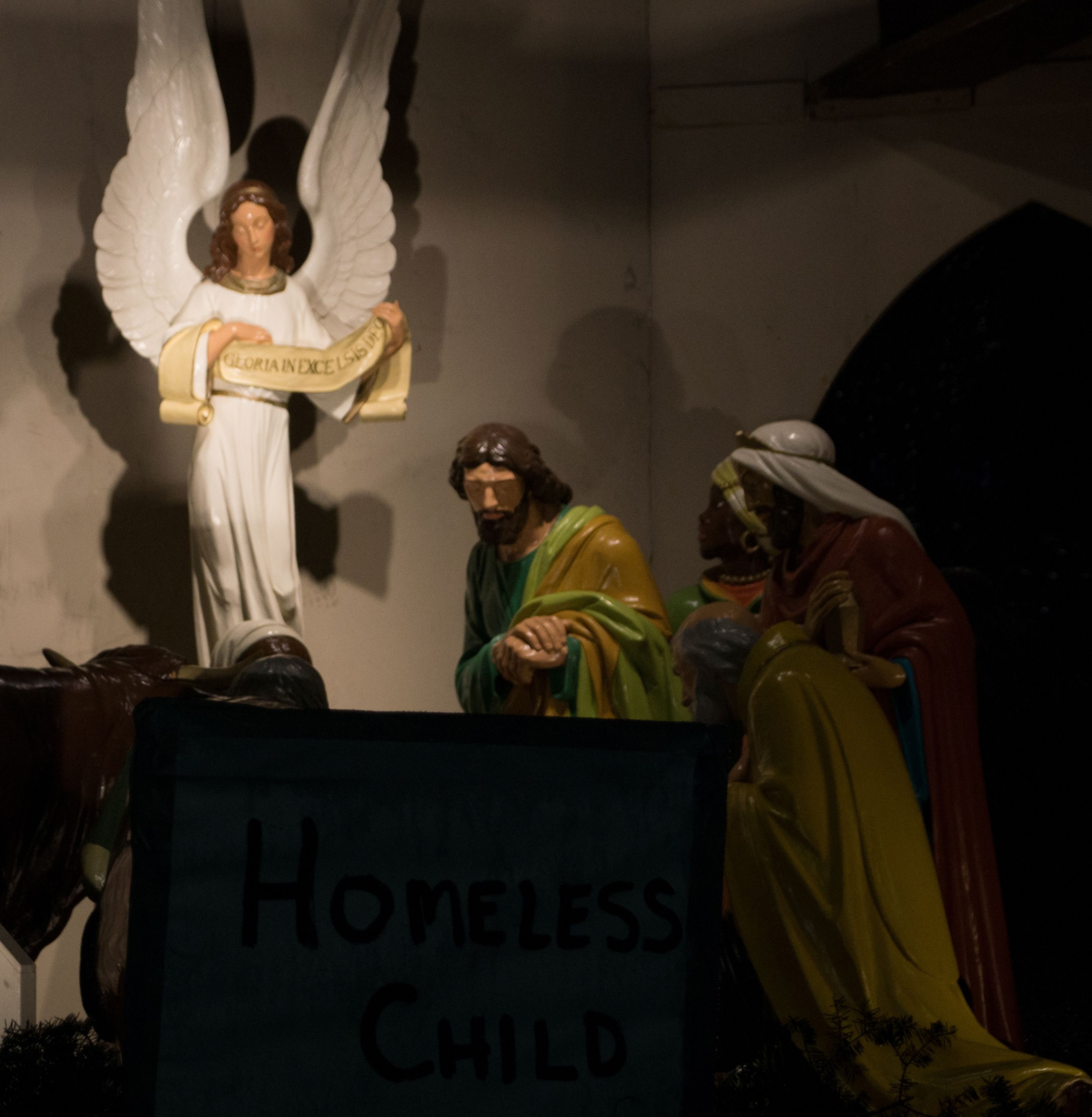
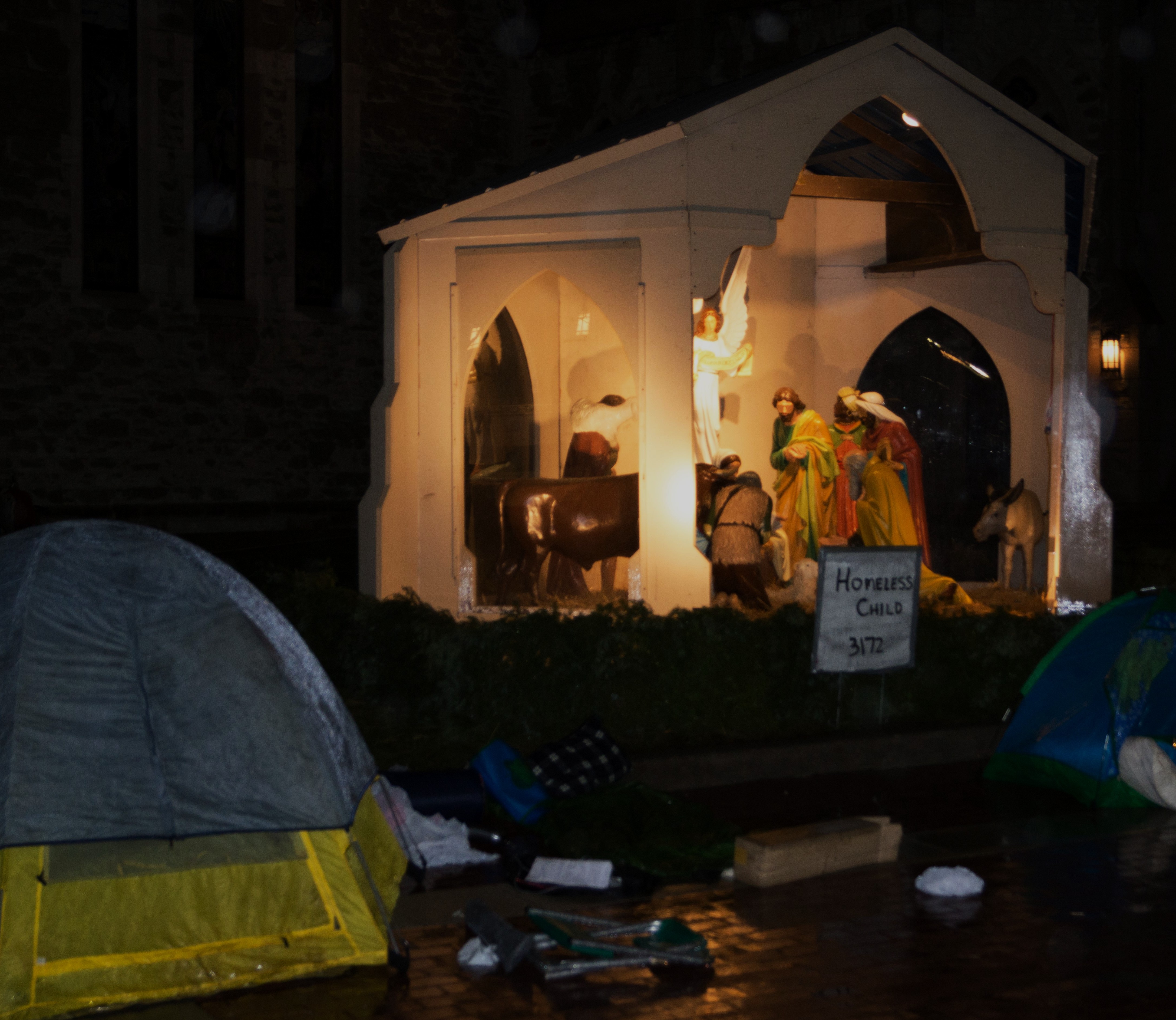
When I think of the Nativity scene, I remember the night, 12/5/2014, when Jim Poyser, an activist friend who knew of my photography, asked me to take photos of a group of Brebeuf Jesuit high school students in Indianapolis who were going to camp on the Circle downtown, to bring awareness to homelessness in the city.
That night, as can be seen, it was raining hard. I lived half a mile from downtown, and didn’t think they would go through with the camping. I don’t think I had a cell phone at the time, so I couldn’t check with Jim. I didn’t have a car, so I couldn’t just drive downtown to see. I was close to talking myself out of going, but I’d made a commitment, and the leading didn’t go away, so I eventually walked downtown, where I was surprised to see the young people putting up their tents. Jim was surprised to see me.
In this case we were talking about displacement in terms of homelessness in the city, rather than Palestinian refugees. One of the students’ signs said Jesus was Homeless.
I wouldn’t have been able to take photos if I hadn’t recently obtained a hood to protect the lens.




 unflinching