Yesterday, in light of today’s nonviolent protests related to the war in the Middle East, I shared some stories of my experiences with nonviolent protest in the 1960s.
Today I’m sharing stories of my experiences with planning and training others for acts of nonviolent civil disobedience in the context of this summer’s National Students for Justice in Palestine (NSJP)’s “Summer School”. My stories relate to the training involved in the Keystone Pledge of Resistance (below).
Summer School
Despite police crackdowns across the country and academic punishments, student organizers expect to come back this fall just as determined to protest, and much more coordinated. Many have been boosted by sessions with the NSJP (National Students for Justice in Palestine) and a coalition of other groups that advocate for a free Palestine and argue, as does the United Nation’s international court of justice (ICJ), that Israel imposes a form of apartheid on Palestinians..
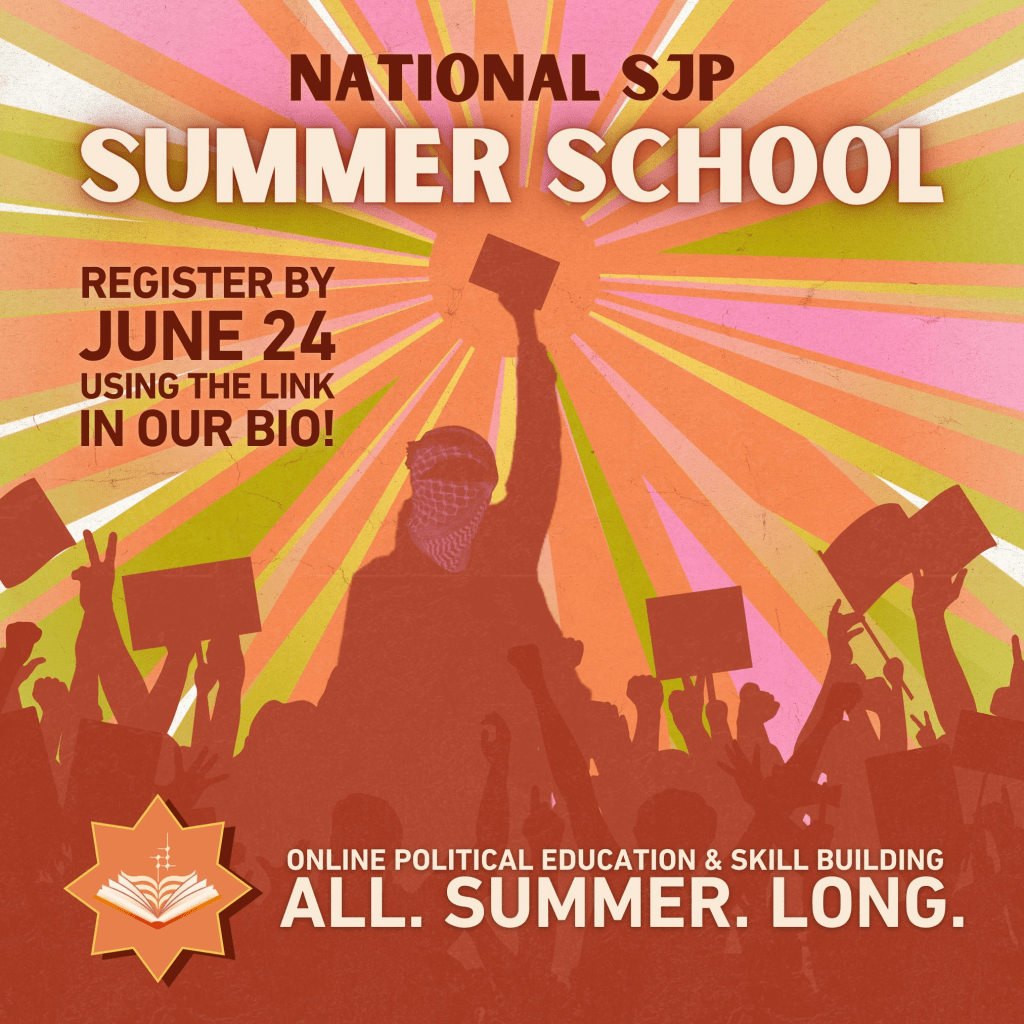
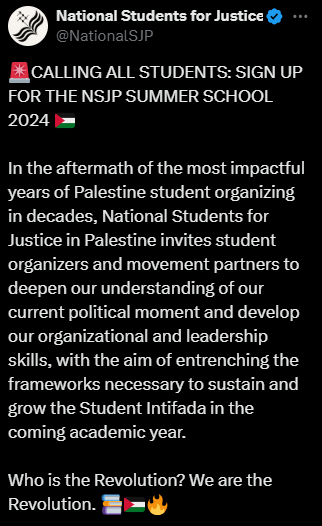
NSJP announced the creation of a student-led summer school on social media in June; subjects related to political history and mass organizing were taught. The organization said more than 1,000 people registered. Parts of the syllabus, shared exclusively with the Guardian, showed 15 classes held remotely in the evenings over the course of six weeks, taught in part by graduate and doctoral students, as well as guest speakers whose names the organizers declined to share.
Leaders at SJP chapters who wished to remain anonymous did not disclose details about what students learned in these two-hour classes, but said some of the subjects covered included safety during a protest, the rights of protesters, lessons in appropriate protest vocabulary, explanations of concepts such as a bail fund in the event of arrests, and the geopolitics of Israel and Palestine.
One eye-catching session title was: The student intifada, the uprising continues.
One student detailed the teaching of protest safety tactics in case police were called, such as using color coding to designate certain volunteers. For example, those marked with red will lock their arms with each other to form a human barricade between police and students, prepared to be arrested and face repercussions. “Green” volunteers may leave as soon as things escalate and police arrive, while “yellow” volunteers remain at the protest after police leave.
‘Summer school’ activists plan pro-Palestinian protests at US colleges in fall. Exclusive: Coordination and strategy are being ramped up despite academic suspensions, doxing attempts and arrests by Erum Salam, The Guardian, Aug 16, 2024


Keystone Pledge of Resistance Training
I’m grateful I was led to become an Action Lead in the national Keystone Pledge of Resistance in 2015.
The Keystone Pledge of Resistance (KXL) was a national movement to try to influence President Barack Obama to reject the approval for the Keystone XL Pipeline be built across the border from Canada.
The campaign was driven from the following pledge, which people could sign online:
“I pledge, if necessary, to join others in my community, and engage in acts of dignified, peaceful civil disobedience that could result in my arrest in order to send the message to President Obama and his administration that they must reject the Keystone XL pipeline.”
The brilliance of that campaign was that people who signed the Pledge left their contact information, building a network of activists. Eventually over 97,000 people signed the Pledge.
In addition, people could indicate their willingness to be trained as an Action Lead, which meant they would train people in their community how to participate in nonviolent civil disobedience actions that would be triggered across the nation if it looked like the Keystone permit was about to be approved.
That summer (2015) activists with experience in nonviolent actions traveled to twenty-five cities, where they trained us Action Leads how to design actions of civil disobedience in our communities. And taught us how to train those in our communities how to participate in such actions. Around 400 of us were trained as Action Leads, who in turn trained around 4,000 people locally.
One interesting way we applied pressure to stop the pipeline was to go to what would be our target and tell them what we planned to do. I went with the other three Action Leads in Indianapolis to the Federal Office Building, where we planned to block the entrance. An indication of how effective this was when the security at our building told us they were already aware of these possible actions.
In Indianapolis, the four of us Action Leads held four training sessions, training 45 people.
We held many public demonstrations to raise awareness of the Keystone Pipeline. My friend Derek Glass and I created this video.
In the end, President Obama did not approve of the Keystone XL pipeline permit. We don’t know what influence our actions might have played in his decision.
This PDF describes more of our actions in Indianapolis.
 unflinching