An increase in the frequency and severity of thunderstorms here in the Midwest brings more attention to increasing environmental devastation and its consequences. And urgency to prepare now for worsening chaos.
Destruction of infrastructure and trying to respond to the devastation leaving thousands without power, water, food and shelter, will increasingly overwhelm governments at all levels. Municipal services will fail. Unless they can garner grassroots support, as Cape Town, South Africa, was able to do.
I began with the subject of water, because we can only survive a few days without it, of course. We need to be planning now for when the water sources we rely on dry up. When water no longer flows from the tap.
“Much of this book was written – and the research trips took place – across 2021 and early 2022. This preceded major climate events, from the catastrophic flooding in Eastern Australia and Pakistan to the European drought that saw the Rhine no longer able to carry coal barges to power stations, and the Yangtze in China all but drying up. But my research foretold their grim inevitability. As sure as June follows May, so every year will now see new climate disasters that outstrip those that came before.” Smedley, Tim. The Last Drop: Solving the World’s Water Crisis (p. 17). Pan Macmillan. Kindle Edition.

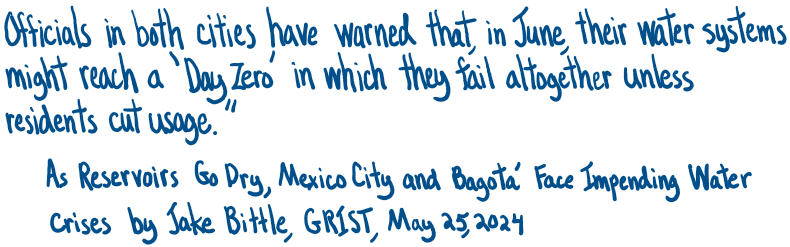



The World Wildlife Fund, with their partner Sanlam, have published a fascinating account, Water: Facts and Futures. Rethinking South Africa’s Water Future.
“Any reproduction in full or in part must mention the title and credit WWF-SA as the copyright owner. Citation: Report to be cited as WWF-SA 2016, Water: Facts & Futures”
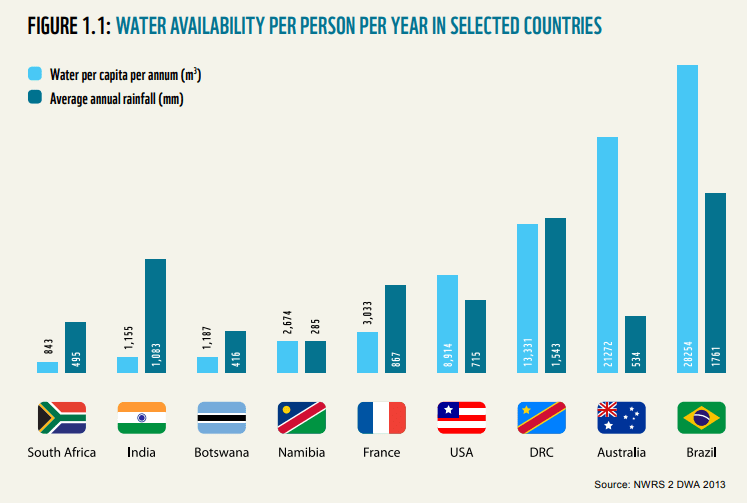
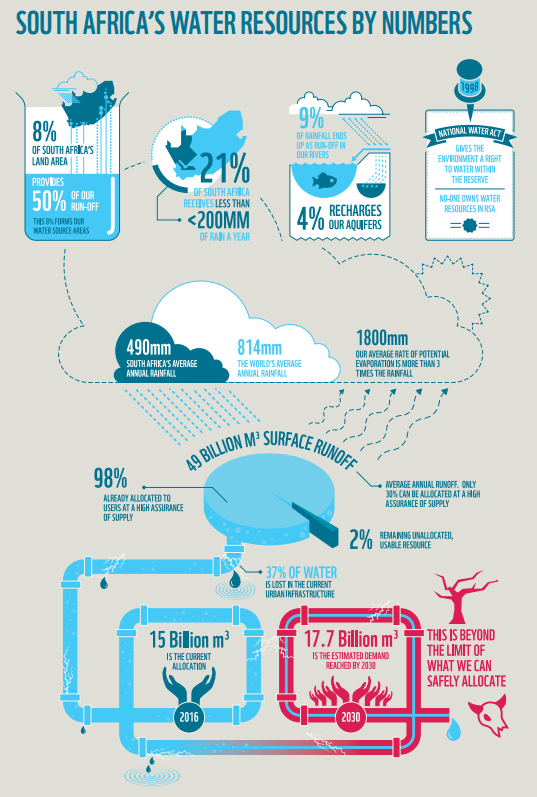
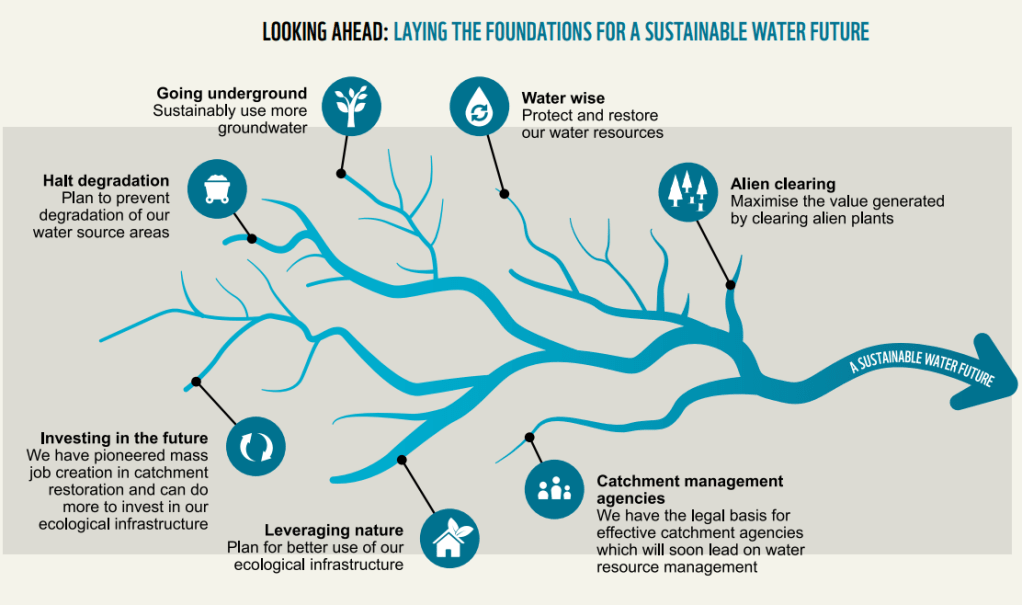
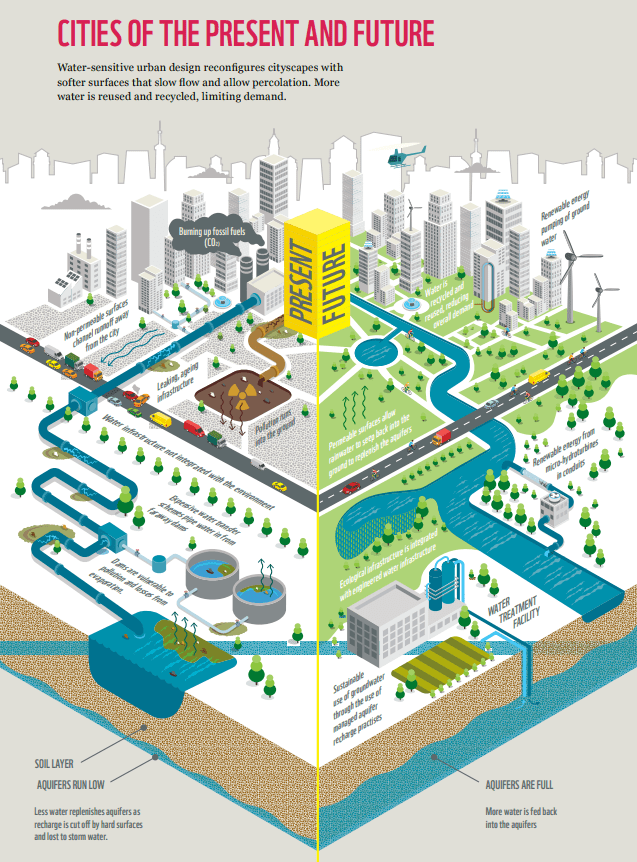
Following are just a few of the graphics from the report.


 unflinching